
Amphibian
Budgett's Frog
Lepidobatrachus laevisAlso known as Hippo Frog, Freddy Krueger Frog, Escuerzo de Agua, Wide-mouthed Frog
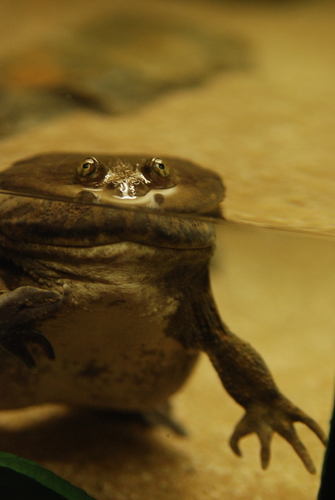
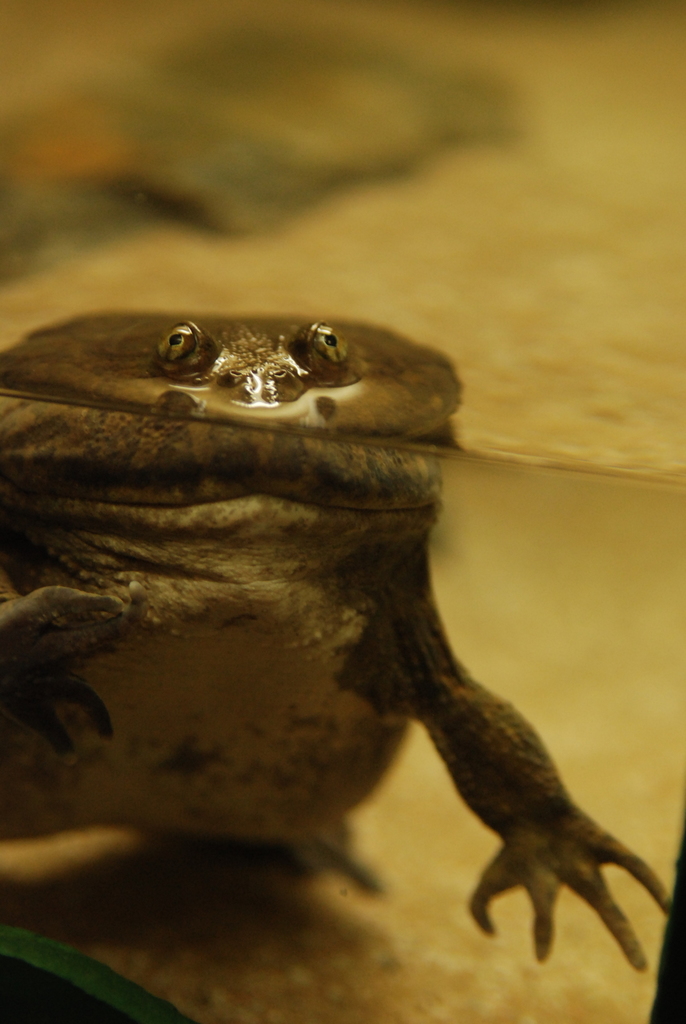
Budgett's frogs are highly aquatic ambush predators native to the seasonal wetlands of the Gran Chaco region in South America. Equipped with an enormous, flattened head and wide mouth lined with sharp odontoid projections, they sit submerged in shallow, muddy water waiting to swallow prey whole. When seasonal pools dry up, they burrow into the mud and secrete multiple layers of shed skin to form a waterproof cocoon, estivating for months until the rains return.
AquaticCarnivorousBurrowing
—observations
—countries
—peak records
Least ConcernConservation statusIUCN Red List categoriesLCNTVUENCREWEXLeast ConcernRed List categories, explained →
Diet & preySmaller frogs, Invertebrates, Small fish
Predators
- Herons
- Caimans
- Water snakes
ThreatsAgricultural expansion, habitat loss, water pollution, and over-collection for the pet trade.
HabitatsTemporary ponds, seasonal marshes, and savannah pools in the Gran Chaco.
Life span10–15 years
Classification
- FamilyCeratophryidae
- SpeciesLepidobatrachus laevis
Range data is not available yet.
Interaction riskLow
- Low
- Moderate
- High
- Very high
- Why interaction risk is low
- Inflates, hisses, and delivers a painful bite with sharp jaw ridges if cornered; observe without handling.
- Why it is dangerous
- Possesses prominent, pointed bony ridges (odontoids) in the lower jaw that can easily puncture skin and draw blood during a defensive strike.
- How to recognize a risky encounter
- Look for a remarkably flattened, rounded body, eyes set high on top of the head, and an expansive mouth stretching nearly the full width of the skull.
- What to do
- Do not attempt to catch or hold wild individuals; give them space if they puff up, stand on outstretched legs, and emit a high-pitched scream.
Responsible observation
- Observe undisturbed: Watch from the edge of ephemeral ponds without stepping in murky shallows.
- Avoid handling: Stressed individuals shriek loudly and lunge forward to bite defensively.
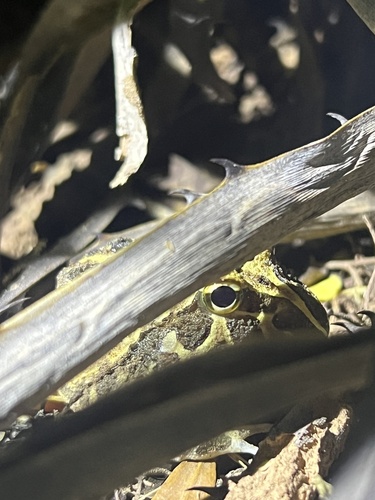
Same Family (c) Emma Walker, some rights reserved (CC BY) · cc-by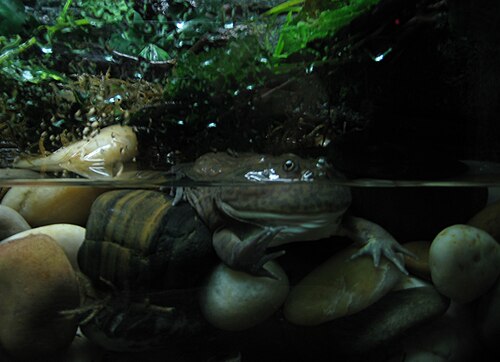
Close Relative Lošmi / CC BY-SA 3.0 · cc-by-sa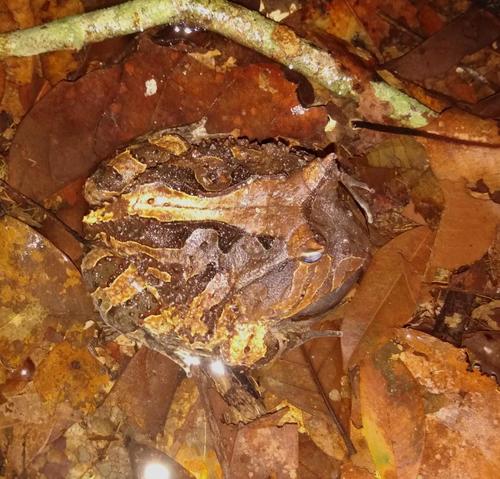
Same Family (c) Sidnei Dantas, some rights reserved (CC BY-SA) · cc-by-sa
Help improve the field guideSomething wrong?
Checking your Fauna account…Report a name, category, or profile issue for review.