Also known as Argentine Horned Frog, Ornate Horned Frog, Pacman Frog, Argentine Wide-mouthed Frog
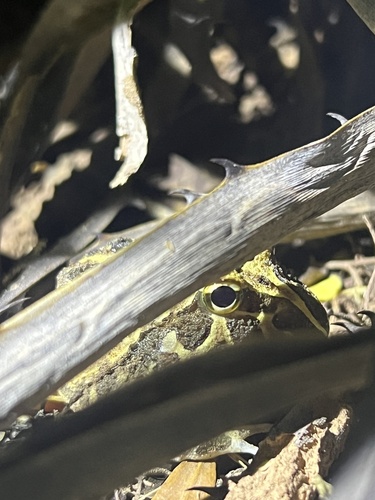
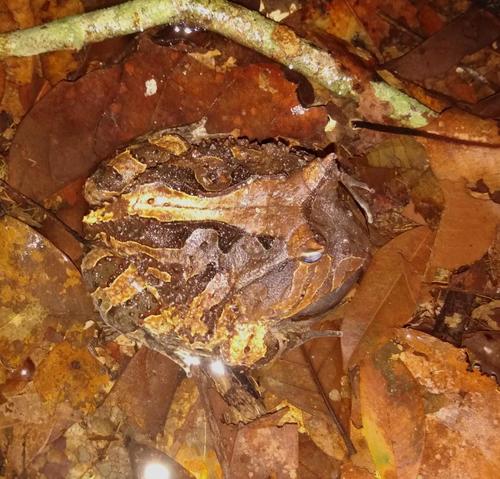
Bell's horned frogs spend most of their lives buried up to their eyes in mud or leaf litter, waiting motionless for prey to wander past their enormous, gaping jaws. When threatened or startled, they inflate their bodies, lunge forward, and let out a sharp squeal while attempting to bite. During dry spells, they encase themselves in a shed-skin cocoon underground and emerge only when heavy summer rains flood the grasslands for breeding.
ThreatsHabitat loss from agriculture, wetland drainage, agrochemicals, and collection for the pet trade
HabitatsHumid grasslands, pampas, marshes, and seasonal ponds in Argentina, Uruguay, and southern Brazil
Life span6–10 years in the wild; up to 15 years in captivity
Classification
FamilyCeratophryidae
SpeciesCeratophrys ornata
Range & activity
Range data is not available yet.
Safe observation
Interaction riskLow
Low
Moderate
High
Very high
Why interaction risk is low
Capable of a painful, skin-breaking bite when handled; observe without picking it up.
Why it is dangerous
Bony, tooth-like projections on the lower jaw and powerful jaw muscles allow it to clamp down hard, tearing skin and refusing to release.
How to recognize a risky encounter
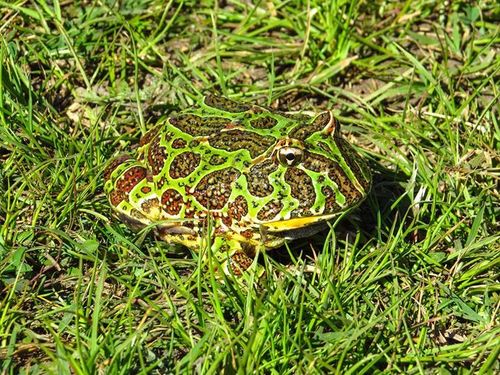
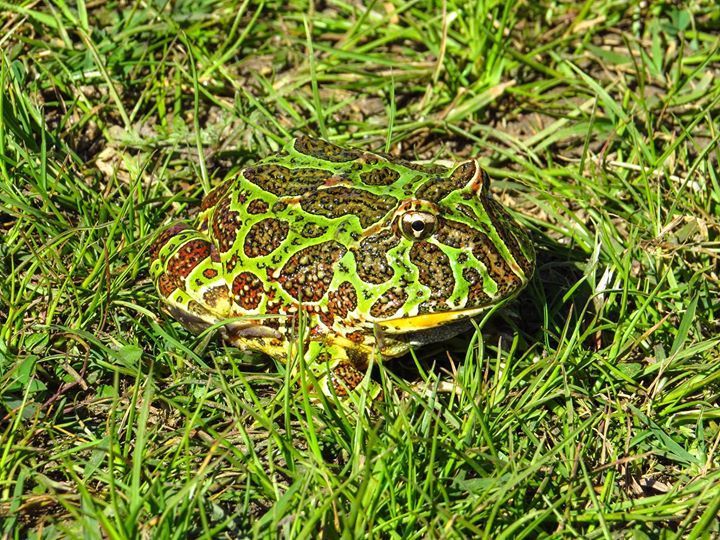
Stocky, rounded body with green and reddish-brown blotches, a massive wide mouth, and small fleshy horns above each eye.
What to do
Leave wild individuals undisturbed on the ground; if relocation from a road is necessary, gently guide it into a container without using bare hands.
What to notice
Look for a plump, mottled green-and-brown frog partially buried in damp soil or shallow temporary pools in lowland South American grasslands.
Support conservation
Observe from a respectful distance without disturbing its burrow, never remove individuals from the wild, and keep breeding wetlands free of contaminants.
Responsible observation
Hands Off: Avoid picking up wild frogs, as they defend themselves with a strong bite and absorb skin oils.
Watch Where You Step: Buried individuals blend seamlessly into mud and grass along pond edges.
Listen After Rain: Males produce loud, nasal calls from flooded depressions on warm summer nights.