Also known as Baron's Painted Mantella, Variegated Golden Frog
Baron's mantellas are vibrant, diurnal rainforest frogs that forage actively along mossy stream banks and leaf litter in eastern Madagascar. They derive potent skin toxins from their diet of wild ants and mites, warning visual predators with bold contrasting patches of jet black, bright orange, and lime green. Males advertise territories with rapid, high-pitched clicking calls from damp moss pads rather than calling from open water.
ThreatsHabitat loss from slash-and-burn agriculture, logging, and over-collection for the pet trade
HabitatsSubtropical or tropical moist lowland and montane forests near streams
Life span5–8 years
Classification
OrderAnura
FamilyMantellidae
GenusMantella
SpeciesMantella baroni
Range & activity
Range data is not available yet.
Safe observation
Interaction riskHigh
Low
Moderate
High
Very high
Why interaction risk is high
Skin secretes toxic alkaloids sequestered from wild prey; avoid handling and never touch mucous membranes.
Why it is dangerous
Skin produces pumiliotoxins and allopumiliotoxins acquired from prey, which can cause numbness, mucosal irritation, or illness if absorbed through broken skin or accidentally ingested.
How to recognize a risky encounter
Look for a jet-black body accented by vivid orange or red patches on the upper hind legs and bright green front limbs or flanks.
What to do
Observe without touching, wash hands thoroughly if accidental contact occurs, and keep pets away from leaf litter where they forage.
Responsible observation
Viewing etiquette: Scan damp mossy banks and sunny leaf litter patches during morning hours.
Handling rule: Do not touch with bare skin, as skin alkaloids cause irritation and human oils harm amphibian skin.
Audio identification: Listen for faint, insect-like single or double clicks echoing near rushing forest water.

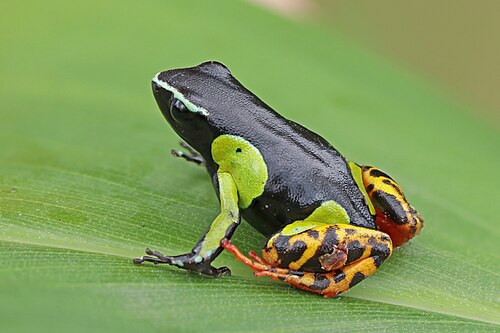
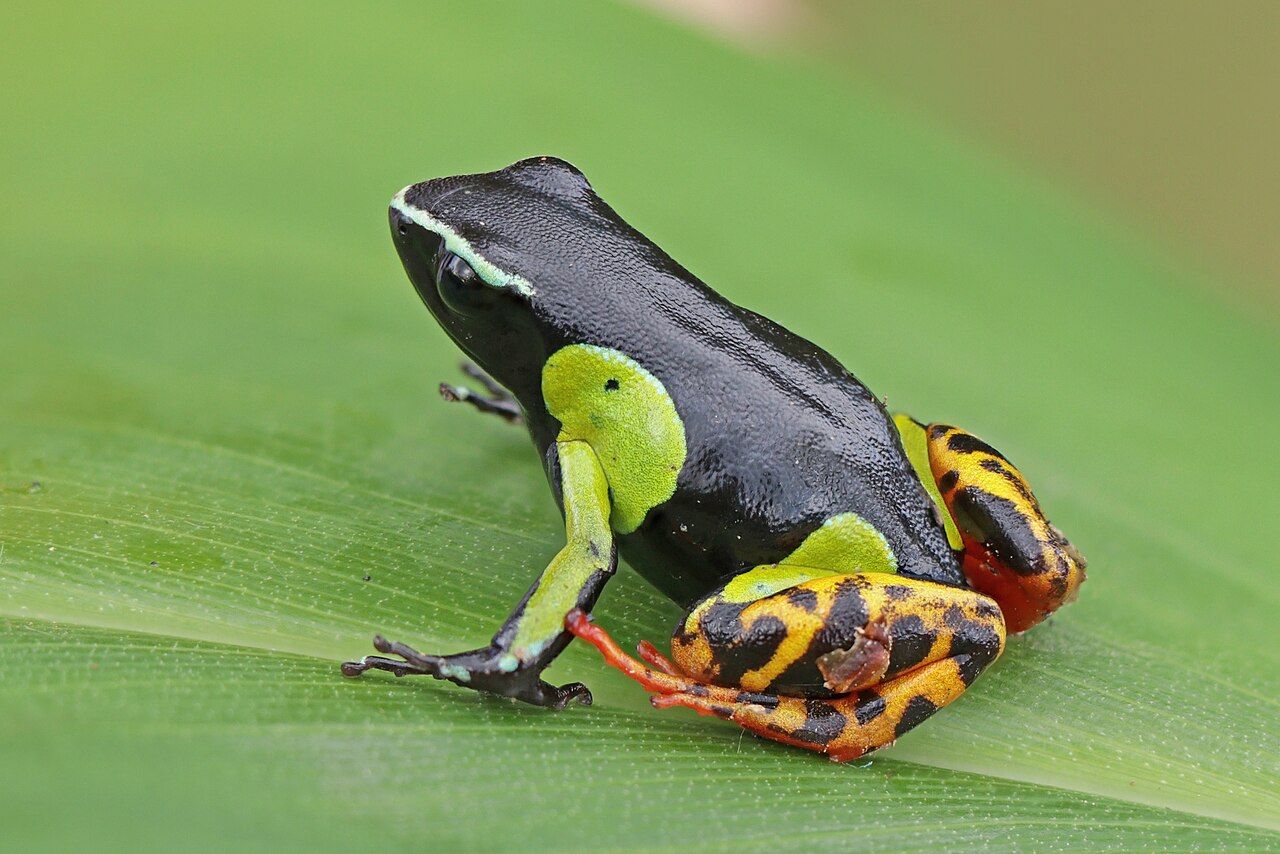
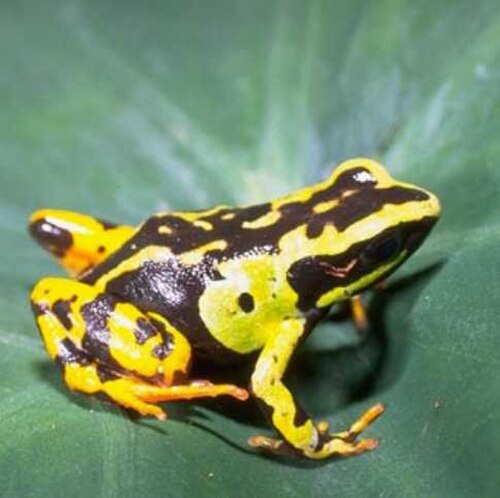
 Image unavailable