Also known as Banded Rubber Frog, Red-Banded Frog, Fire Frog
Red-banded rubber frogs are terrestrial, ground-dwelling amphibians famous for walking or running rather than hopping. When threatened, they inflate their bodies and tuck their heads to display vivid red or pink dorsal stripes that warn predators of potent skin toxins. They spend the dry winter months concealed deep inside termite mounds, burrows, or hollow logs, emerging in huge numbers after the first heavy seasonal rains to breed in temporary pools.
ThreatsHabitat loss from intensive agriculture, pollution of temporary breeding pools, and road mortality during breeding migrations.
HabitatsDry and moist savannas, subtropical grasslands, shrublands, flooded plains, and agricultural edges.
Life span5–10 years
Classification
FamilyMicrohylidae
SpeciesPhrynomantis bifasciatus
Range & activity
Range data is not available yet.
Safe observation
Interaction riskHigh
Low
Moderate
High
Very high
Why interaction risk is high
Skin secretes cardiotoxic mucus that burns eyes and cuts; never handle with bare hands.
Why it is dangerous
Produces a milky skin secretion containing lethal cardiotoxic peptides that cause severe cardiac irregularities if ingested and intense chemical burns on broken skin or mucous membranes.
How to recognize a risky encounter
Recognized by a smooth, rubbery black or dark grey body traversed by broad, bright red or pink-orange lateral stripes and spots.
What to do
Do not touch or collect wild specimens; observe them undisturbed on the ground and keep domestic pets away.
Responsible observation
Observation: Watch from a short distance with a flashlight during warm, rainy nights near savanna pans.
Hygiene: Thoroughly wash hands immediately if accidental contact occurs, and avoid touching eyes or mouth.

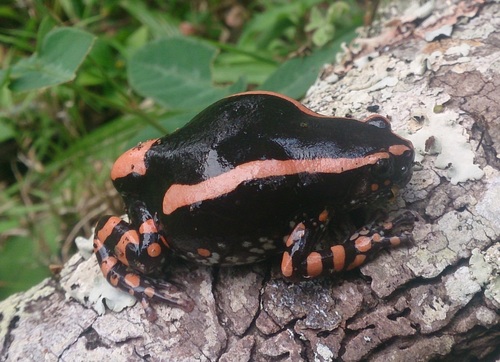
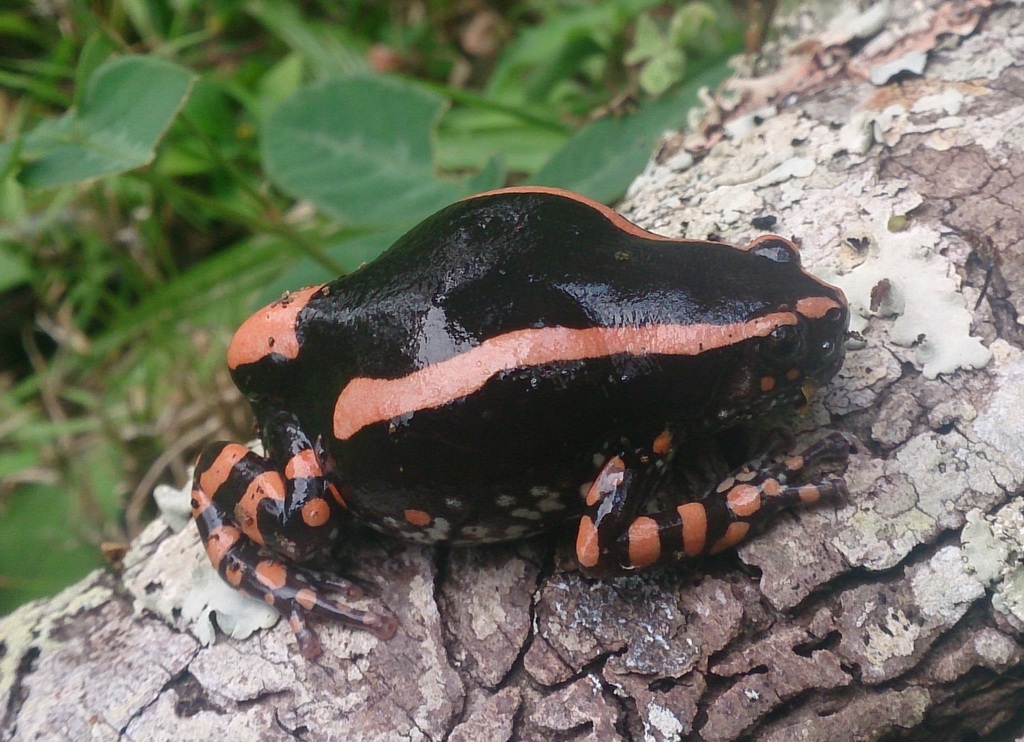
 Image unavailable