
Fish
Balloon Shark
Cephaloscyllium sufflansBalloon sharks are sluggish, bottom-dwelling catsharks named for their remarkable defense mechanism: when threatened by predators, they swallow water or air to inflate their bodies into an unyielding, spiny ball that wedges tightly into rocky crevices. Resting quietly on sandy or muddy sea floors by day, they become more active at night to forage along the continental shelf. Females produce egg cases with tendrils that anchor them securely to marine growth in deep shelf waters.
BenthicDeep WaterNocturnal


—observations
—countries
—peak records
Near ThreatenedConservation statusIUCN Red List categoriesLCNTVUENCREWEXNear ThreatenedRed List categories, explained →
Diet & preyCrabs, Squid, Bony Fishes
Predators
- Sevengill Shark
- Great White Shark
ThreatsBycatch in commercial bottom-trawl fisheries
HabitatsContinental shelf and upper slope over sandy and muddy substrates
Life span12–20 years
Classification
- FamilyScyliorhinidae
- SpeciesCephaloscyllium sufflans
Range data is not available yet.
Interaction riskLow
- Low
- Moderate
- High
- Very high
- Why interaction risk is low
- Small teeth can pinch or scrape skin if handled directly, but they are harmless at normal observing distances.
- What to notice
- Look for a thick, light-gray body with broad flattened head, narrow nasal flaps, and faint dark saddle marks.
- Support conservation
- Avoid harassing or touching resting sharks; report scientific sightings to local marine biodiversity repositories.
Responsible observation
- Habitat Clues: Encountered primarily by deep divers or submersibles on deep continental shelves and muddy slopes.
- Observation Distance: Give resting individuals space, as crowding can trigger unnecessary defensive inflation.
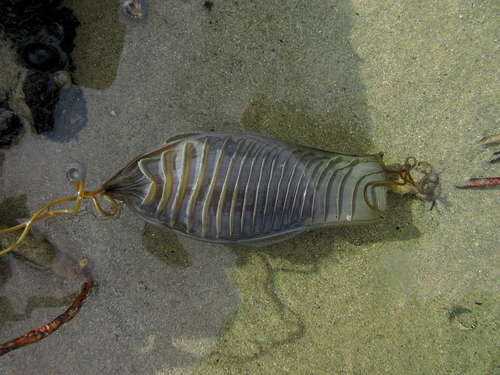
Same Genus (c) Mark Ridgway, some rights reserved (CC BY), uploaded by Mark Ridgway · cc-by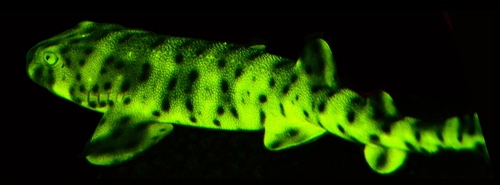
Same Genus (c) Sparks, J. S.; Schelly, R. C.; Smith, W. L.; Davis, M. P.; Tchernov, D.; Pieribone, V. A.; Gruber, D. F., some rights reserved (CC BY) · cc-by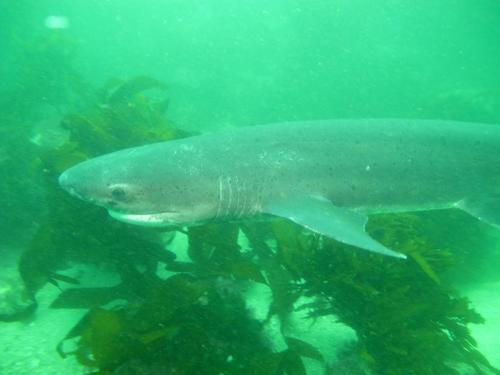
Predator (c) Derek Keats, some rights reserved (CC BY-SA) · cc-by-sa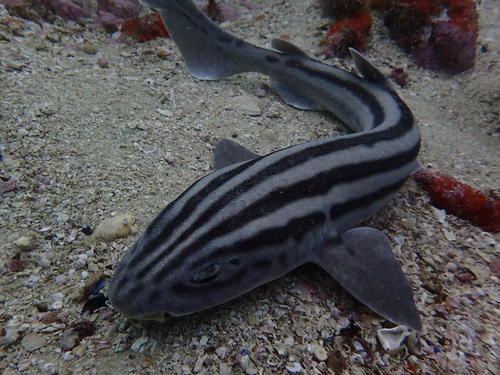
Same Family (c) Peter Southwood, some rights reserved (CC BY-SA), uploaded by Peter Southwood · cc-by-sa
Help improve the field guideSomething wrong?
Checking your Fauna account…Report a name, category, or profile issue for review.