
Fish · GBIF taxon 2417418
Australian Elephantfish
Callorhinchus miliiAlso known as Australian Ghostshark, Elephant Shark, Plough-nose Chimaera, Makorepe
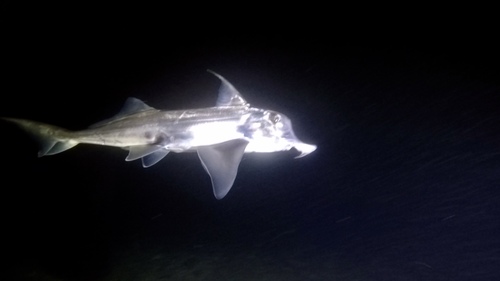
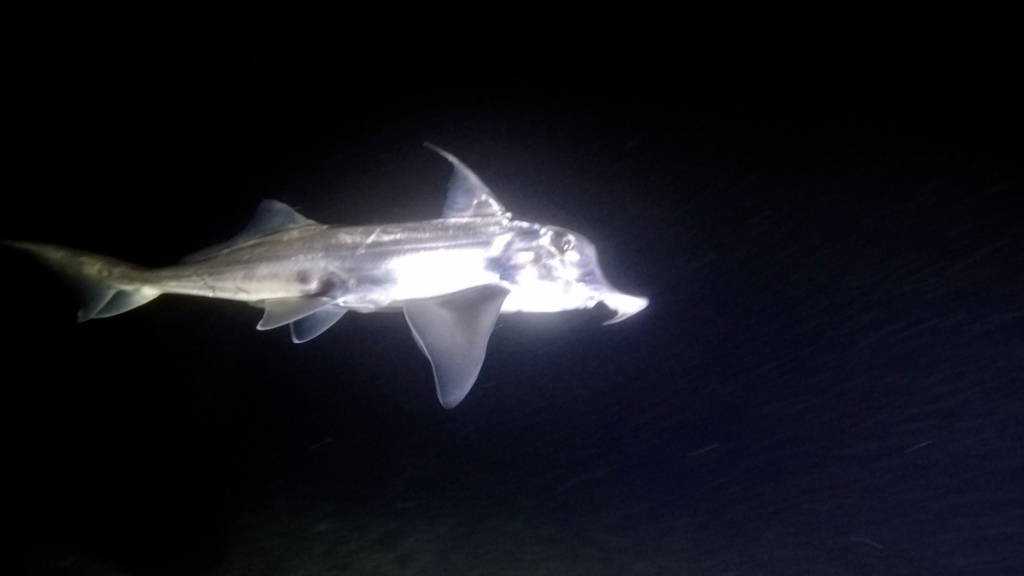
Elephantfish navigate temperate southern waters, using an elaborate hoe-shaped snout packed with electroreceptors to detect mollusks and crabs buried beneath the sediment. Females migrate into shallow coastal bays and estuaries during spring to deposit distinctive large, ribbed egg cases into sandy substrate. Because their cartilaginous skeleton and compact genome have remained largely unchanged for hundreds of millions of years, they serve as vital evolutionary benchmarks for vertebrate biology.
MarineCartilaginousBottom-dwelling
—observations
—countries
—peak records
Least ConcernConservation statusIUCN Red List categoriesLCNTVUENCREWEXLeast ConcernRed List categories, explained →
Diet & prey
- Bivalves
- Crabs
- Polychaete worms
Predators
- Broadnose sevengill shark
- School shark
- Australian fur seal
ThreatsCommercial trawl and gillnet bycatch, coastal development
HabitatsCoastal bays, shallow estuaries, and continental shelves
Life span15–20 years
Classification
- FamilyCallorhinchidae
- SpeciesCallorhinchus milii
Range data is not available yet.
Interaction riskLow
- Low
- Moderate
- High
- Very high
- Why interaction risk is low
- Possesses a sharp dorsal spine; safe to observe underwater without physical contact.
Responsible observation
- Beachcombing Clues: Look for their distinctive leather-like egg cases washed ashore on surf beaches after winter storms.
- Diving Etiquette: Maintain neutral buoyancy and watch quietly as they forage across the sandy seafloor.
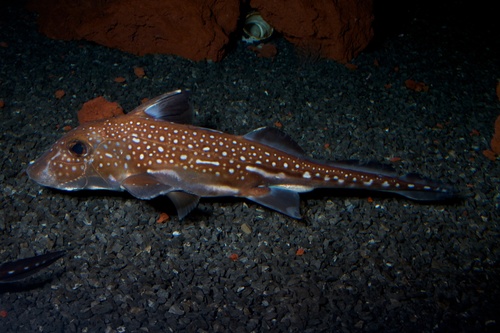
Same Order (c) Brian Gratwicke, some rights reserved (CC BY) · cc-by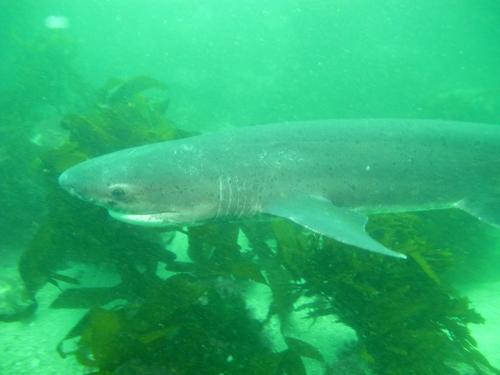
Predator (c) Derek Keats, some rights reserved (CC BY-SA) · cc-by-sa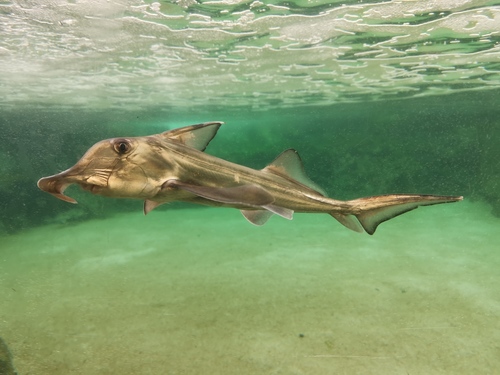
Close Relative (c) Devon Bowen, some rights reserved (CC BY-SA) · cc-by-sa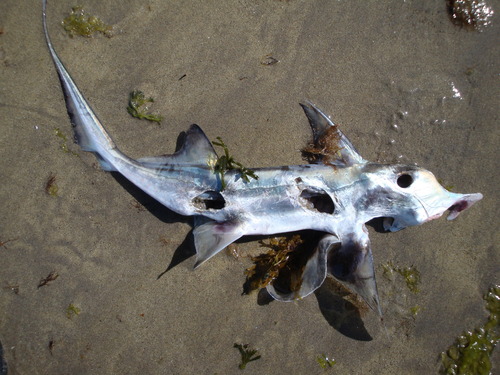
Close Relative (c) Nicolas Olejnik, some rights reserved (CC BY), uploaded by Nicolas Olejnik · cc-by
Help improve the field guideSomething wrong?
Checking your Fauna account…Report a name, category, or profile issue for review.