
Species
Haddock
Melanogrammus aeglefinusAlso known as Haddie
Haddock are cold-water bottom-dwellers instantly recognizable by a dark lateral line and an oval dark patch behind the gills, often called the devil's thumbprint. They form dense, migrating schools across sandy and gravel sea floors, rooting through sediment to uncover buried invertebrates. Historically foundational to North Atlantic commercial fisheries, their populations fluctuate heavily based on seasonal recruitment success and oceanic temperature shifts.
MarineCold-waterBottom-dweller
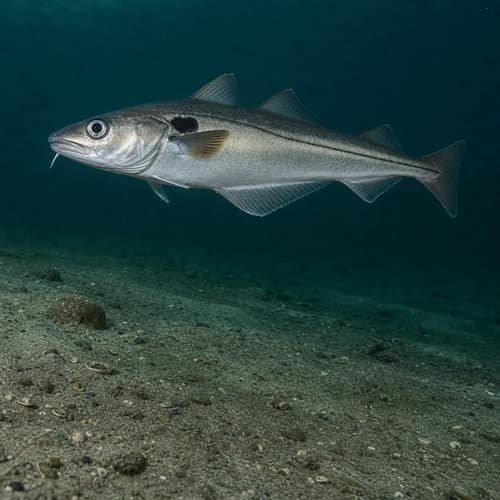
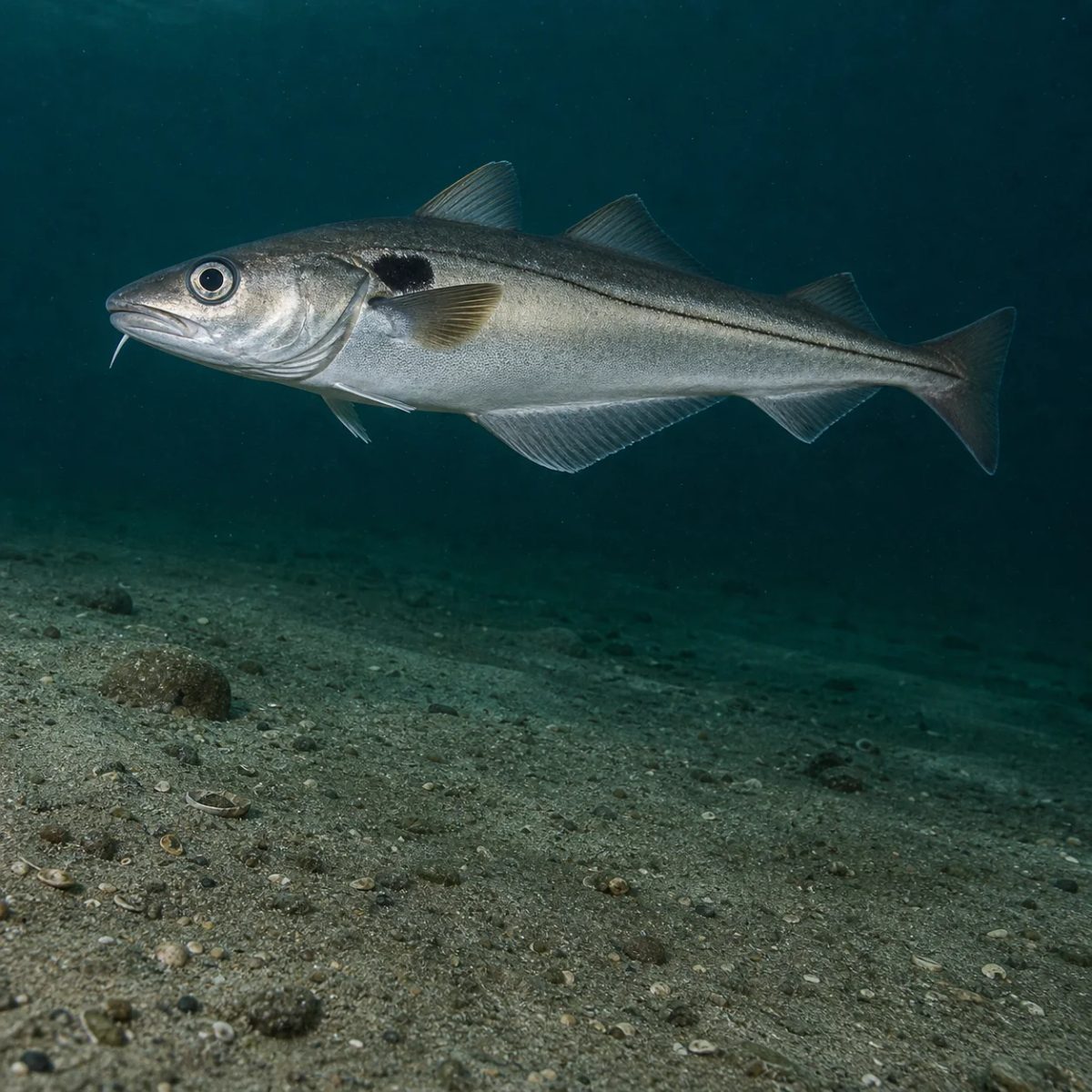
—observations
—countries
—peak records
VulnerableConservation statusIUCN Red List categoriesLCNTVUENCREWEXVulnerableRed List categories, explained →
Diet & preyOphiura brittlestars, Polychaete worms, Sand lance
Predators
- Atlantic cod
- Harbor seal
- Spiny dogfish
ThreatsCommercial overfishing, bottom trawl habitat disruption, and warming ocean temperatures
HabitatsContinental shelves and offshore gravel, rock, or shell seabeds at depths of 40 to 300 meters
Life span10–14 years
Classification
- FamilyGadidae
- SpeciesMelanogrammus aeglefinus
Range data is not available yet.
Interaction riskLow
- Low
- Moderate
- High
- Very high
- Why interaction risk is low
- Safe to observe at a normal distance.
- What to notice
- Recognizable by the dark, distinct lateral line against a silvery flank, topped by a dark black spot near the pectoral fin.
- Support conservation
- Comply strictly with regional catch-and-release guidelines and release bycatch quickly using deep-water descender devices.
Responsible observation
- Angling regulations: Check local seasonal quotas and size limits carefully, as haddock stocks are heavily managed.
- Identification mark: Look for the prominent dark blotch beneath the first dorsal fin to differentiate it from cod.
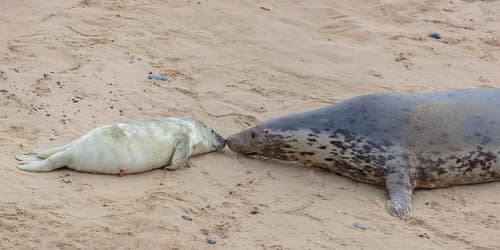
Predator Diego Delso / CC BY-SA 4.0 · cc-by-sa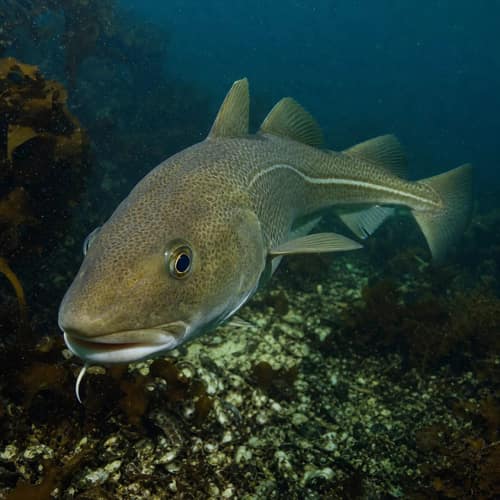
Close Relative NOAA / Public Domain (NOAA) · Public Domain (NOAA)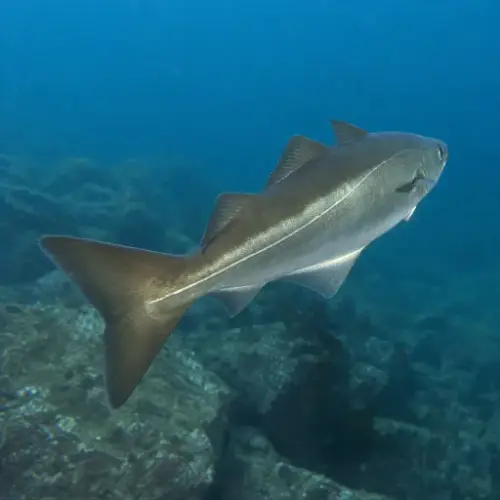
Close Relative Unknown / CC-BY · cc-by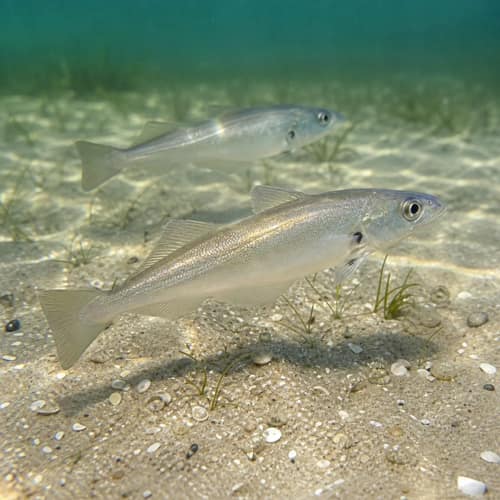
Same Family Georges Jansoone / CC BY 3.0 · CC BY 3.0
Help improve the field guideSomething wrong?
Checking your Fauna account…Report a name, category, or profile issue for review.