Also known as Golden Puffer, White-spotted Pufferfish, Spotted Puffer
Guineafowl puffers cruise coral reefs using undulating dorsal and anal fins, foraging primarily on the living tips of branching corals. They occur in two distinct color phases, a dark brown form specked with pure white dots and a brilliant bright yellow morph known as the golden puffer. When threatened, they swallow water to swell into a spiny sphere, deterring predators while carrying potent neurotoxins in their tissues.
ThreatsCoral reef degradation, warming ocean waters, and aquarium trade collection
HabitatsClear lagoon and seaward coral reefs rich in coral growth
Life span10–15 years
Classification
FamilyTetraodontidae
SpeciesArothron meleagris
Range & activity
Range data is not available yet.
Safe observation
Interaction riskHigh
Low
Moderate
High
Very high
Why interaction risk is high
Tissues contain deadly tetrodotoxin; never ingest and observe quietly without touching while diving or snorkeling.
Why it is dangerous
Internal organs and skin contain tetrodotoxin, an extraordinarily potent neurotoxin that blocks sodium channels, causing rapid paralysis, respiratory failure, and death if consumed.
How to recognize a risky encounter
Recognizable by the blunt heavy snout, lack of pelvic fins, and either a dark speckled or completely bright yellow body.
What to do
Never consume any part of this fish; observe at a safe distance underwater without attempting to touch or harass.
Responsible observation
Diving Etiquette: Keep a respectful distance and avoid cornering them, as forcing inflation causes severe metabolic stress.
Identification: Look for either a dark body dusted in hundreds of white spots or a solid vibrant canary-yellow body.
Beak Caution: Avoid offering fingers near the mouth, as their fused teeth can effortlessly shear through hard coral skeleton.

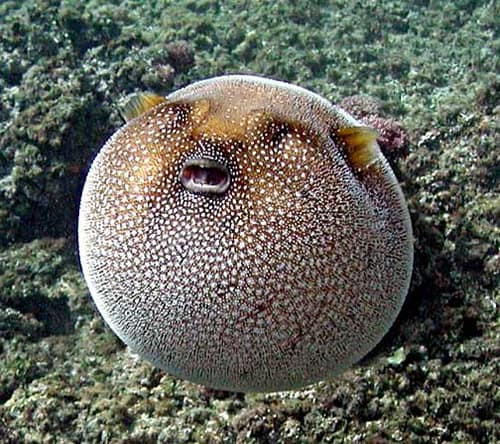
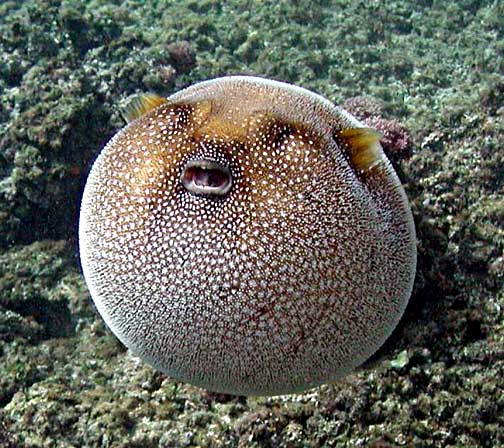
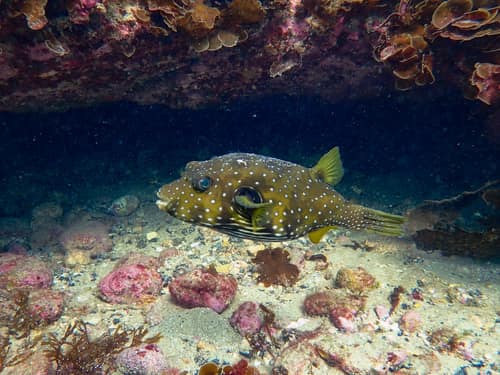
 Image unavailable