
Fish
Bridled Triggerfish
Sufflamen fraenatumAlso known as Masked Triggerfish
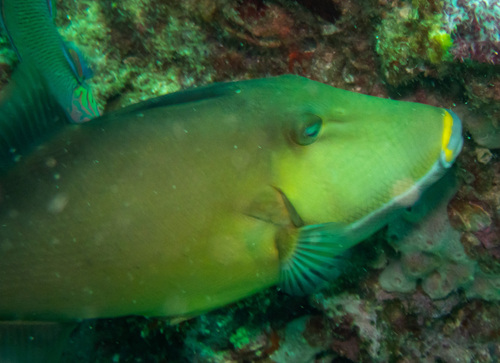
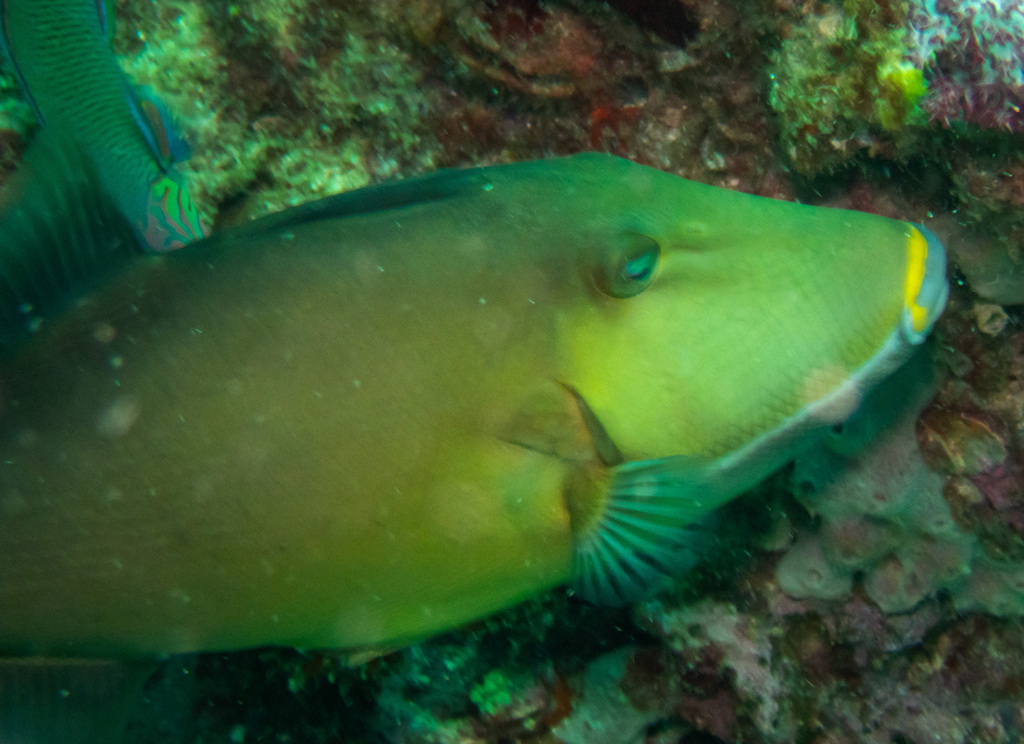
Bridled triggerfish cruise over sandy patches, lagoons, and outer reef slopes across the Indo-Pacific, using undulating dorsal and anal fins for precise, low-energy maneuvers. Mature males display a distinct pale pinkish-yellow bridle curving under the mouth, which rapidly shifts in intensity during courtship or territorial disputes. When darkness falls or danger approaches, they wedge securely into tight coral crevices by locking their stout first dorsal spine.
MarineReef DwellerTerritorial
—observations
—countries
—peak records
Least ConcernConservation statusIUCN Red List categoriesLCNTVUENCREWEXLeast ConcernRed List categories, explained →
Diet & preySea Urchins, Crabs, Bivalves
Predators
- Reef Sharks
- Groupers
- Moray Eels
ThreatsCoral reef degradation, warming ocean waters, and aquarium collection
HabitatsCoral reefs, lagoons, rocky drop-offs, and rubble slopes
Life span10–15 years
Classification
- OrderTetraodontiformes
- FamilyBalistidae
- GenusSufflamen
- SpeciesSufflamen fraenatum
Range data is not available yet.
Interaction riskLow
- Low
- Moderate
- High
- Very high
- Why interaction risk is low
- Capable of delivering a sharp defensive bite if cornered or guarding egg clutches; observe with distance.
- Why it is dangerous
- Powerful jaw musculature and sharp, chisel-like teeth designed for crushing heavy shells can cause painful puncture wounds and lacerations.
- How to recognize a risky encounter
- Look for a stocky, oval brown fish with a pale yellow-to-pink stripe running along the lower jaw past the pectoral fin.
- What to do
- Give active nests a wide berth, and back away horizontally rather than ascending if the fish begins posturing or darting forward.
Responsible observation
- Reef Etiquette: Float calmly above the substrate while watching it overturn rubble in search of burrowing prey.
- Nesting Clearance: Maintain wide clearance around sandy depressions during breeding cycles to avoid territorial charges.
- Night Spotting: Look inside overhangs and narrow caves with a dive light to observe its locked-spine sleeping posture.
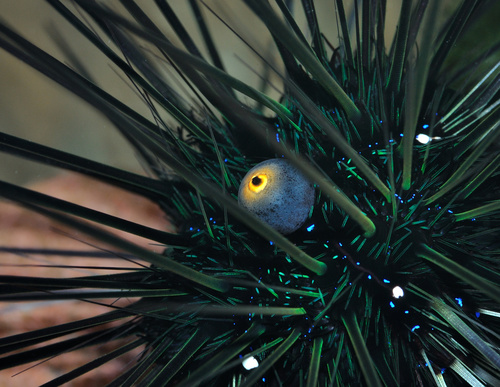
Prey (c) Quartl, some rights reserved (CC BY-SA) · cc-by-sa Image unavailable
Close Relative 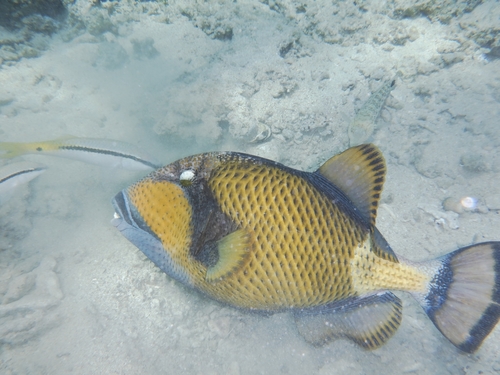
Same Family (c) Michal Honskus, some rights reserved (CC BY), uploaded by Michal Honskus · cc-by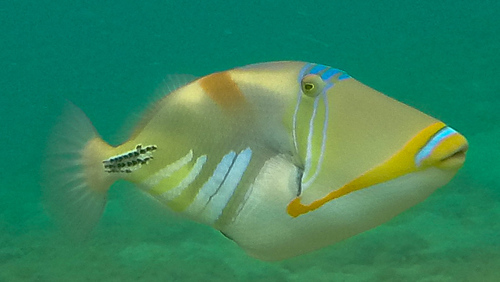
Same Family no rights reserved, uploaded by Scott Loarie · cc0
Help improve the field guideSomething wrong?
Checking your Fauna account…Report a name, category, or profile issue for review.