
Species
Harlequin Snake Eel
Myrichthys colubrinusAlso known as Banded Snake Eel, Ringed Snake Eel, Harlequin Eel, Colubrine Snake Eel
Harlequin snake eels glide gracefully over shallow sandy flats and seagrass beds, using hardened, pointed tails to burrow backward into the substrate within seconds. Their striking black-and-white banded pattern represents a classic case of Batesian mimicry, deterring predators by imitating highly venomous sea kraits. Probing loose sediment with sensitive, tubular nostrils, they actively root out concealed crabs and stomatopods across coral reef margins.
MarineBurrowerBatesian Mimic
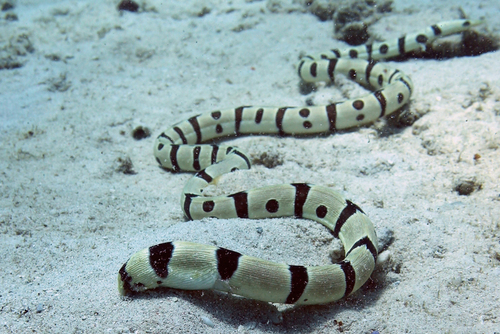
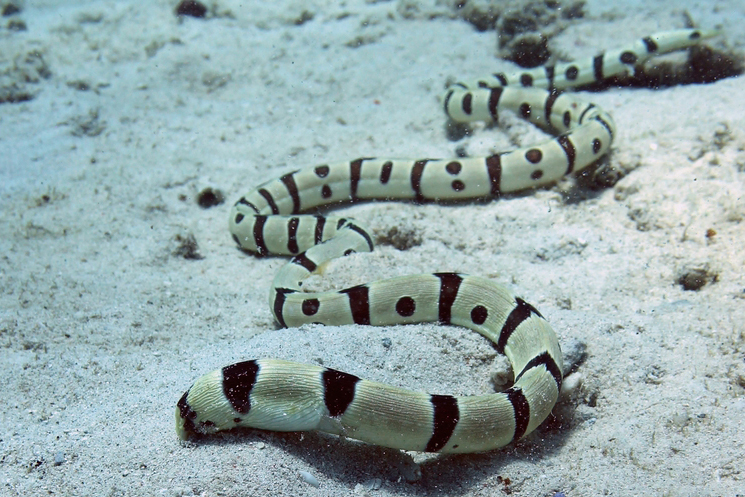
—observations
—countries
—peak records
Least ConcernConservation statusIUCN Red List categoriesLCNTVUENCREWEXLeast ConcernRed List categories, explained →
Diet & preySmall Crabs, Mantis Shrimp, Small Benthic Fish
Predators
- Reef Sharks
- Groupers
- Trevally
ThreatsCoastal development, reef degradation, and habitat loss
HabitatsShallow coral reefs, sandy lagoons, and seagrass meadows
Life span10–15 years
Classification
- FamilyOphichthidae
- SpeciesMyrichthys colubrinus
Range data is not available yet.
Interaction riskLow
- Low
- Moderate
- High
- Very high
- Why interaction risk is low
- Harmless and non-venomous; safe to observe from a respectful distance.
Responsible observation
- Spotting Technique: Scan sandy channels and reef margins where only their banded heads poke above the seafloor.
- Quiet Approach: Swim gently above the seabed without kicking up silt to avoid prompting them to burrow away.
- Look-alike Distinction: Inspect the tail tip, which is pointed and fleshy without the paddle fin seen on true sea snakes.
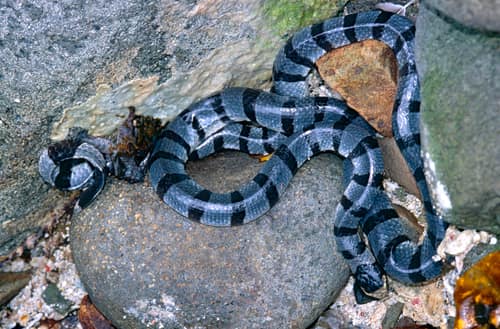
Mimicry Model (c) Bernard DUPONT, some rights reserved (CC BY-SA) · cc-by-sa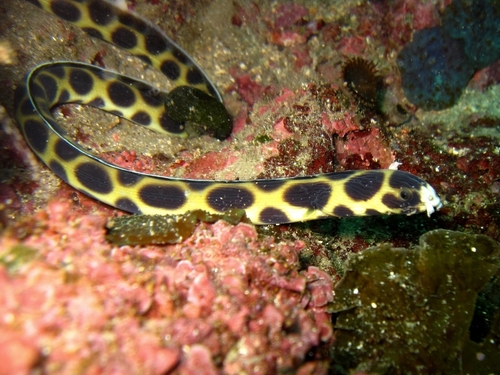
Close Relative (c) "Vincent C. Chen is a Taiwanese recreational diver and free diver who dedicate to underwater photography and the marine lives protection. He is also one of the contributors to EZDive magazine since 2008.", some rights reserved (CC BY-SA) · cc-by-sa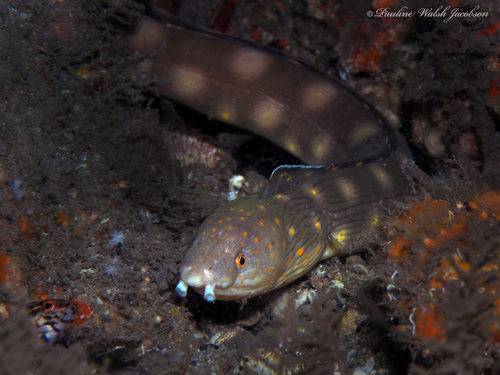
Close Relative (c) Pauline Walsh Jacobson, some rights reserved (CC BY), uploaded by Pauline Walsh Jacobson · cc-by Image unavailable
Same Family
Help improve the field guideSomething wrong?
Checking your Fauna account…Report a name, category, or profile issue for review.