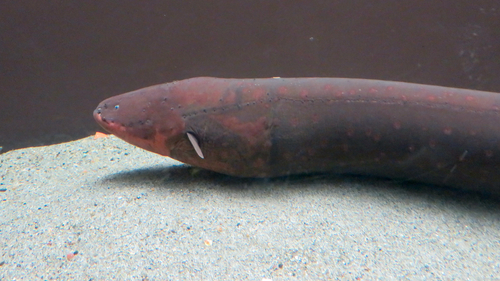
Electric eels navigate turbid South American waterways using low-voltage pulses to map their surroundings and detect hidden prey. Packed with thousands of specialized electrocytes, their elongated bodies can suddenly unleash high-voltage shocks exceeding 600 volts to stun fish and deter potential river predators. Because their gills are rudimentary, adults must periodically rise to the surface to gulp atmospheric air into heavily vascularized mouth linings.
ThreatsHabitat loss from deforestation, hydroelectric dam construction, and aquatic pollution
HabitatsMurky river backwaters, swamps, coastal streams, and flooded forest floors
Life span12–22 years
Classification
OrderGymnotiformes
FamilyGymnotidae
GenusElectrophorus
SpeciesElectrophorus electricus
Range & activity
Range data is not available yet.
Safe observation
Interaction riskHigh
Low
Moderate
High
Very high
Why interaction risk is high
Produces high-voltage electric discharges that can cause severe muscle spasms and drowning; do not approach in water.
Why it is dangerous
Specialized electrocytes produce simultaneous discharges up to 600 volts, causing involuntary muscular paralysis that can lead to cardiac arrest or drowning.
How to recognize a risky encounter
Look for a thick, dark cylindrical body lacking dorsal or pelvic fins, an orange-yellow throat, and small eyes set in a broad, flattened head.
What to do
Never touch an electric eel even if it appears stranded or dead, and immediately exit the water if an individual is spotted nearby.
Responsible observation
Surface Observation: Scan quiet river edges for the blunt snout breaking the surface every ten to fifteen minutes to gulp air.
Maintain Shore Distance: Stay clear of muddy banks and never wade into murky water where submerged eels may rest unseen.
Boat Safety: View from a dry watercraft using polarized sunglasses to spot the long brown body against the river bottom.

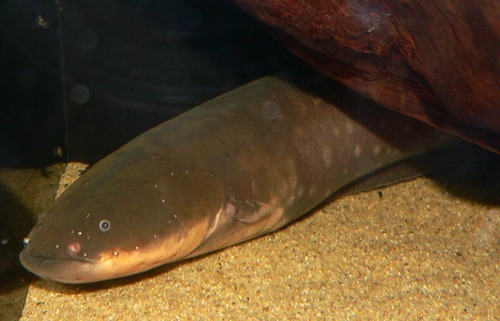
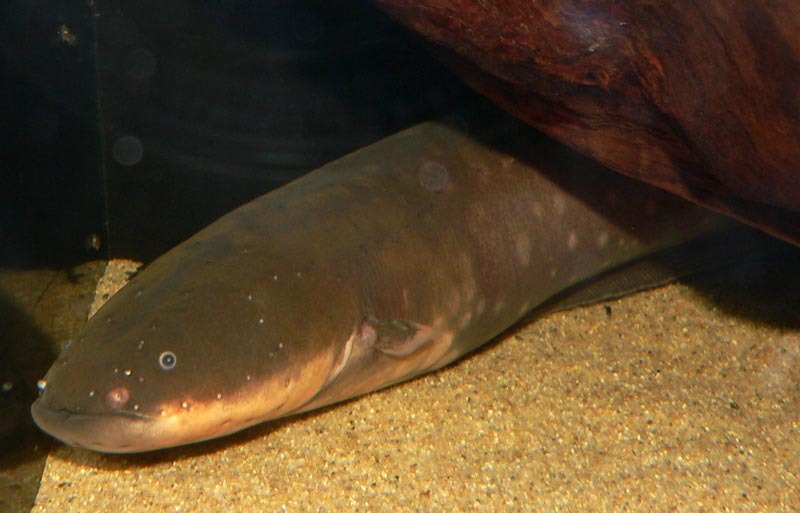
 Image unavailable