
Fish · GBIF taxon 2397850
Swordfish
Xiphias gladiusAlso known as Broadbill, Broadbill Swordfish
Swordfish slice through deep ocean waters using their flattened, sword-like bills to slash and disable fast-swimming prey. Special heating organs near their eyes keep their brains and vision warm in frigid depths below five hundred meters, allowing them to hunt effectively during massive daily vertical migrations. Adults lack teeth and scales entirely, relying on sheer speed, power, and precise bill strikes to dominate open ocean ecosystems worldwide.
MarineApex PredatorMigratory
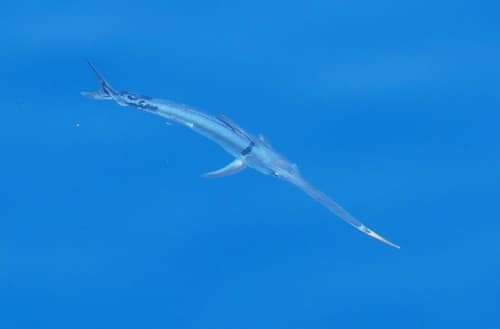

—observations
—countries
—peak records
Near ThreatenedConservation statusIUCN Red List categoriesLCNTVUENCREWEXNear ThreatenedRed List categories, explained →
Diet & prey
- Squid
- Mackerel
- Lanternfish
Predators
- Killer Whale
- Shortfin Mako Shark
- Great White Shark
ThreatsOverfishing, longline bycatch, plastic pollution
HabitatsOpen ocean, pelagic waters, tropical to temperate seas
Life span9–15 years
Size / weightNot available
Classification
- FamilyXiphiidae
- SpeciesXiphias gladius
Range data is not available yet.
Interaction riskHigh
- Low
- Moderate
- High
- Very high
- Why interaction risk is high
- Powerful bill and thrashing body can cause serious injury if brought aboard; observe safely from boats.
- Why it is dangerous
- Possesses a rigid, razor-edged bill and immense muscle capacity capable of delivering fatal puncture wounds when thrashing on deck.
- How to recognize a risky encounter
- Look for a long, flattened upper jaw resembling a broadsword and a dark, cylindrical body lacking ventral fins.
- What to do
- Never bring an active live billfish onto a boat deck; allow fishers or experts to handle gear safely from the water.
- What to notice
- Recognizable by its immense broad bill, large dark eyes adapted for dark depths, and tall curved dorsal fin.
- Support conservation
- Advocate for sustainable fishing quotas and release non-target pelagic species immediately using circle hooks.
Responsible observation
- Responsible Boating: Maintain a respectable distance from surface-feeding or basking individuals to avoid collisions.
- Sustainable Seafood: Choose line-caught swordfish from well-managed fisheries to support population recovery.
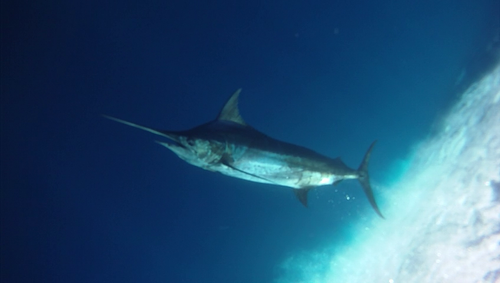
Competitor (c) Michel Frisch, some rights reserved (CC BY), uploaded by Michel Frisch · cc-by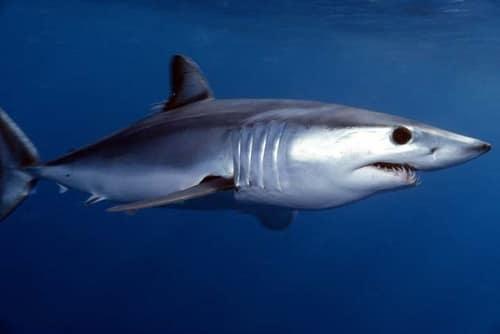
Predator (c) jidanchaomian, some rights reserved (CC BY-SA) · cc-by-sa Image unavailable
Prey 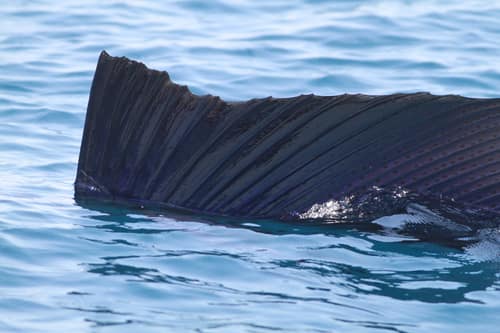
Pelagic Relative (c) harrier, some rights reserved (CC BY) · cc-by
Help improve the field guideSomething wrong?
Checking your Fauna account…Report a name, category, or profile issue for review.