
Fish · GBIF taxon 2394736
Spotted Scat
Scatophagus argusAlso known as Butterfish, Mia Mia, Spotted Butterfish, Argusfish
Spotted scats are highly adaptable coastal teleosts known for shifting from freshwater nursery streams to brackish estuaries and fully marine reefs as they mature. Schools graze along muddy substrates, mangrove prop roots, and wharf pilings, using flattened spade-shaped bodies and comb-like teeth to scrape biofilms, filamentous algae, and detritus. When threatened by larger predatory fish or wading birds, they erect sharp, mildly venomous dorsal and anal spines to deter attackers.
BrackishSchoolingEuryhaline
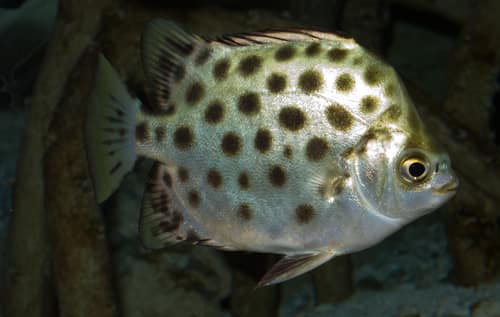
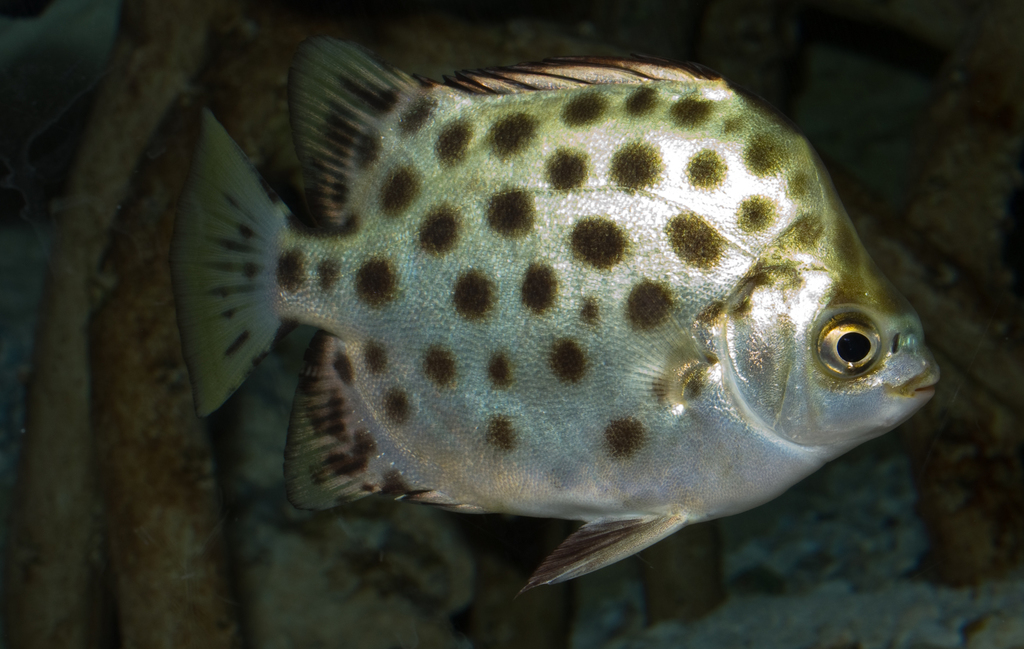
—observations
—countries
—peak records
Least ConcernConservation statusIUCN Red List categoriesLCNTVUENCREWEXLeast ConcernRed List categories, explained →
Diet & prey
- Filamentous Algae
- Polychaete Worms
- Small Crustaceans
Predators
- Barramundi
- Mangrove Jack
- Estuarine Crocodiles
ThreatsCoastal habitat destruction, mangrove deforestation, pollution from port runoff, and local overfishing.
HabitatsMangrove swamps, brackish estuaries, harbors, muddy coastal bays, and freshwater lower river courses.
Life span10–20 years
Classification
- OrderPerciformes
- FamilyScatophagidae
- GenusScatophagus
- SpeciesScatophagus argus
Range data is not available yet.
Interaction riskVery high
- Low
- Moderate
- High
- Very high
- Why interaction risk is very high
- Dorsal and anal spines deliver a mildly venomous, painful sting; avoid touching without protective gear.
- Why it is dangerous
- Dorsal, anal, and pelvic spines contain venom glands that inject toxins capable of causing intense throbbing pain, swelling, and localized numbness.
- How to recognize a risky encounter
- Recognizable by its disc-shaped, laterally compressed body covered in round dark spots over a greenish or bronzy-red base.
- What to do
- Never pick up bare-handed from an angler line or aquarium; immerse accidental punctures in non-scalding hot water to break down venom proteins.
Responsible observation
- Handling Precaution: Use thick puncture-resistant gloves or a net if handling, as fin spines cause intense localized pain.
- Estuary Spotting: Look around sheltered mangrove roots and boat docks during high tide where juveniles actively graze biofilms.
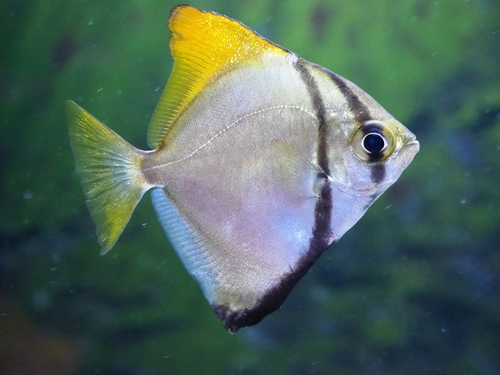
Frequent Companion (c) Lawrencekhoo, some rights reserved (CC BY-SA) · cc-by-sa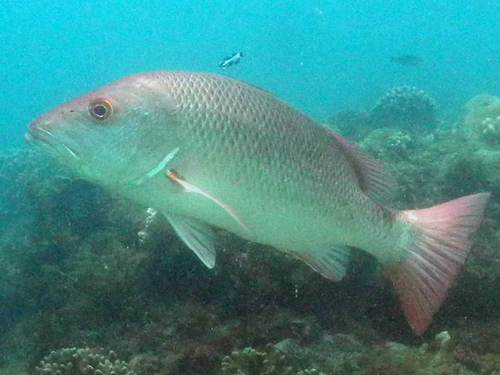
Predator (c) Ewout Knoester, some rights reserved (CC BY-SA), uploaded by Ewout Knoester · cc-by-sa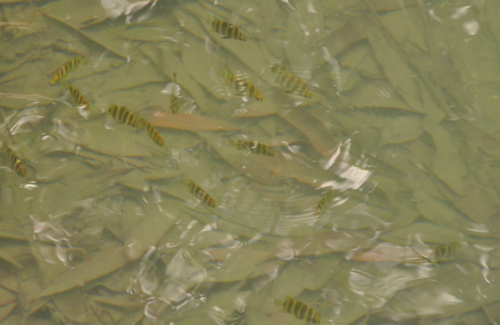
Close Relative (c) Josip Skejo, some rights reserved (CC BY), uploaded by Josip Skejo · cc-by Image unavailable
Same Family
Help improve the field guideSomething wrong?
Checking your Fauna account…Report a name, category, or profile issue for review.