
Species
Rainbow Parrotfish
Scarus guacamaiaAlso known as Guacamaia Parrotfish
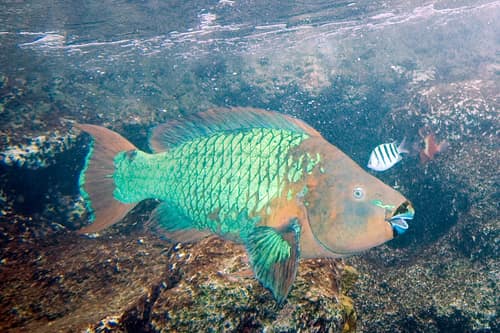
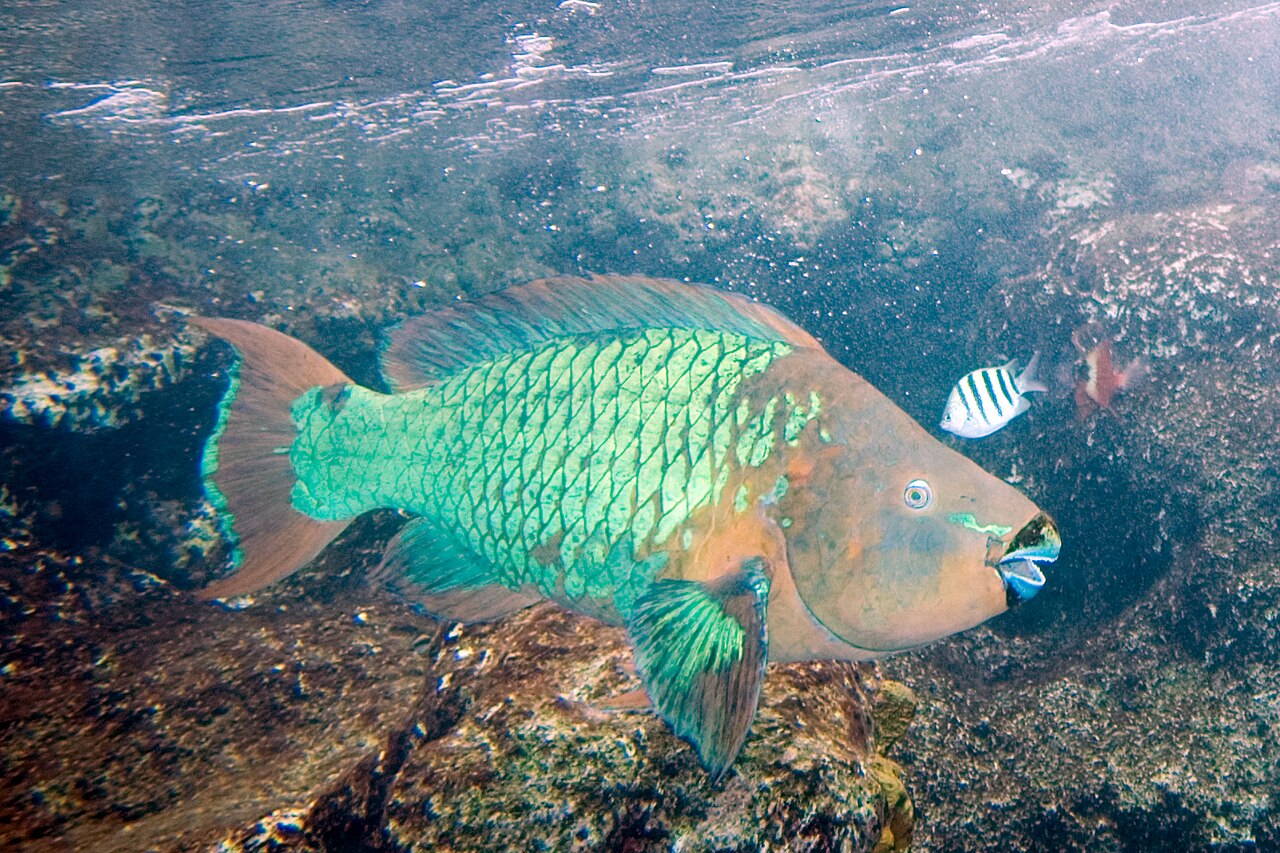
Rainbow parrotfish are the largest herbivorous fish on Atlantic coral reefs, wielding robust fused teeth that scrape turf algae, encrusting sponges, and dead coral rock. Juveniles rely exclusively on dense mangrove prop-root systems for nursery habitat before migrating seaward to exposed reef slopes as adults. At night, individuals often wedge into reef crevices and envelop themselves in a transparent mucus cocoon that masks their scent from hunting moray eels.
MarineCoral ReefHerbivore
—observations
—countries
—peak records
Near ThreatenedConservation statusIUCN Red List categoriesLCNTVUENCREWEXNear ThreatenedRed List categories, explained →
Diet & preyTurf Algae, Encrusting Sponges, Halimeda Algae
Predators
- Caribbean Reef Shark
- Nassau Grouper
- Great Barracuda
ThreatsMangrove habitat destruction, coral reef degradation, and spearfishing pressure
HabitatsCoral reefs, mangrove lagoons, and adjacent seagrass beds
Life span15–20 years
Classification
- FamilyScaridae
- SpeciesScarus guacamaia
Range data is not available yet.
Interaction riskLow
- Low
- Moderate
- High
- Very high
- Why interaction risk is low
- Safe to observe at a normal distance.
- What to notice
- Easily spotted as the largest parrotfish in the Atlantic, showing bright orange-brown head coloring and rich turquoise-green flanks.
- Support conservation
- Observe quietly without blocking reef swim-throughs or corralling fish against coral heads.
Responsible observation
- Reef Etiquette: Maintain a buffer of several meters to let them graze peacefully without startling them into flight.
- Listening Underwater: Listen closely while snorkeling to hear the distinct scraping and crunching of their beak against coral.
 Image unavailable
Same Genus 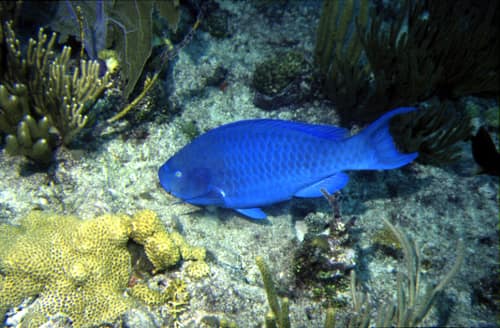
Same Genus Derek Keats from Johannesburg, South Africa / CC BY 2.0 · cc-by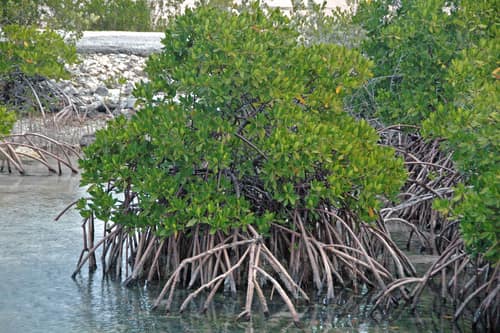
Host Plant (c) James St. John, some rights reserved (CC BY) · cc-by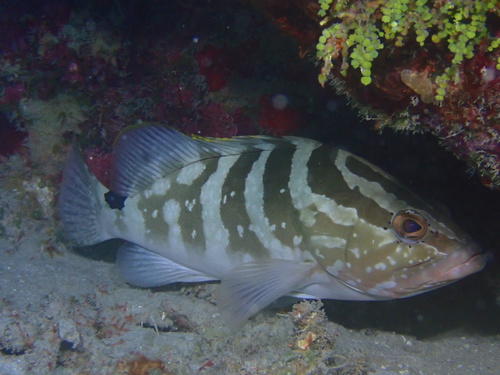
Predator (c) Robin White, some rights reserved (CC BY), uploaded by Robin White · cc-by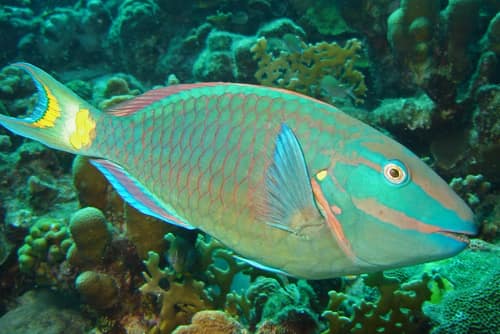
Same Family Adona9 at English Wikipedia / CC BY-SA 3.0 · cc-by-sa
Help improve the field guideSomething wrong?
Checking your Fauna account…Report a name, category, or profile issue for review.