Eastern blue gropers are exceptionally curious coastal wrasses renowned for approaching divers and snorkelers like friendly underwater companions. Born exclusively as females with reddish-brown or green hues, dominant individuals transition into bright cobalt-blue males as they age and grow. Their powerful peg-like teeth easily pry hard-shelled molluscs, crabs, and sea squirts from exposed sandstone ledges.
ThreatsHistorical overfishing, illegal spearfishing, and hooking by recreational anglers
HabitatsExposed rocky reefs, kelp forests, and estuarine seagrass beds
Life spanUp to 35 years
Classification
FamilyLabridae
SpeciesAchoerodus viridis
Range & activity
Range data is not available yet.
Safe observation
Interaction riskLow
Low
Moderate
High
Very high
Why interaction risk is low
Safe to observe at a normal distance.
What to notice
Large, heavy-bodied wrasse with fleshy lips, paddle-like tails, and solid coloration (males deep blue, females mottled brown to green).
Support conservation
Maintain a respectful observational distance, never attempt to touch or feed them, and follow all local marine sanctuary and line-fishing restrictions.
Responsible observation
Diving Encounter: Stay still and allow them to approach, as their natural curiosity often brings them within arm's reach.
No Hand-Feeding: Avoid offering food, which disrupts natural foraging habits and can lead to accidental bites from strong jaws.

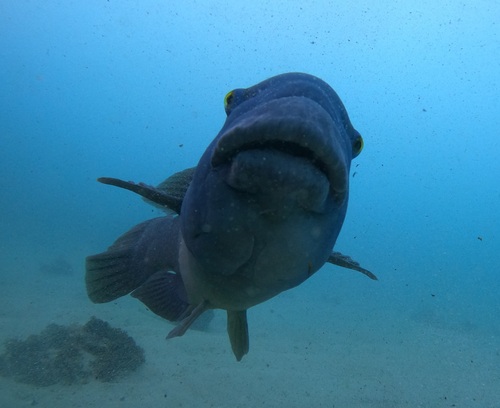
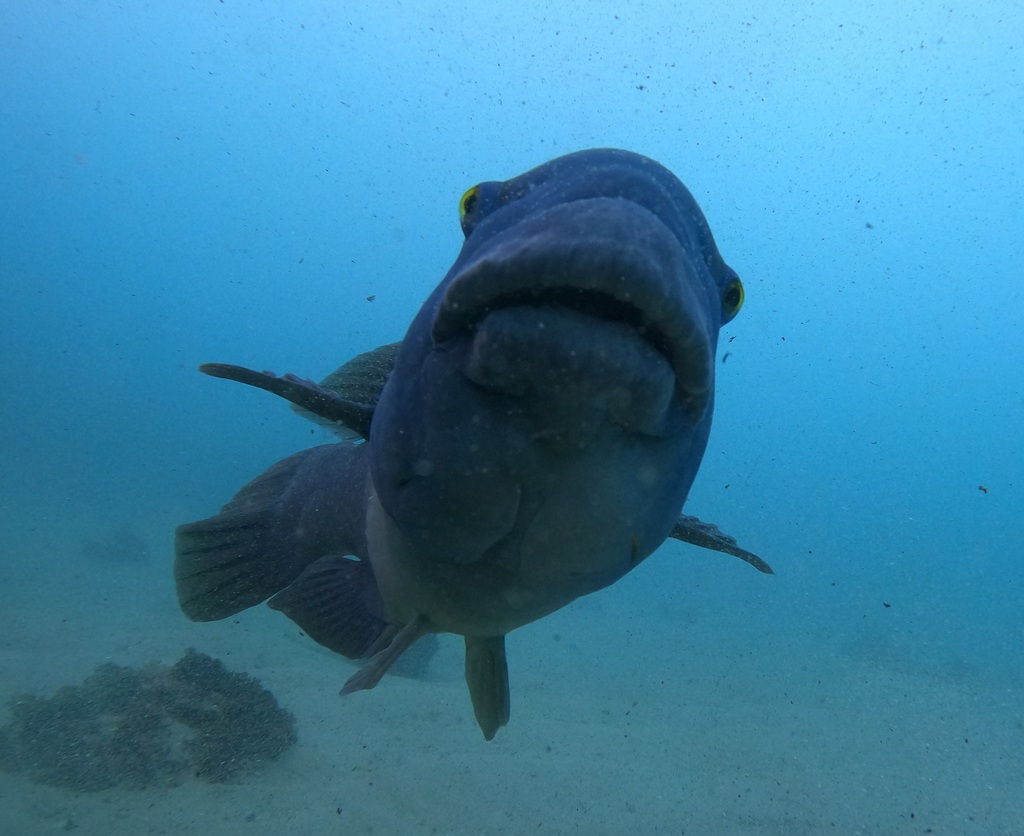
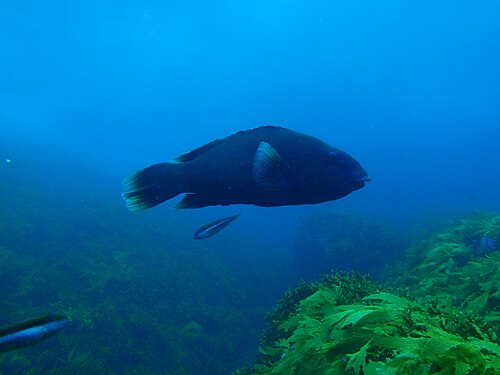
 Image unavailable