
Species
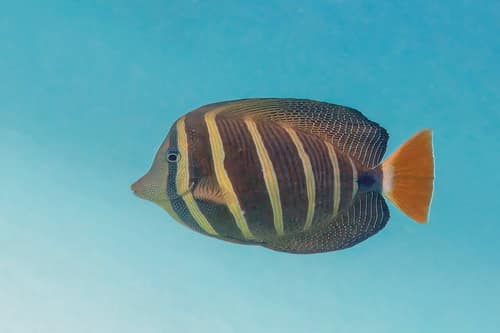
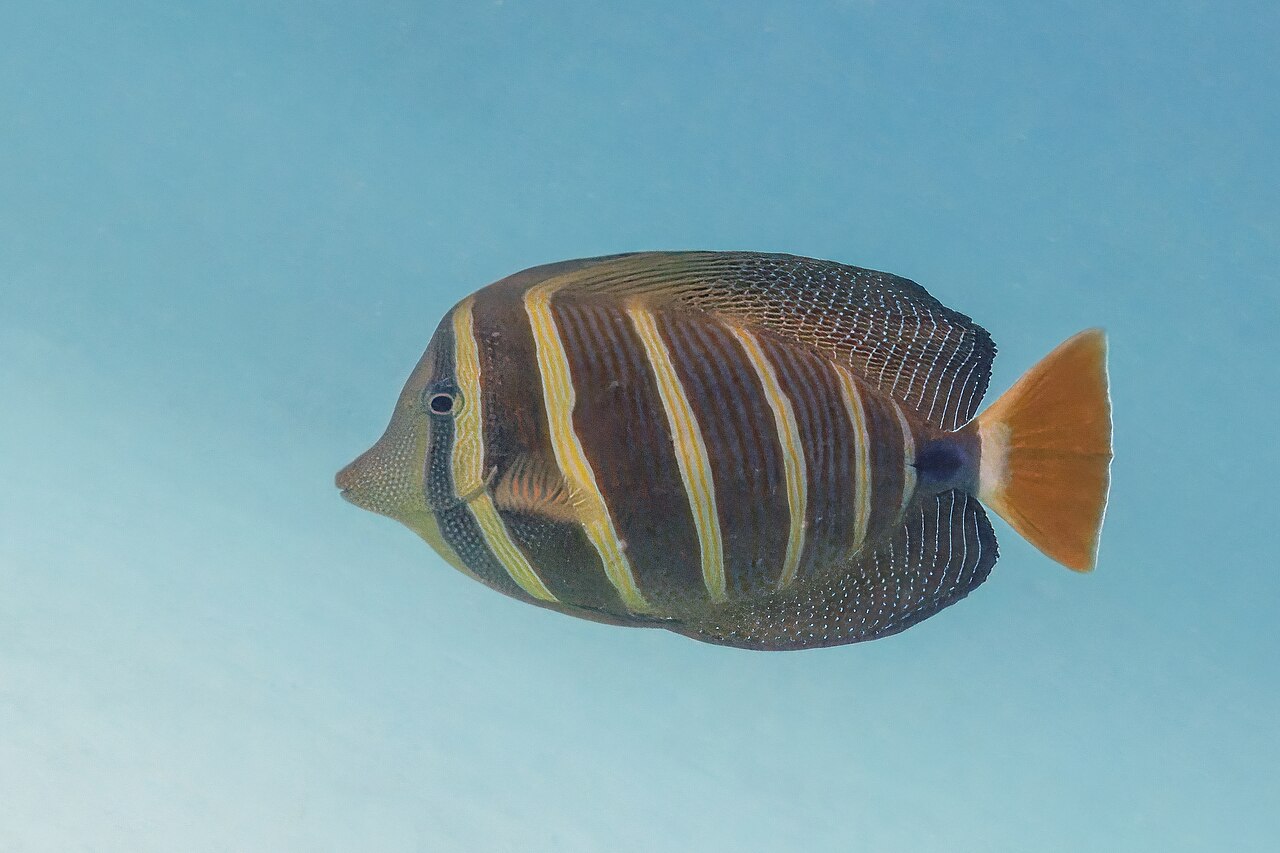
Sailfin Tang
Zebrasoma veliferumAlso known as Pacific Sailfin Tang, Purple Sailfinned Tang, Sailfin Surgeonfish
Sailfin tangs cruise over coral formations during daylight hours, using specialized pharyngeal teeth to scrape turf algae and microalgae off rock surfaces. When alarmed or asserting dominance, they dramatically erect their oversized dorsal and anal fins, instantly doubling their apparent profile. Adults typically roam singly or in pairs across lagoons and seaward reefs, performing an essential ecological service by preventing algae from smothering living corals.
Reef DwellerHerbivorousDiurnal
—observations
—countries
—peak records
Least ConcernConservation statusIUCN Red List categoriesLCNTVUENCREWEXLeast ConcernRed List categories, explained →
Diet & preyFilamentous Algae, Turf Algae, Detritus
Predators
- Groupers
- Moray Eels
- Reef Sharks
ThreatsCoral reef degradation, climate change, and localized aquarium trade harvesting
HabitatsCoral-rich lagoons, outer reef flats, and seaward reef slopes
Life span20–30 years
Classification
- FamilyAcanthuridae
- SpeciesZebrasoma veliferum
Range data is not available yet.
Interaction riskLow
- Low
- Moderate
- High
- Very high
- Why interaction risk is low
- Sharp caudal spine blades on the tail base can cause deep lacerations; avoid cornering or handling.
- Why it is dangerous
- Carries folding, scalpel-sharp spines on either side of the tail base that can slash deeply into skin when thrashing defensively.
- How to recognize a risky encounter
- Look for alternating dark brown and yellow vertical bands across a high-bodied disk with vast, sail-like fins.
- What to do
- Observe peacefully while snorkeling or diving, and never grab or attempt to net the fish by hand.
Responsible observation
- Reef Etiquette: Maintain neutral buoyancy and give grazing tangs ample room along the reef crest.
- Fin Displays: Watch for sudden flaring of dorsal and anal fins when two fish dispute feeding patches.
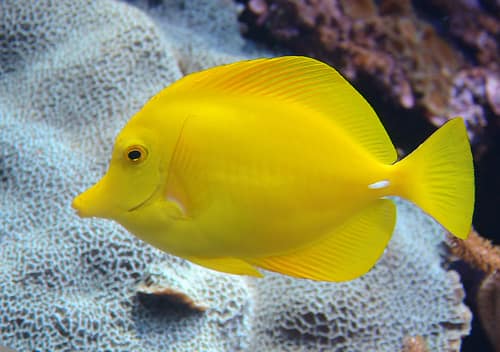
Same Genus (c) User:Amada44, some rights reserved (CC BY) · cc-by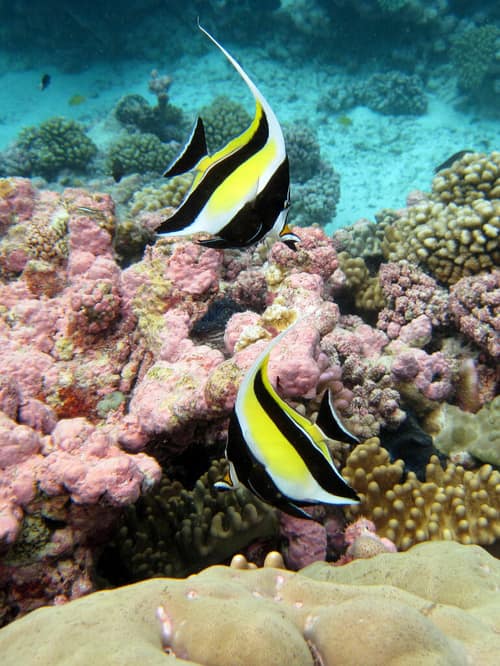
Neighbor (c) NOAA Photo Library, some rights reserved (CC BY) · cc-by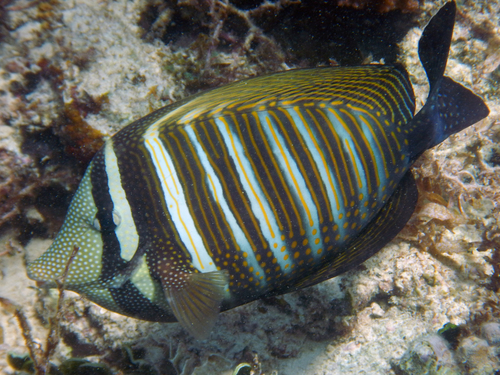
Close Relative (c) Ewout Knoester, some rights reserved (CC BY-SA), uploaded by Ewout Knoester · cc-by-sa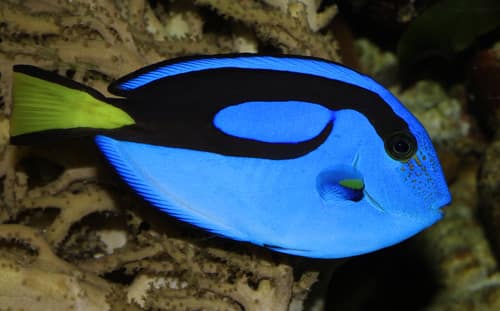
Same Family (c) H. Krisp, some rights reserved (CC BY) · cc-by
Help improve the field guideSomething wrong?
Checking your Fauna account…Report a name, category, or profile issue for review.