
Fish · GBIF taxon 2375731
Giant Mudskipper
Periophthalmodon schlosseriGiant Mudskippers are large amphibious gobies with raised eyes, muscular pectoral fins, and olive bodies marked by darker bars. They move across exposed mud, defend burrow territories, and retreat as tides cover the flat.
amphibious fishmudflatburrow defender
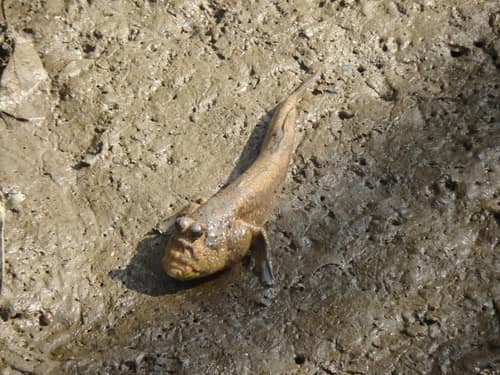
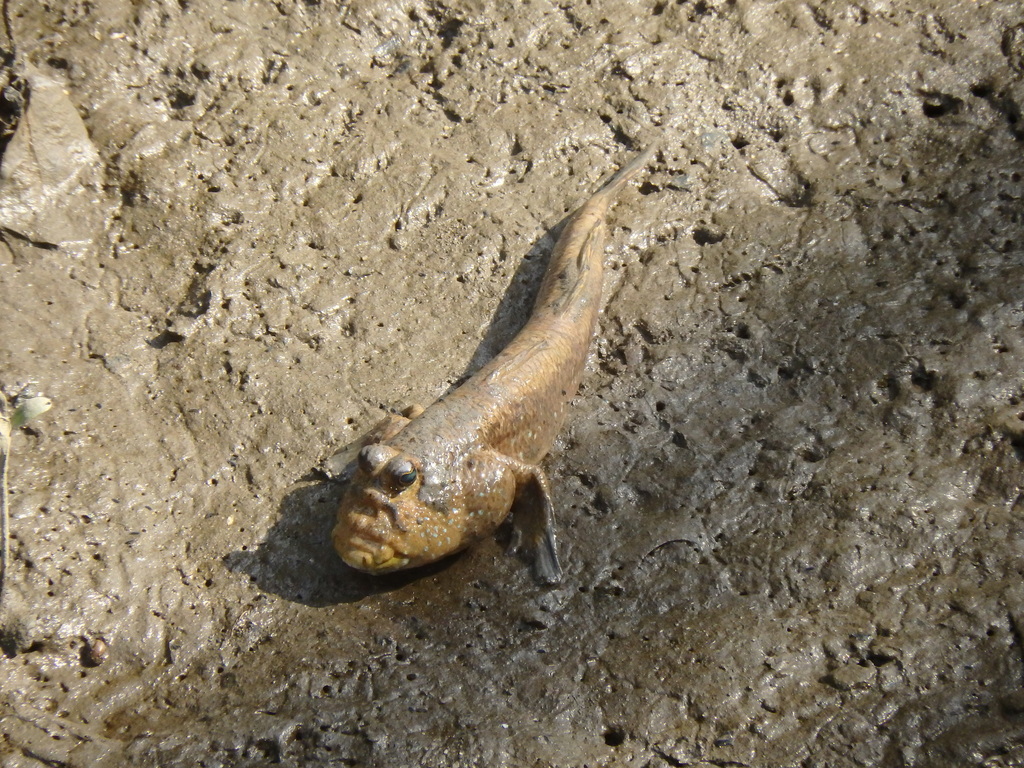
—observations
—countries
—peak records
Least ConcernConservation statusIUCN Red List categoriesLCNTVUENCREWEXLeast ConcernRed List categories, explained →
Diet & prey
- small crabs
- worms
- small fish
Predators
- herons
- larger fish
- water snakes
ThreatsMangrove clearing, shoreline development, oil pollution, contaminated sediment, and altered tides
HabitatsMangrove mudflats, estuaries, tidal creeks, brackish shores, and lower river margins
Life spanLikely several years, with exact wild longevity not well documented
Size / weightNot available
Classification
- FamilyGobiidae
- SpeciesPeriophthalmodon schlosseri
Range data is not available yet.
Interaction riskLow
- Low
- Moderate
- High
- Very high
- Why interaction risk is low
- A captured Giant Mudskipper can bite with strong jaws; never grab or corner it.
- Why it is dangerous
- A large territorial mudskipper can use its strong jaws defensively when trapped or handled.
- How to recognize a risky encounter
- Confirm a large olive mudskipper with raised eyes, dark body bars, and powerful pectoral fins.
- What to do
- Do not catch, touch, or block the fish; rinse and clean any accidental bite that breaks skin.
Responsible observation
- Watch: Stand still on firm ground and wait for animals to resume territorial displays.
- Protect: Avoid stepping near burrow mouths or crossing soft mangrove mud.
Help improve the field guideSomething wrong?
Checking your Fauna account…Report a name, category, or profile issue for review.