
Fish
Blue Ram Cichlid
Mikrogeophagus ramireziAlso known as Ram Cichlid, Butterfly Cichlid, Ramirez's Dwarf Cichlid
Ram cichlids glide across warm, vegetated savanna pools in the Orinoco basin, sifting mouthfuls of fine sand to filter out insect larvae and tiny crustaceans. Breeding pairs form close monogamous bonds, meticulously cleaning flat stones or digging shallow pits where both parents defend their translucent eggs and free-swimming fry. Highly sensitive to water quality and thermal fluctuations, they thrive exclusively in exceptionally warm, quiet backwaters shielded by fallen wood and floating plants.
FreshwaterColorfulEgg Layer
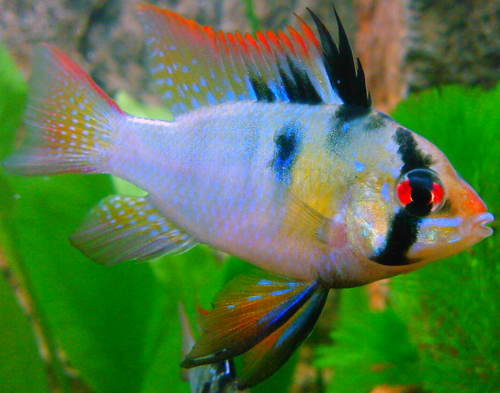
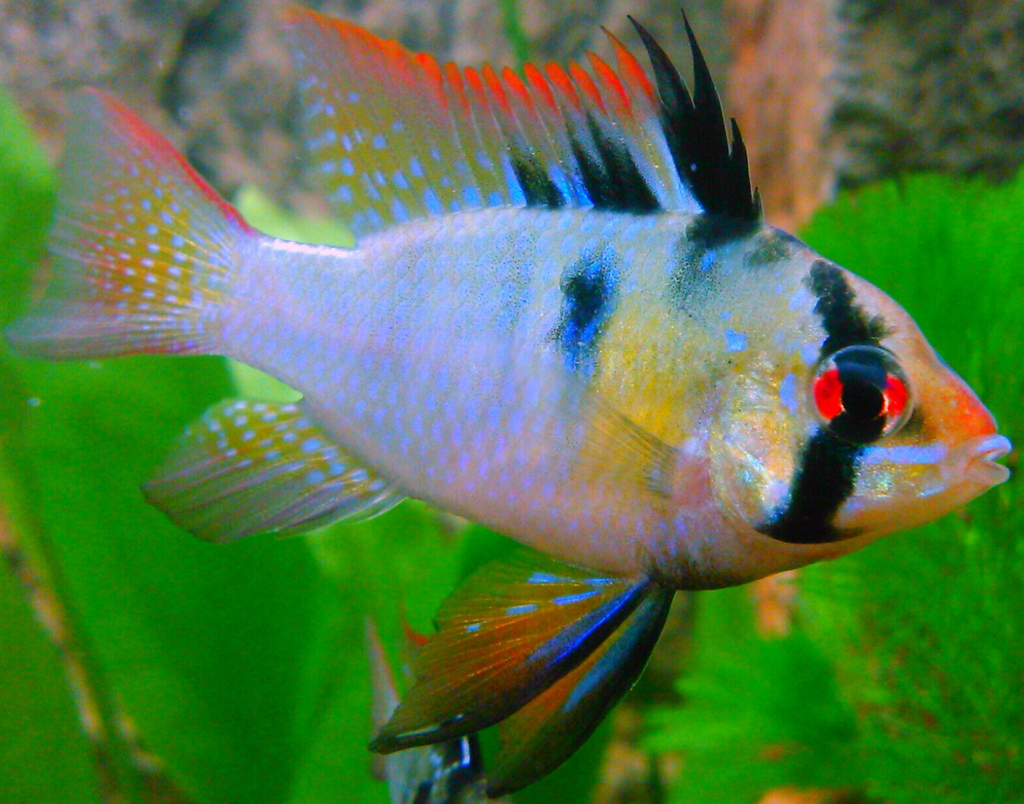
—observations
—countries
—peak records
Least ConcernConservation statusIUCN Red List categoriesLCNTVUENCREWEXLeast ConcernRed List categories, explained →
Diet & preyInsect larvae (chironomids, mosquito wrigglers), Small crustaceans (cladocerans, copepods), Aquatic worms and organic detritus
Predators
- Piscivorous birds (kingfishers, herons)
- Larger characiform fishes
- Pimelodid catfishes
ThreatsAgricultural runoff, habitat degradation, and localized overcollection
HabitatsWarm, slow-moving streams, lagoons, and flooded savanna wetlands
Life span2–4 years
Classification
- OrderPerciformes
- FamilyCichlidae
- GenusMikrogeophagus
- SpeciesMikrogeophagus ramirezi
Range data is not available yet.
Interaction riskLow
- Low
- Moderate
- High
- Very high
- Why interaction risk is low
- Safe to observe at a normal distance.
Responsible observation
- Habitat Spotting: Look in calm, sunlit shallows with fine sand beds and dense vegetation.
- Parental Care: Watch for pairs actively fanning substrate nests and herding tight swarms of fry.
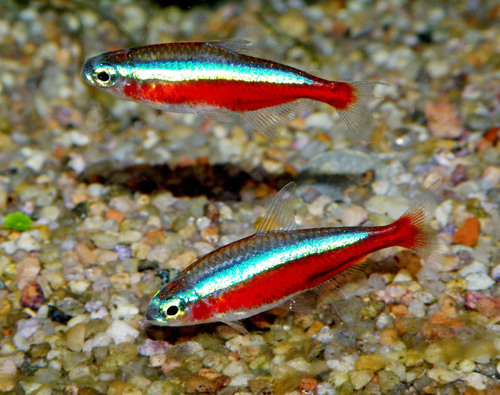
Frequent Companion (c) CHUCAO, some rights reserved (CC BY-SA) · cc-by-sa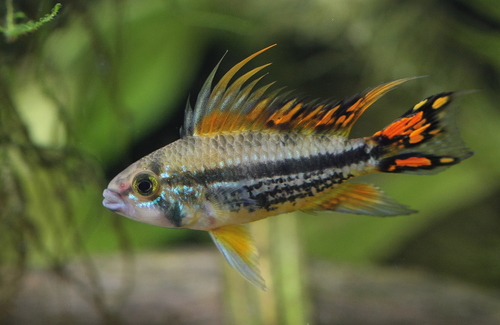
Neighbor (c) Dornenwolf, some rights reserved (CC BY) · cc-by Image unavailable
Frequent Companion 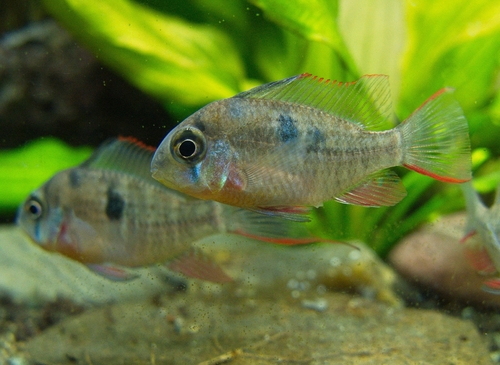
Close Relative (c) Gunnar Ries zwo, some rights reserved (CC BY-SA) · cc-by-sa
Help improve the field guideSomething wrong?
Checking your Fauna account…Report a name, category, or profile issue for review.