
Fish
Tambaqui
Colossoma macropomumAlso known as Black Pacu, Black-finned Pacu, Giant Pacu, Cachama
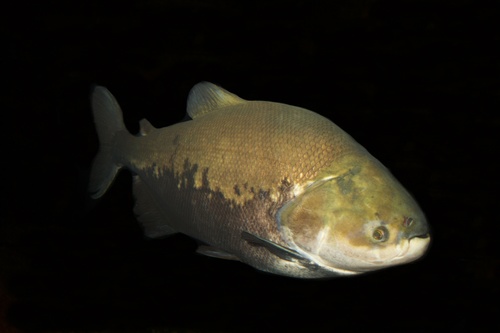
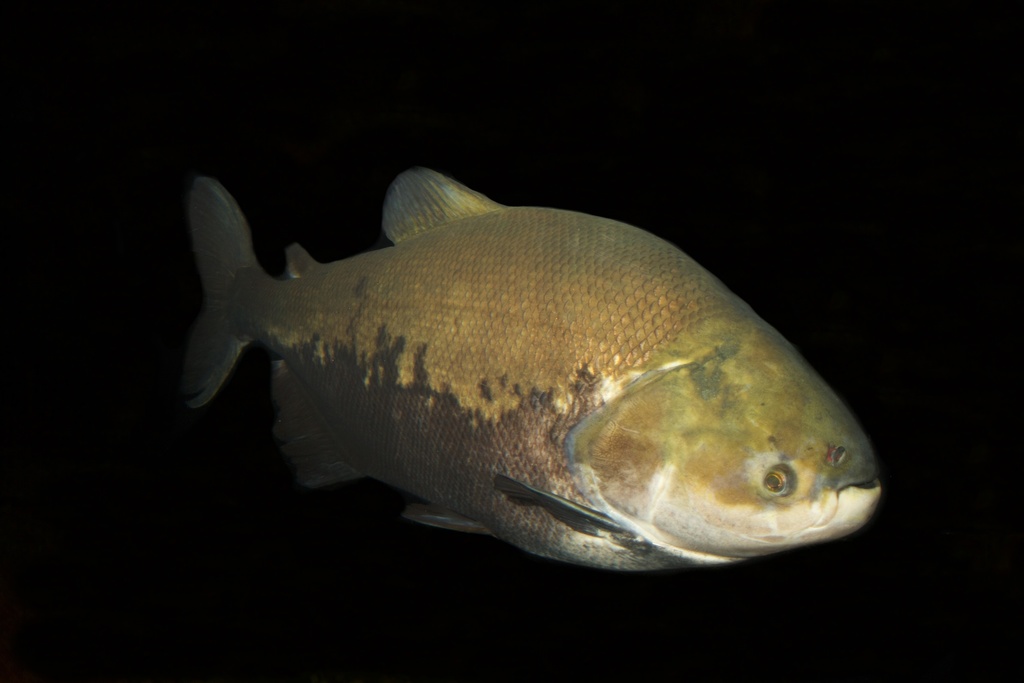
Tambaqui navigate the flooded forests of South America during seasonal high waters, using extraordinarily strong jaws and human-like molar teeth to crush hard rubber seeds and palm fruits. They play a vital ecological role as long-distance seed dispersers, swimming through inundated canopies to consume and spread forest vegetation. Juvenile fish filter zooplankton in open river waters before maturing into deep-bodied, black-finned adults that can weigh over thirty kilograms.
FreshwaterFruit EaterAmazonian
—observations
—countries
—peak records
Near ThreatenedConservation statusIUCN Red List categoriesLCNTVUENCREWEXNear ThreatenedRed List categories, explained →
Diet & preyRubber Tree Seeds, Palm Fruits, Zooplankton
Predators
- Jaguar
- Black Caiman
- Giant Otter
ThreatsOverfishing, dam construction, and deforestation of seed-bearing floodplain forests
HabitatsFlooded forests, rivers, oxbow lakes, and floodplain lakes
Life spanUp to 40 years
Classification
- OrderCharaciformes
- FamilySerrasalmidae
- GenusColossoma
- SpeciesColossoma macropomum
Range data is not available yet.
Interaction riskLow
- Low
- Moderate
- High
- Very high
- Why interaction risk is low
- Possesses powerful jaws designed to crush hard nuts; handle landed fish with extreme care.
- Why it is dangerous
- Equipped with dense molar teeth and extremely powerful jaw muscles designed to crush nuts, capable of inflicting severe crushing injuries.
- How to recognize a risky encounter
- Recognized by its deep, compressed body, dark grey to black lower fins, and broad crushing teeth.
- What to do
- Never place fingers near or inside the mouth of a landed fish; use long-nosed pliers to clear hooks safely.
- What to notice
- Large, dark-colored characin with high body depth native to the Amazon and Orinoco river basins.
- Support conservation
- Practice catch-and-release using barbless hooks, minimizing air exposure and supporting the belly.
Responsible observation
- Observation: Look for feeding activity in flooded Amazonian forests during the rainy season when fruits fall into the water.
- Handling: Keep fingers well away from the mouth when unhooking, using long pliers to avoid crushing bites.
- Ethical Angling: Support the fish beneath its heavy body when lifting to avoid injuring internal organs before release.
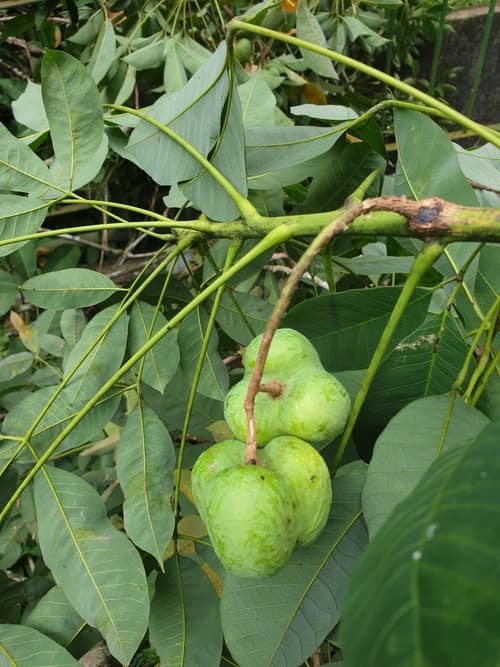
Food Source (c) Cheongweei Gan, some rights reserved (CC BY-SA), uploaded by Cheongweei Gan · cc-by-sa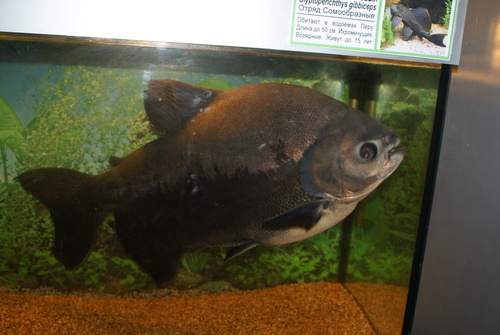
Close Relative (c) Хомелка, some rights reserved (CC BY-SA) · cc-by-sa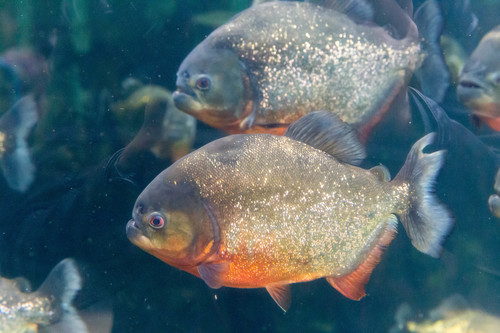
Family Member (c) Marco Verch, some rights reserved (CC BY) · cc-by
Help improve the field guideSomething wrong?
Checking your Fauna account…Report a name, category, or profile issue for review.