
Species
Black-tailed Payara
Hydrolycus armatusAlso known as Silver Payara, Payara, Harm
Black-tailed payaras command fast-flowing rivers across tropical South America, striking down open-water prey with lightning acceleration. Two elongated lower fangs fit neatly into special sockets inside the upper jaw, allowing these formidable predators to swallow fish nearly half their own length. During high water, adults migrate into flooded river channels and deep eddies to follow large schools of migratory fish.
PredatoryFreshwaterRiverine
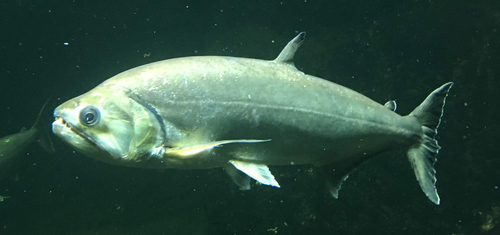
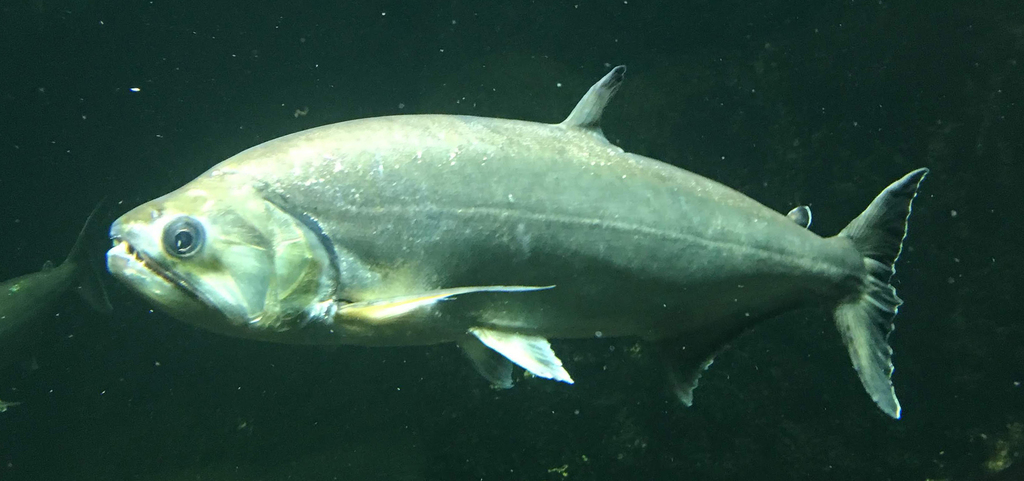
—observations
—countries
—peak records
Least ConcernConservation statusIUCN Red List categoriesLCNTVUENCREWEXLeast ConcernRed List categories, explained →
Diet & preyPiranhas, Tetras, Prochilodus
Predators
- Black Caiman
- Giant River Otter
- Amazon River Dolphin
ThreatsOverfishing, dam construction, and habitat degradation
HabitatsFast-flowing rivers, rapids, and deep river channels
Life span8–12 years
Classification
- FamilyCynodontidae
- SpeciesHydrolycus armatus
Range data is not available yet.
Interaction riskLow
- Low
- Moderate
- High
- Very high
- Why interaction risk is low
- Sharp fangs and powerful jaws can cause severe puncture wounds; handle with extreme caution if unhooked.
- Why it is dangerous
- Possesses two massive, dagger-like lower teeth that easily puncture skin and cause deep tissue lacerations.
- How to recognize a risky encounter
- Identified by a silver compressed body, dark tail edging, and prominent lower fangs protruding past the upper lip.
- What to do
- Never place hands near the mouth; use extra-long pliers and sturdy lip tools if unhooking.
Responsible observation
- Angling Precautions: Use long-handled tools and wire leaders to keep hands clear of the dangerous lower fangs.
- Habitat Spotting: Look for active feeding strikes in oxygen-rich water directly below turbulent river rapids.
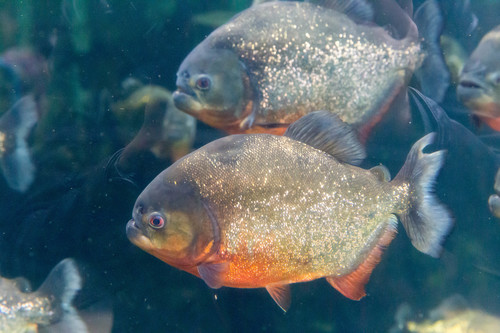
Prey (c) Marco Verch, some rights reserved (CC BY) · cc-by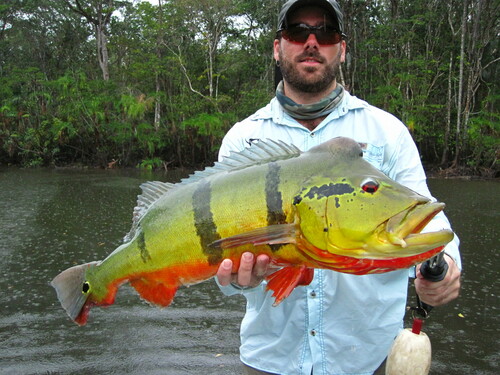
Competitor (c) Wellerson Santana, some rights reserved (CC BY-SA) · cc-by-sa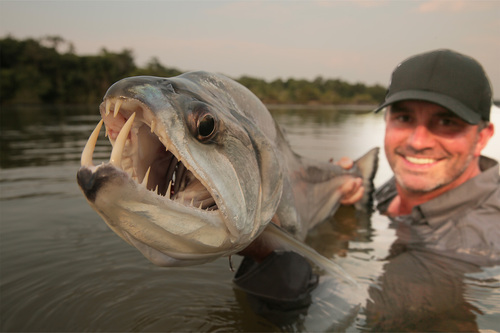
Close Relative (c) Sébastien Untamed, some rights reserved (CC BY-SA) · cc-by-sa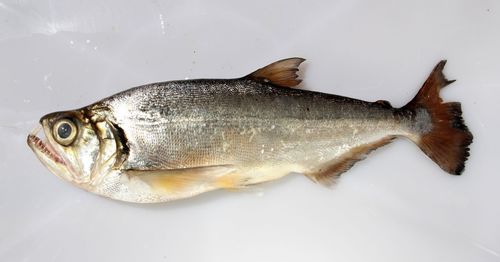
Close Relative (c) Clinton & Charles Robertson, some rights reserved (CC BY) · cc-by
Help improve the field guideSomething wrong?
Checking your Fauna account…Report a name, category, or profile issue for review.