
Fish · GBIF taxon 2346701
Longnose Gar
Lepisosteus osseusAlso known as Longnose Garpike, Billy Gar, Needlenose Gar
Longnose gars lie motionless near the water surface, resembling floating logs until they strike fast-swimming prey with a lightning-quick side swipe. Their needle-like snouts contain rows of fine, sharp teeth perfectly suited for trapping small fish, while diamond-shaped ganoid scales form an interlocking chainmail armor. Capable of breathing atmospheric air using a vascularized swim bladder, these ancient predators thrive in warm, low-oxygen backwaters across North America.
Ancient LineagePredatorFreshwater
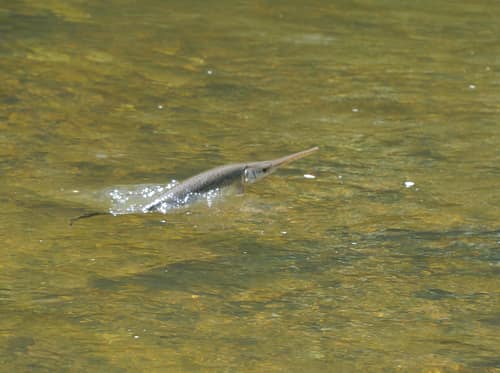
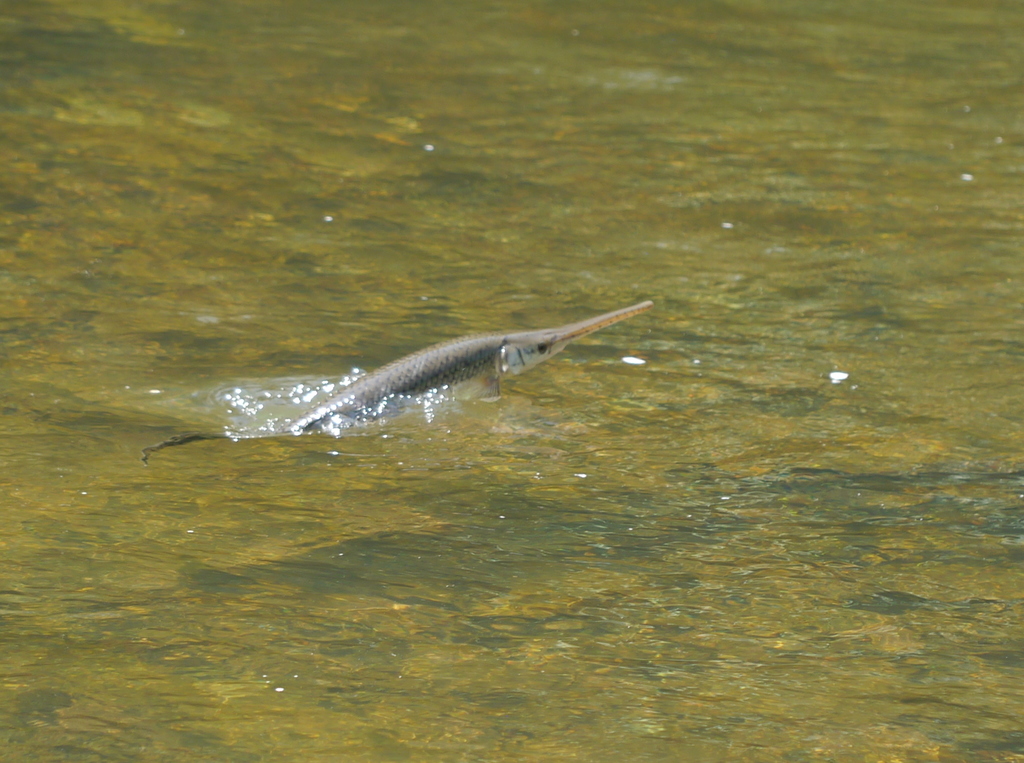
—observations
—countries
—peak records
Least ConcernConservation statusIUCN Red List categoriesLCNTVUENCREWEXLeast ConcernRed List categories, explained →
Diet & prey
- Minnows
- Gizzard Shad
- Crayfish
Predators
- Osprey
- Alligators
- Larger predatory fish
ThreatsHabitat degradation, dam construction, targeted eradication by anglers
HabitatsSlow rivers, lakes, reservoirs, swamps, brackish estuaries
Life span15–20 years (females can exceed 30 years)
Size / weightNot available
Classification
- OrderLepisosteiformes
- FamilyLepisosteidae
- GenusLepisosteus
- SpeciesLepisosteus osseus
Range data is not available yet.
Interaction riskHigh
- Low
- Moderate
- High
- Very high
- Why interaction risk is high
- Gar roe is toxic if ingested, and their sharp teeth and interlocking scales can cause painful cuts if handled.
- Why it is dangerous
- Gar eggs contain toxic proteins that cause severe vomiting and headache if eaten, while the fish's teeth and scales inflict lacerations.
- How to recognize a risky encounter
- Recognized by an elongated snout more than twice the length of its head and heavily armored ganoid scales.
- What to do
- Observe safely from shore or boat, and use a net or heavy pliers to unhook fish without direct contact.
Responsible observation
- Spotting: Watch calm, sunlit river backwaters for long, slender shapes floating near the surface.
- Handling: Keep hands clear of the mouth and sharp scale edges if brought aboard a boat.
- Safety: Never consume gar eggs or feed them to pets because they contain hazardous toxins.
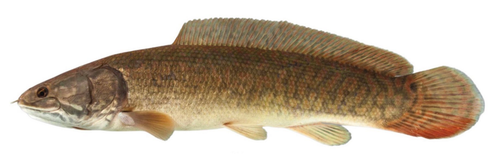
Frequent Companion Zachary Randall / CC BY 3.0 · cc-by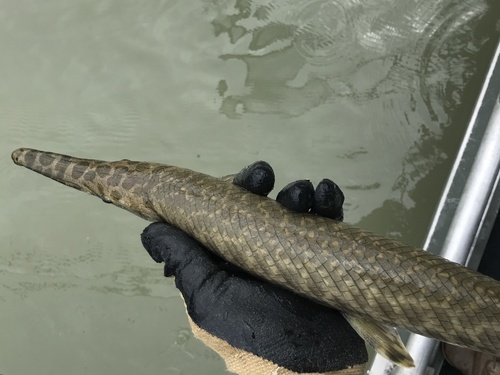
Close Relative no rights reserved, uploaded by Nick Loveland · cc0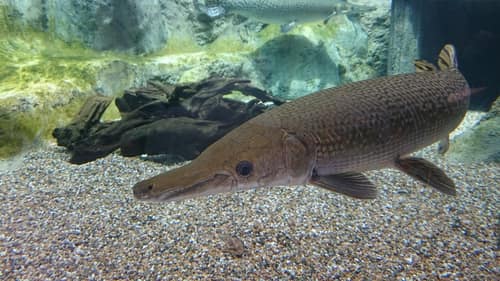
Close Relative (c) ProjectManhattan, some rights reserved (CC BY-SA) · cc-by-sa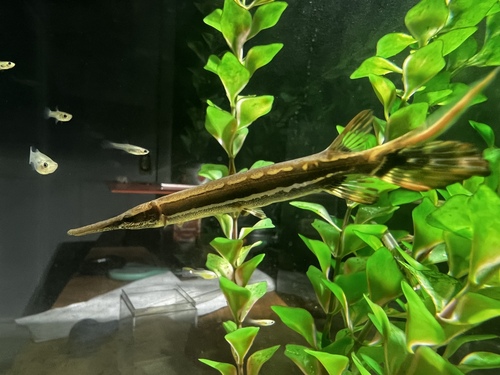
Close Relative (c) Nick Tobler (Cowturtle), some rights reserved (CC BY), uploaded by Nick Tobler (Cowturtle) · cc-by
Help improve the field guideSomething wrong?
Checking your Fauna account…Report a name, category, or profile issue for review.