
Species
Spotted Gar
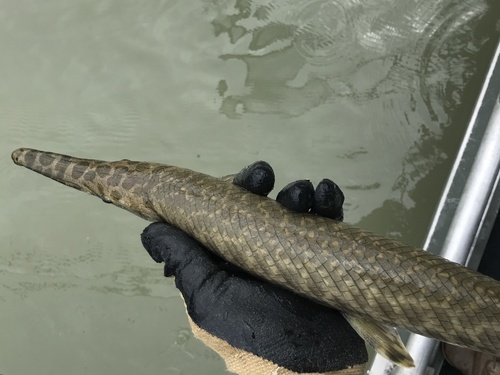
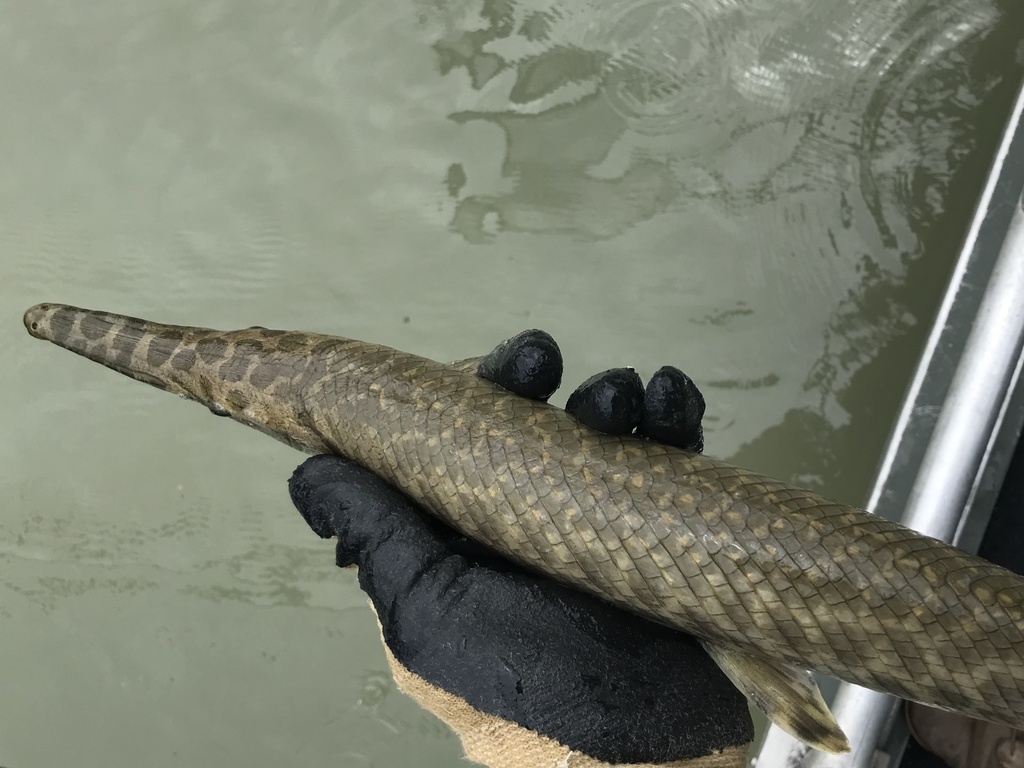
Lepisosteus oculatusSpotted gars are living fossils that have stalked North American waters for tens of millions of years, using camouflage and patience to ambush smaller fish and crustaceans. Their armor of overlapping, enamel-coated ganoid scales provides tough protection, while a vascularized swim bladder allows them to surface and gulp atmospheric air in stagnant, oxygen-poor shallows. Hovering motionless near submerged vegetation or logs, they strike with lightning speed, snaring prey in long, tooth-studded jaws.
PredatoryFreshwaterAncient Lineage
—observations
—countries
—peak records
Least ConcernConservation statusIUCN Red List categoriesLCNTVUENCREWEXLeast ConcernRed List categories, explained →
Diet & preyMinnows, Sunfish, Crayfish
Predators
- American Alligators
- Ospreys
- Larger Predatory Fish
ThreatsHabitat destruction, wetland drainage, water pollution, and removal of aquatic vegetation
HabitatsClear, slow-moving rivers, oxbow lakes, backwaters, and vegetated reservoirs
Life span10–18 years
Classification
- FamilyLepisosteidae
- SpeciesLepisosteus oculatus
Range data is not available yet.
Interaction riskLow
- Low
- Moderate
- High
- Very high
- Why interaction risk is low
- Sharp teeth and armor-like scales can cause severe scratches or cuts if handled recklessly.
- Why it is dangerous
- Possesses a jaw lined with needle-sharp teeth and interlocking ganoid scales with rough edges that easily slice skin during handling.
- How to recognize a risky encounter
- Recognizable by prominent round dark spots scattered across the snout, head, body, and fins.
- What to do
- Maintain a firm grip using heavy gloves or a rubber net, keeping hands clear of the snapping jaw.
Responsible observation
- Observe surface breathing: Watch quiet river backwaters for snouts breaking the surface to gulp air.
- Look near timber: Scan still waters around submerged logs or weed beds where individuals hover motionless.
- Handle with protection: Wear heavy gloves when unhooking or moving a gar to protect hands from sharp teeth and rough scales.
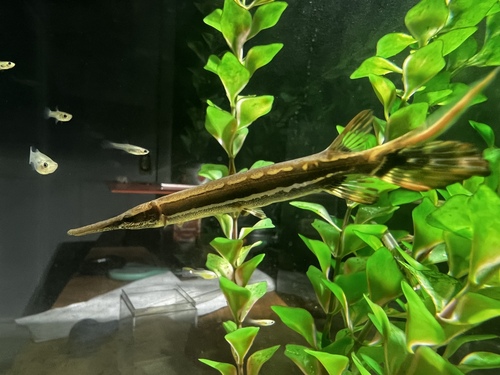
Close Relative (c) Nick Tobler (Cowturtle), some rights reserved (CC BY), uploaded by Nick Tobler (Cowturtle) · cc-by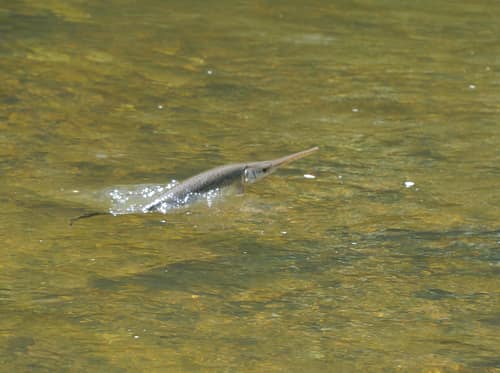
Close Relative (c) Matt Muir, some rights reserved (CC BY) · cc-by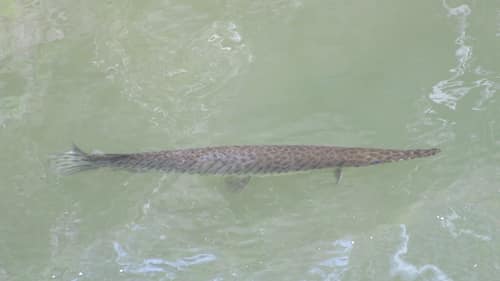
Close Relative no rights reserved · cc0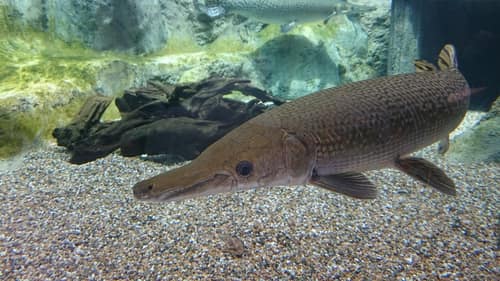
Close Relative (c) ProjectManhattan, some rights reserved (CC BY-SA) · cc-by-sa
Help improve the field guideSomething wrong?
Checking your Fauna account…Report a name, category, or profile issue for review.