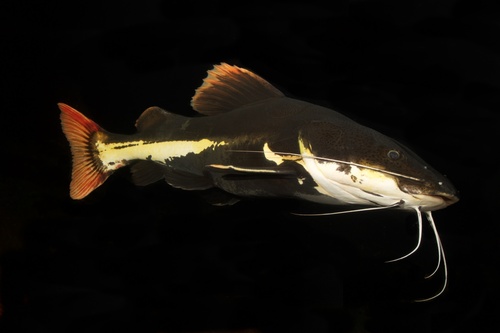
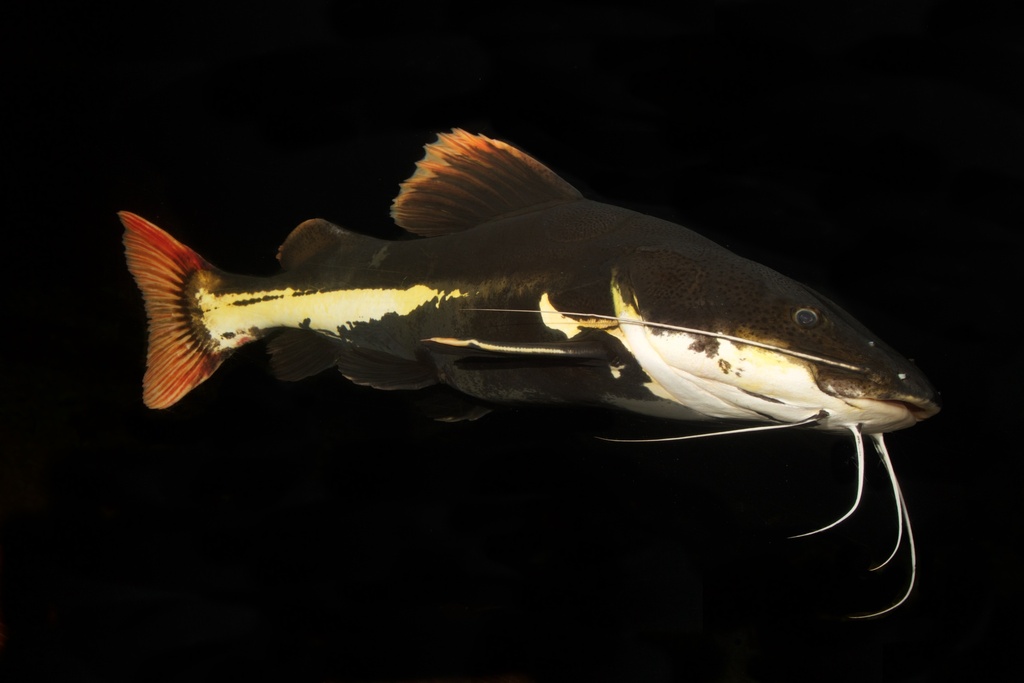
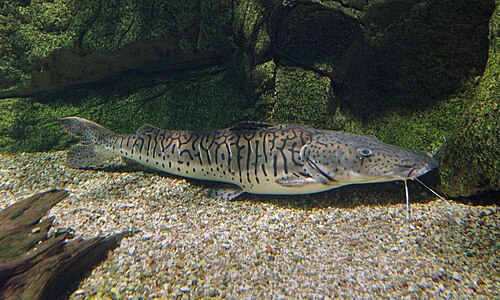
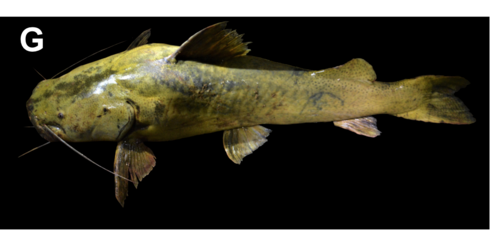
Cruising the riverbeds of the Amazon and Orinoco basins, this heavyweight predator uses extraordinarily long sensory barbels to navigate murky currents and detect chemical trails left by potential meals. When startled or cornered, it expels air against its swim bladder to produce a startling, deep croaking sound that resonates clearly through the water. While primarily hunting fish and bottom-dwelling crustaceans, it regularly consumes fallen palm fruits and seeds during seasonal high-water floods.
ThreatsHydroelectric dam construction, overharvesting, and mercury contamination from gold mining
HabitatsDeep tropical river channels, flooded forests, and lagoons
Life span15–20 years
Classification
OrderSiluriformes
FamilyPimelodidae
GenusPhractocephalus
SpeciesPhractocephalus hemioliopterus
Range & activity
Range data is not available yet.
Safe observation
Interaction riskLow
Low
Moderate
High
Very high
Why interaction risk is low
Sharp pectoral fin spines and powerful jaws can cause serious injuries if handled carelessly.
Why it is dangerous
Stout, serrated pectoral spines lock into place when stressed, capable of tearing skin and inflicting deep puncture wounds, accompanied by a crushing bite.
How to recognize a risky encounter
Look for a broad, flattened skull with six long whiskers, a dark upper body separated by a pale creamy flank, and a bright red-orange tail.
What to do
Do not attempt to lift or grab wild specimens by the mouth or gills; use a soft net or support the underbelly.
Responsible observation
River Watching: Look into calm, deep eddies and submerged brush piles around dusk when feeding begins.
Aquarium Consideration: Avoid keeping them in home tanks, as juveniles rapidly grow into unmanageable river monsters.