Also known as Tasseled Scorpionfish, Small-scaled Scorpionfish
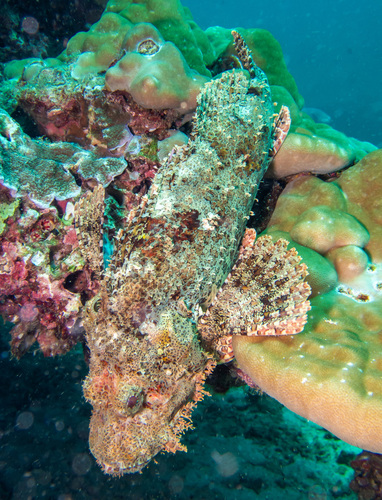
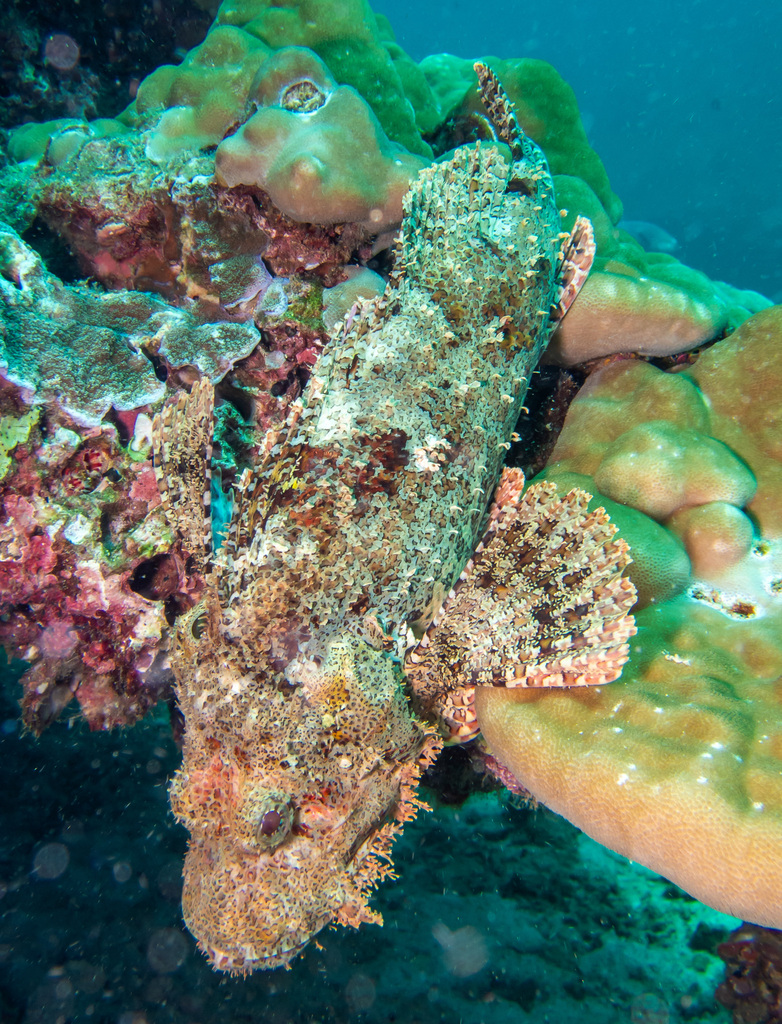
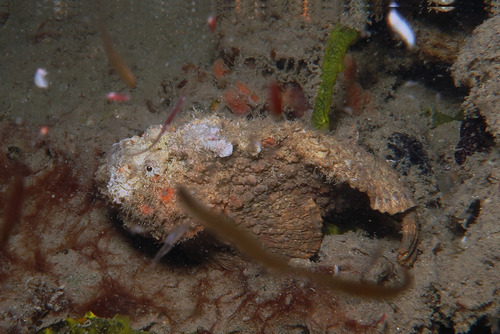
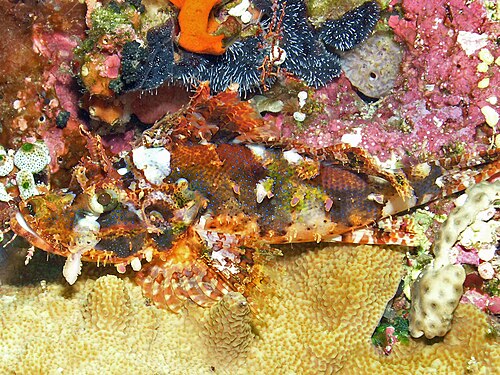
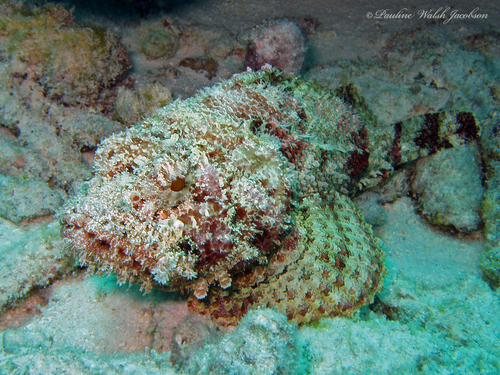
Masters of ambush, these heavily camouflaged reef predators rest motionless on coral heads and rocky rubble, blending seamlessly with surrounding algae and invertebrates. Fleshy skin flaps, intricate tassels around the lower jaw, and mottled coloration break up their outline completely. When an unsuspecting fish or crustacean ventures close, they snap their massive jaws open in a fraction of a second, engulfing the prey whole via suction feeding.
Not EvaluatedConservation statusIUCN Red List categoriesLCNTVUENCREWEXNot Evaluated — not placed on the risk ladderRed List categories, explained →
Key facts
Diet & prey
Damselfish
Reef gobies
Shrimp
Predators
Large groupers
Moray eels
Sharks
ThreatsCoral reef degradation, warming ocean waters, and accidental capture
HabitatsShallow to moderate-depth coral reefs, rubble slopes, and reef flats
Life span10–15 years
Classification
OrderScorpaeniformes
FamilyScorpaenidae
GenusScorpaenopsis
SpeciesScorpaenopsis oxycephala
Range & activity
Range data is not available yet.
Safe observation
Interaction riskVery high
Low
Moderate
High
Very high
Why interaction risk is very high
Dorsal spines deliver painful venom; maintain good buoyancy and avoid touching the reef floor.
Why it is dangerous
Dorsal fin spines possess venom glands that inject toxic proteins upon puncture, causing excruciating local pain, severe swelling, and potential systemic distress.
How to recognize a risky encounter
Recognized by dense, fleshy beard-like tassels fringing the lower chin, a broad flattened head, and mottled stone-like coloration.
What to do
Never touch, prod, or step on the reef substrate; if stung, immerse the wound in hot water and seek medical evaluation.
Responsible observation
Buoyancy control: Keep well off the bottom while diving to avoid accidentally pressing against hidden spines.
Spotting technique: Search rocky outcrops and coral rubble for an eye movement or the outline of tasseled jaws.
Photography advice: Approach slowly without resting hands or knees on reef substrate.