
Species · GBIF taxon 2334438
Common Lionfish
Pterois volitansAlso known as Red Lionfish, Turkeyfish, Dragonfish, Butterfly Cod
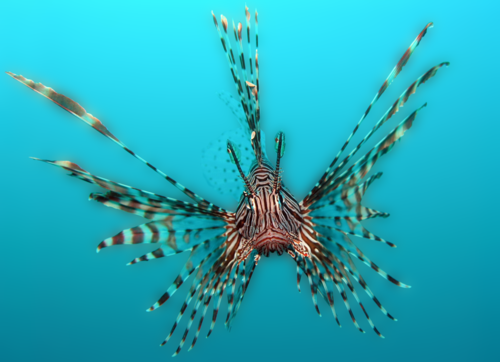
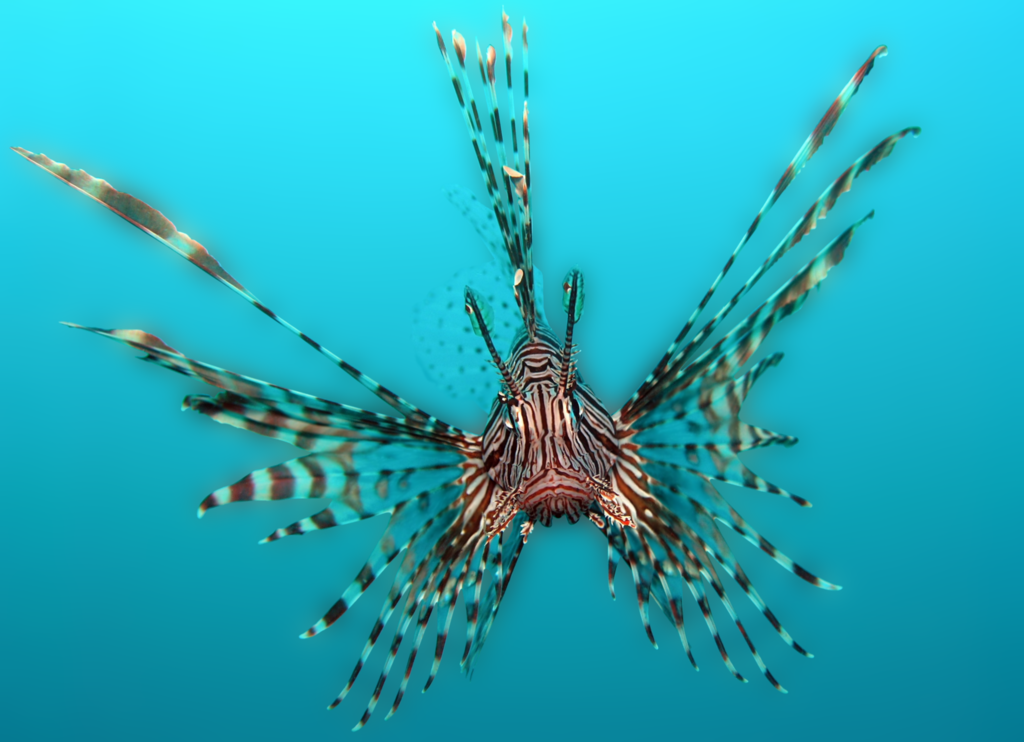
Red lionfish glide gracefully over coral reefs, using their fan-like pectoral fins to corner small fish before swallowing them whole with a lightning-fast strike. Their dramatic reddish-brown and white zebra stripes serve as warning coloration for the array of venomous spines along their dorsal, anal, and pelvic fins. While native predators in the Indo-Pacific keep their numbers in check, booming invasive populations across the western Atlantic lack natural controls and threaten local reef ecosystems.
VenomousInvasiveReef Fish
—observations
—countries
—peak records
Least ConcernConservation statusIUCN Red List categoriesLCNTVUENCREWEXLeast ConcernRed List categories, explained →
Diet & prey
- Small reef fish
- Shrimp
- Crabs
Predators
- Groupers
- Reef sharks
- Moray eels
ThreatsTargeted culling in invasive ranges; localized overfishing in native waters
HabitatsCoral reefs, rocky ledges, artificial reefs, lagoons
Life span10–15 years
Size / weightNot available
Classification
- OrderScorpaeniformes
- FamilyScorpaenidae
- GenusPterois
- SpeciesPterois volitans
Range data is not available yet.
Interaction riskVery high
- Low
- Moderate
- High
- Very high
- Why interaction risk is very high
- Venomous spines cause severe pain and swelling; keep a safe distance while swimming or diving.
- Why it is dangerous
- Spines carry a protein-based neuromuscular toxin that causes excruciating pain, rapid swelling, and localized tissue necrosis.
- How to recognize a risky encounter
- Look for broad maroon and white zebra striping with long, delicate, needle-like spines along the back.
- What to do
- Maintain at least two meters of distance underwater, and never attempt to handle without specialized puncture-proof gear.
Responsible observation
- Observing safely: Give lionfish plenty of clearance near reefs because they drift slowly but can move abruptly.
- First aid protocol: Immerse any accidental spine sting immediately in hot water to break down toxins.
- Reporting sightings: Log Atlantic sightings with local wildlife agencies to aid invasive species control.
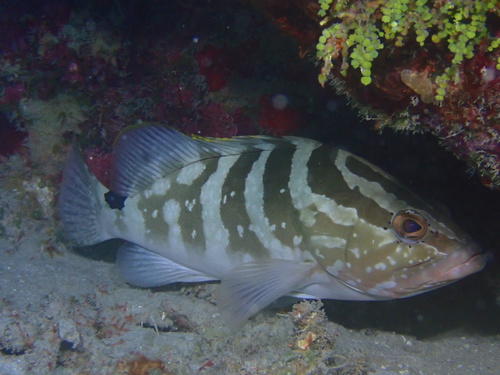
Predator (c) Robin White, some rights reserved (CC BY), uploaded by Robin White · cc-by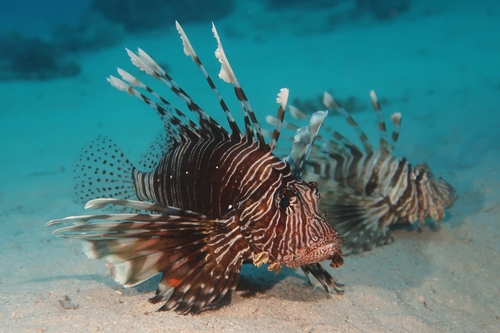
Close Relative (c) Daniel Benák, some rights reserved (CC BY), uploaded by Daniel Benák · cc-by Image unavailable
Close Relative
Help improve the field guideSomething wrong?
Checking your Fauna account…Report a name, category, or profile issue for review.