
Invertebrate
Spanish Shawl
Flabellinopsis iodineaSpanish shawls navigate rocky reefs and kelp forests along the eastern Pacific coast, using luminous purple bodies and brilliant orange cerata to advertise their stolen stinging defenses. When threatened by floor-dwelling predators like predatory sea slugs, they flex their bodies vigorously from side to side in an undulating swimming motion to escape into open water. They feed almost exclusively on hydroids, sequestering the stinging cells unharmed in their cerata to deter fish and crabs.
MarineColorfulCarnivorous
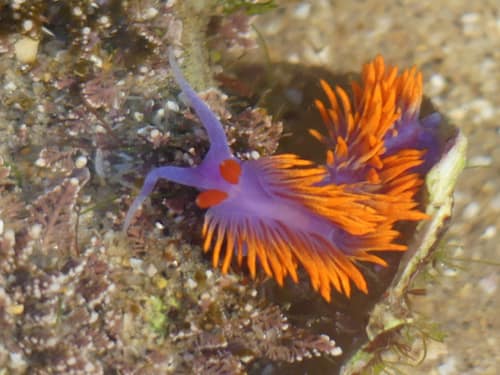
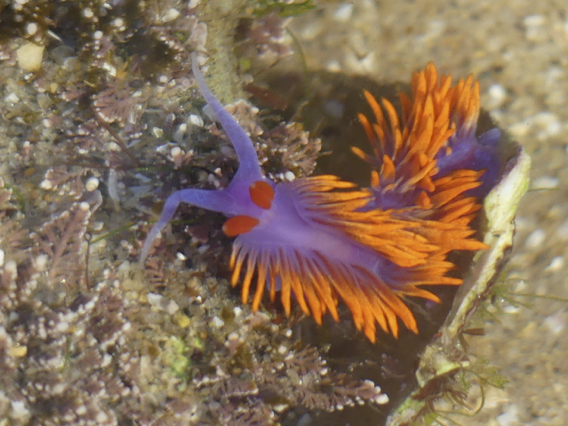
—observations
—countries
—peak records
Not EvaluatedConservation statusIUCN Red List categoriesLCNTVUENCREWEXNot Evaluated — not placed on the risk ladderRed List categories, explained →
Diet & preyBushy hydroids
Predators
- Navanax
- Sea anemones
- Carnivorous fish
ThreatsOcean warming, coastal pollution, and habitat degradation
HabitatsKelp forests, rocky reefs, and lower intertidal pools
Life spanUp to 1 year
Classification
- FamilyFlabellinopsidae
- SpeciesFlabellinopsis iodinea
Range data is not available yet.
Interaction riskLow
- Low
- Moderate
- High
- Very high
- Why interaction risk is low
- Safe to observe at a normal distance.
Responsible observation
- Tidepool Etiquette: Look for them on hydroid colonies in deep, calm low-tide pools without disturbing rocks.
- Diver Buoyancy: Maintain neutral buoyancy over reefs to avoid kicking up silt or crushing delicate nudibranchs.
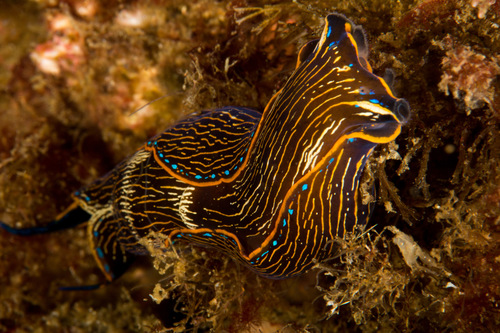
Predator (c) Yury Velikanau, some rights reserved (CC BY) · cc-by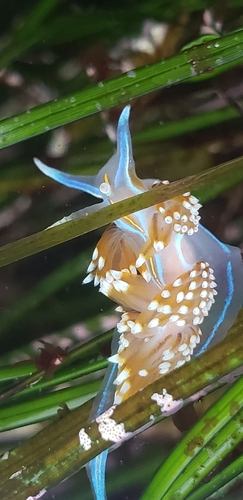
Ecological Neighbor (c) Steve Addison, some rights reserved (CC BY) · cc-by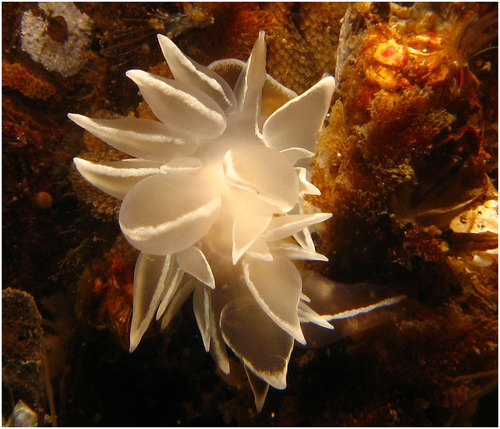
Ecological Neighbor (c) Dan Hershman, some rights reserved (CC BY) · cc-by Image unavailable
Ecological Neighbor
Help improve the field guideSomething wrong?
Checking your Fauna account…Report a name, category, or profile issue for review.