
Invertebrate · GBIF taxon 2289092
Hawaiian Bobtail
Euprymna scolopesAlso known as Hawaiian Bobtail Squid, Hawaiian Dumpling Squid
Hawaiian bobtail squids spend daylight hours completely buried beneath shallow coastal sands, gluing sediment to their skin with specialized mucus to remain invisible to passing fish. After nightfall, they emerge to hunt small crustaceans using an internal light organ packed with symbiotic bioluminescent bacteria. By matching the downwelling moonlight with their belly glow, they erase their silhouette and become virtually invisible to predators watching from below.
NocturnalBioluminescentMarine
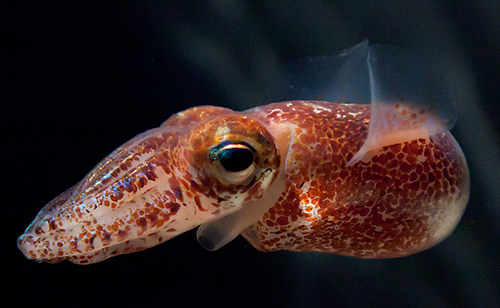
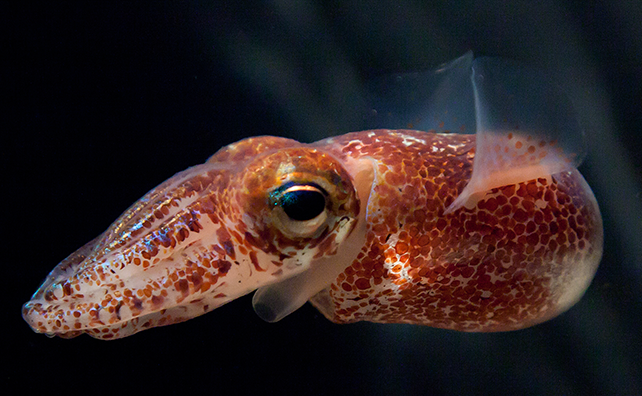
—observations
—countries
—peak records
Data DeficientConservation statusIUCN Red List categoriesLCNTVUENCREWEXData Deficient — not placed on the risk ladderRed List categories, explained →
Diet & prey
- Mysid shrimp
- Amphipods
- Small gobies
Predators
- Lizardfish
- Moray eels
- Barracuda
ThreatsCoastal development, light pollution, and water runoff
HabitatsShallow coastal coral reefs and sandy flats
Life span9–12 months
Classification
- FamilySepiolidae
- SpeciesEuprymna scolopes
Range data is not available yet.
Interaction riskLow
- Low
- Moderate
- High
- Very high
- Why interaction risk is low
- Safe to observe at a normal distance.
Responsible observation
- Night diving: Scan shallow sandy flats near coral edges with a red-filtered dive light.
- Sand camouflage: Search for pairs of reflective eyes protruding from the sediment by day.
- Avoid disturbance: Keep lights low to watch natural counterillumination behavior.
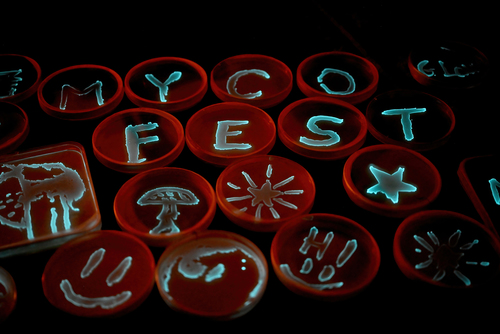
Symbiont (c) Alan Rockefeller, some rights reserved (CC BY), uploaded by Alan Rockefeller · cc-by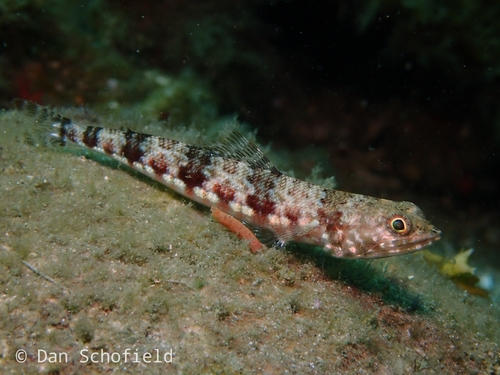
Predator (c) Dan Schofield, some rights reserved (CC BY), uploaded by Dan Schofield · cc-by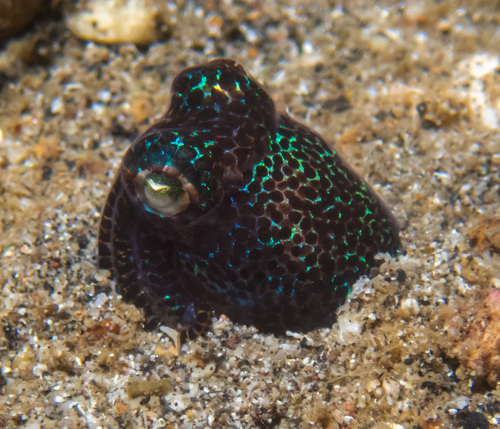
Close Relative (c) portioid, some rights reserved (CC BY) · cc-by Image unavailable
Same Family
Help improve the field guideSomething wrong?
Checking your Fauna account…Report a name, category, or profile issue for review.