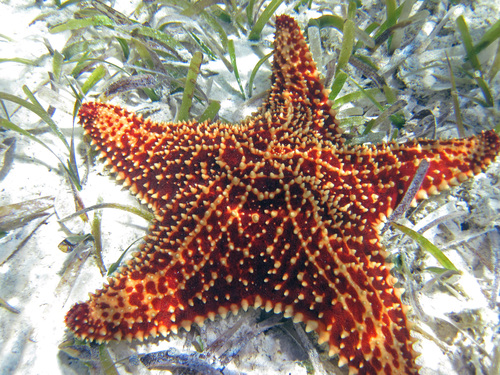
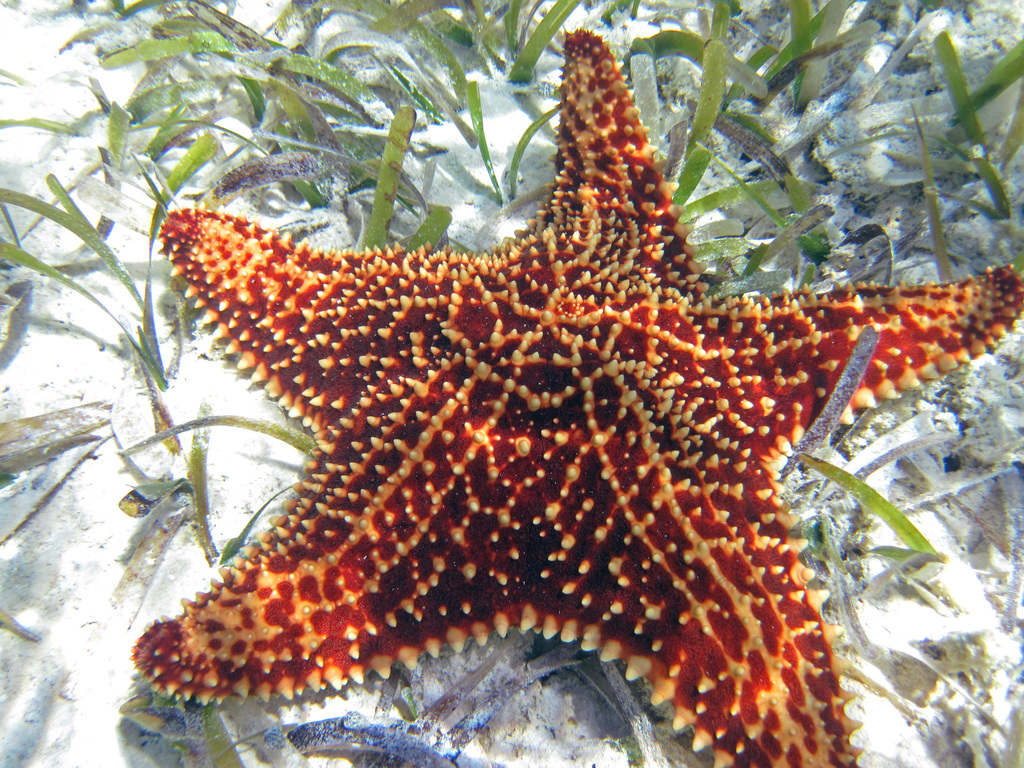
Red Cushion Sea Star
Oreaster reticulatusAlso known as West Indian Sea Star, Cushion Sea Star, Bahamian Starfish
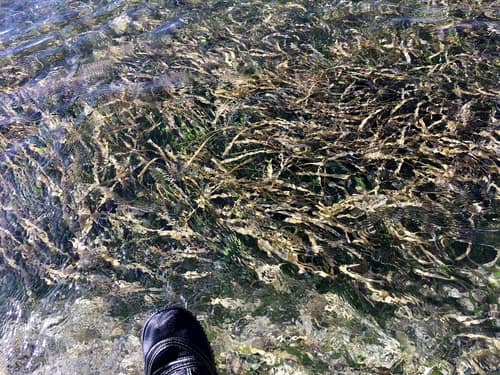
Thriving on sunlit Caribbean flats and seagrass beds, these massive echinoderms gather in loose aggregations to graze microbial mats and microfauna. Feeding individuals evert their large cardiac stomachs through the central mouth, spreading tissue over the seabed to liquefy organic film externally before absorption. Juveniles hide among dense mangrove prop roots and turtle grass, migrating to open sandy bottom habitats only as they develop thick, heavily armored calcified ossicles.

- Benthic microalgae
- Encrusting sponges
- Benthic detritus
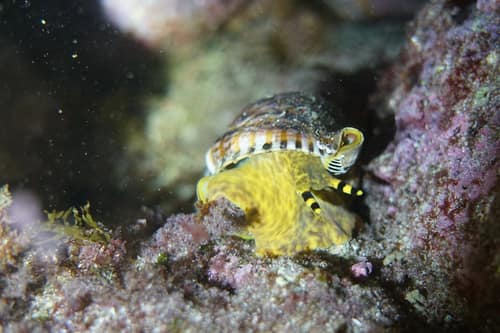
- Atlantic triton
- Nurse shark
- Loggerhead sea turtle
- OrderValvatida
- FamilyOreasteridae
- GenusOreaster
- SpeciesOreaster reticulatus
- Low
- Moderate
- High
- Very high
- Why interaction risk is low
- Safe to observe at a normal distance.
- What to notice
- Look for a thick, pillow-like profile with five stout arms and a striking mesh of raised orange, red, or yellow knobby spines.
- Support conservation
- Observe and photograph entirely underwater while snorkeling, maintaining respectful clearance without touching or displacing the animal.
- Keep Submerged: Never lift sea stars out of the water, as air exposure impairs their delicate respiratory papulae.
- Hands Off: Avoid flipping or stepping around individuals, which interrupts feeding and damages vulnerable tube feet.
Found in Collections
Shore Life
Red Cushion Sea Star is found in this collection. Identify it in Fauna to fill this slot and continue your progress.
Unlock to track progress
Report a name, category, or profile issue for review.