Also known as Man-of-War, Bluebottle, Pacific Man o' War
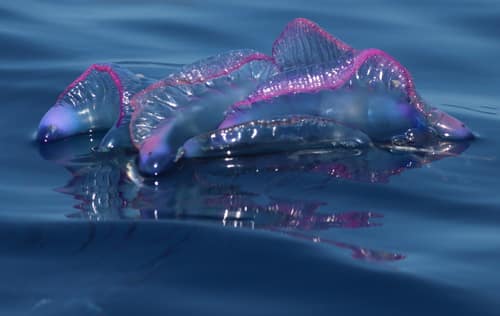
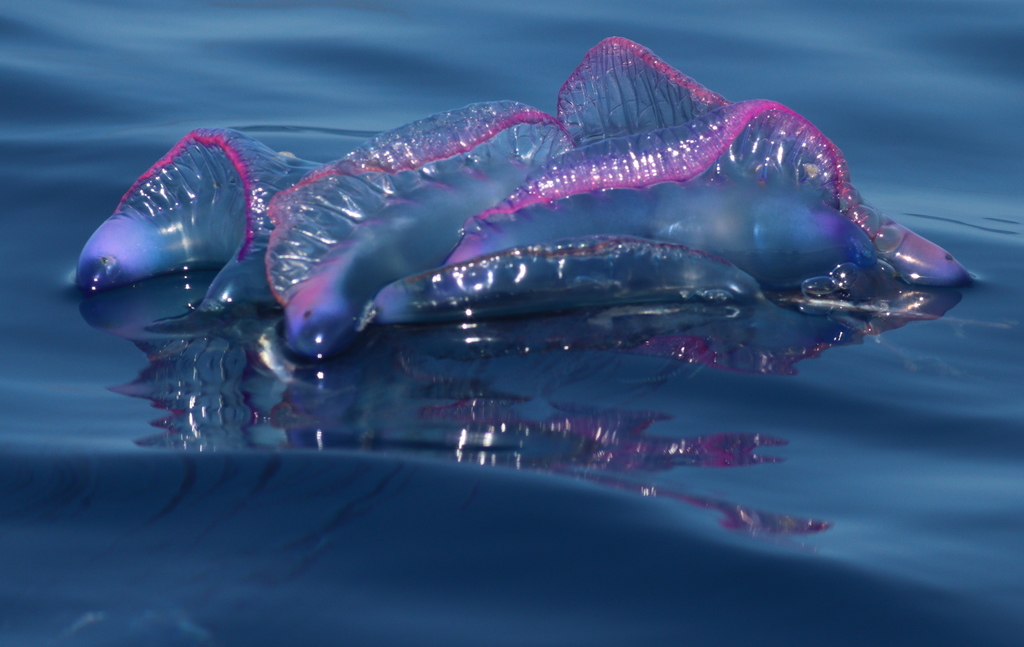
Portuguese men o' war are not true jellyfish, but colonial siphonophores composed of four specialized polyps that act in unison as a single organism. Their vibrant, gas-filled floats serve as sails that catch prevailing ocean winds, pushing colonies across tropical and subtropical currents. Beneath the surface, trailing venomous tentacles capture passing fish and haul prey upward toward specialized feeding mouths.
HabitatsPelagic open ocean, warm coastal waters, tropical and subtropical seas
Life spanUp to 1 year
Classification
OrderSiphonophorae
FamilyPhysaliidae
GenusPhysalia
SpeciesPhysalia physalis
Range & activity
Range data is not available yet.
Safe observation
Interaction riskVery high
Low
Moderate
High
Very high
Why interaction risk is very high
Tentacles deliver agonizing venomous stings even when washed ashore; maintain distance and never touch.
Why it is dangerous
Nematocysts inject a potent neurotoxic and hemolytic protein cocktail that causes extreme pain, severe skin blistering, and potential cardiovascular or respiratory distress.
How to recognize a risky encounter
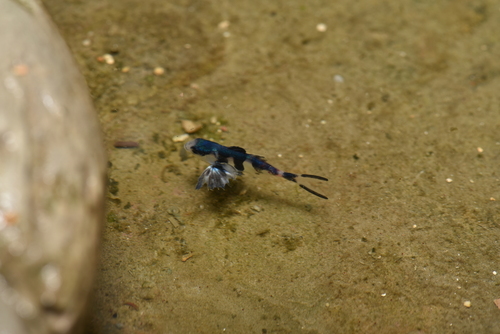
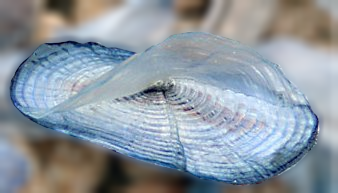
Watch for a translucent, blue-to-pink bladder floating above the waterline trailing long, dark blue or purple strands.
What to do
Give living or dead colonies a wide berth; if stung, carefully lift away tentacles with tweezers and immerse the area in hot water.
Responsible observation
Beach Safety: Avoid touching stranded specimens on the sand, as stinging cells fire long after death.
Ocean Awareness: Scan downwind waters while swimming, since invisible tentacles drift meters behind floats.
Sting First Aid: Rinse stings thoroughly with seawater and soak in hot water rather than using vinegar.