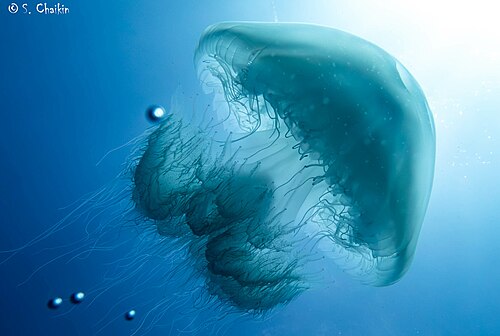
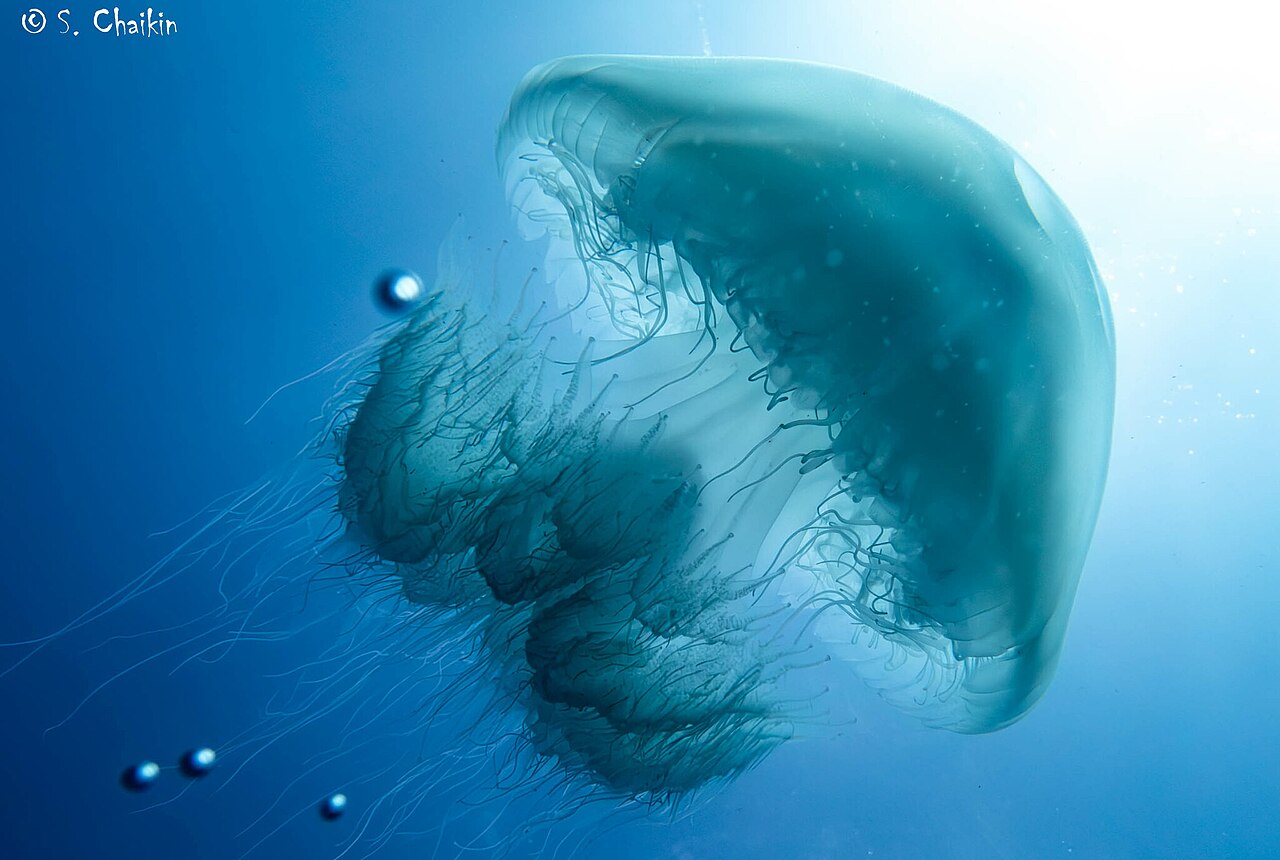
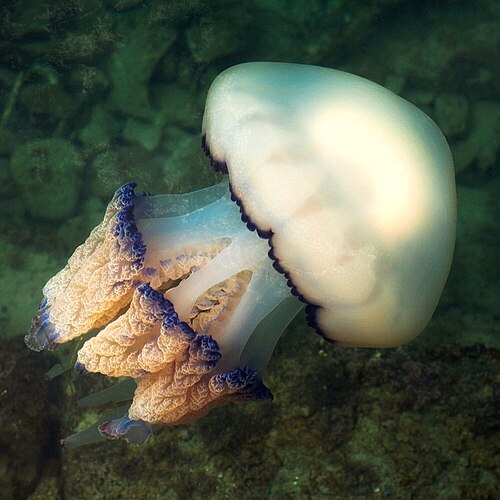
Nomad jellies drift through warm surface waters, pulsing their robust icy-blue domes to propel themselves while filtering immense quantities of plankton. Immense summer swarms often clog coastal waters, shutting down beaches and disrupting power plant cooling systems. As a highly successful Lessepsian migrant, this jellyfish dramatically altered Eastern Mediterranean marine food webs within decades of arriving through the Suez Canal.
Not EvaluatedConservation statusIUCN Red List categoriesLCNTVUENCREWEXNot Evaluated — not placed on the risk ladderRed List categories, explained →
Key facts
Diet & preyCopepods, Fish larvae, Planktonic mollusks
Predators
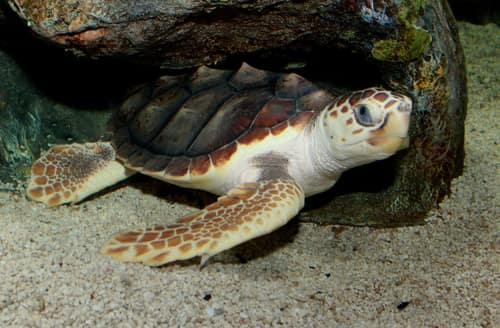
Loggerhead sea turtle
Leatherback sea turtle
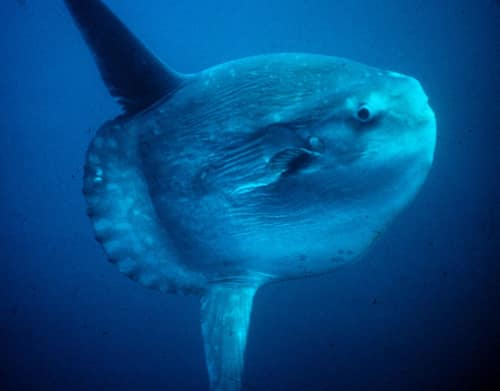
Ocean sunfish
ThreatsMarine pollution, coastal development, and occasional predation by marine turtles
HabitatsWarm coastal neritic waters, open pelagic seas, and semi-enclosed bays
Life span1–2 years
Classification
FamilyRhizostomatidae
SpeciesRhopilema nomadica
Range & activity
Range data is not available yet.
Safe observation
Interaction riskVery high
Low
Moderate
High
Very high
Why interaction risk is very high
Tentacles deliver extremely painful stings that can cause severe burning and systemic reactions; avoid swimming nearby.
Why it is dangerous
Microscopic nematocysts inject venom that triggers intense burning, erythema, localized swelling, and occasional systemic symptoms like muscle cramps and nausea.
How to recognize a risky encounter
Look for a heavy, hemispherical pale blue to translucent white dome with thick, frilly oral arms and no long margin tentacles.
What to do
Give a wide berth in open water and never pick up beached specimens; treat accidental stings with seawater rather than fresh water.
Responsible observation
Water awareness: Exit the sea immediately if swarms appear, as broken tentacle fragments floating in the water can still sting.
Stranded specimens: Avoid touching washed-up bells on the sand, because nematocysts remain active long after the animal dies.