
Invertebrate · GBIF taxon 2256825
Sunburst Anemone
Anthopleura solaAlso known as Starburst Anemone, Solitary Anemone, Solitary Aggregating Anemone
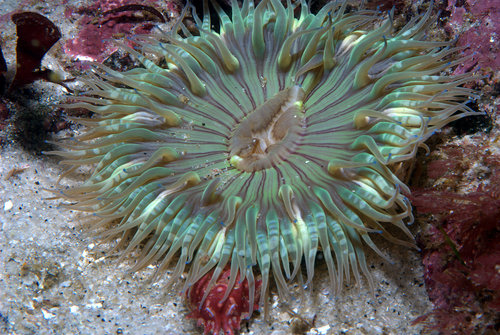
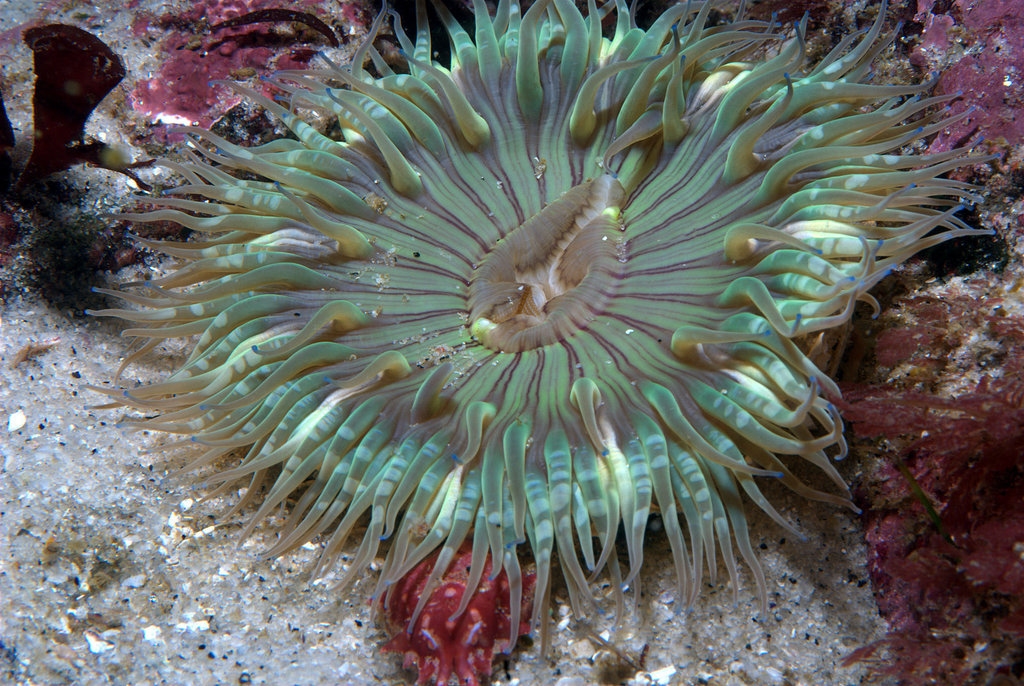
Sunburst anemones anchor themselves in rocky tide pools along the eastern Pacific coast, where their green or olive oral discs showcase vibrant, radiating stripes. They host symbiotic microalgae within their tissues, relying on sunlight alongside captured prey for energy. When neighboring individuals touch, they fight slow-motion territorial battles using specialized white tentacles loaded with stinging cells.
IntertidalMarineSolitary
—observations
—countries
—peak records
Not EvaluatedConservation statusIUCN Red List categoriesLCNTVUENCREWEXNot Evaluated — not placed on the risk ladderRed List categories, explained →
Diet & prey
- Amphipods
- Isopods
- Small fish
Predators
- Shag-rug nudibranch
- Leather star
- Mosshead sculpin
ThreatsOcean acidification, extreme heat events, coastal development
HabitatsRocky intertidal zones, tide pools, shallow reefs
Life span50–100+ years
Classification
- FamilyActiniidae
- SpeciesAnthopleura sola
Range data is not available yet.
Interaction riskLow
- Low
- Moderate
- High
- Very high
- Why interaction risk is low
- Safe to observe at a normal distance in rocky tide pools.
Responsible observation
- Tidepool Etiquette: Step carefully on bare rock to avoid crushing submerged or exposed anemones.
- Gentle Touch: Touch a tentacle softly with a wet finger to feel the light, sticky tug of harmless stinging cells.
- Spotting Battles: Search for a narrow band of bare rock between adjacent individuals where territorial fights occur.
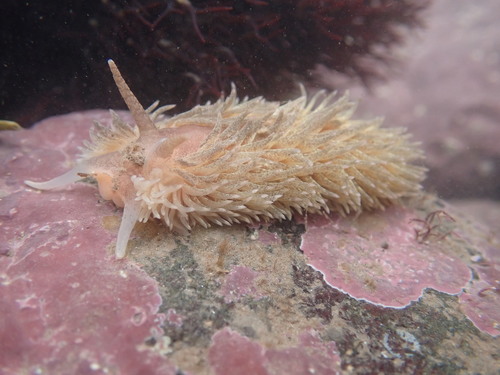
Predator (c) Ian Manning, some rights reserved (CC BY), uploaded by Ian Manning · cc-by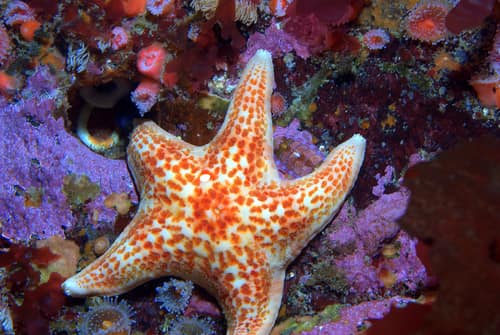
Predator "Leather Star" by Ed Bierman is licensed under CC BY 2.0. To view a copy of this license, visit https://creativecommons.org/licenses/by/2.0/. · cc-by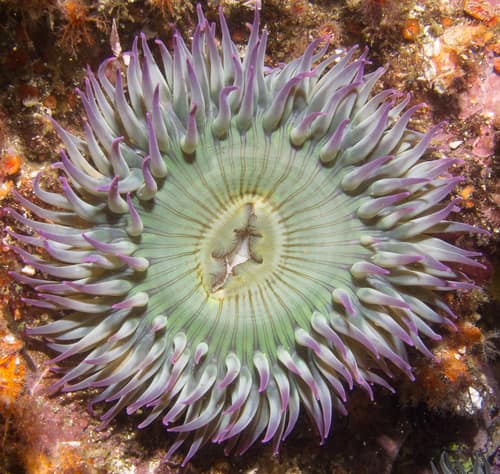
Close Relative "Aggregating Anemone, anthopleura elegantissima" by Ed Bierman is licensed under CC BY 2.0. To view a copy of this license, visit https://creativecommons.org/licenses/by/2.0/. · cc-by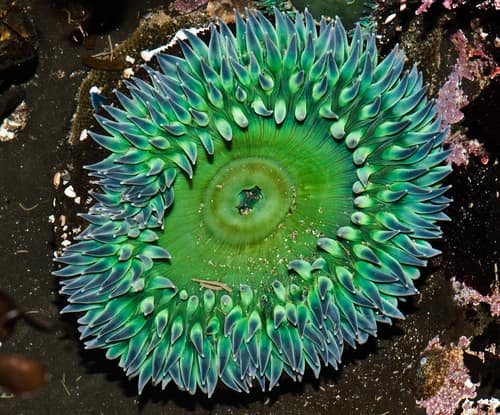
Close Relative "Anthopleura sola - (Giant Green Anemone)" by jkirkhart35 is licensed under CC BY 2.0. To view a copy of this license, visit https://creativecommons.org/licenses/by/2.0/. · cc-by
Help improve the field guideSomething wrong?
Checking your Fauna account…Report a name, category, or profile issue for review.