
Invertebrate · GBIF taxon 2226736
Portly Spider Crab
Libinia emarginataAlso known as Common Spider Crab, Nine-Spined Spider Crab
Portly spider crabs move sluggishly along the ocean floor, blending seamlessly into mud and rock through a habit of attaching living algae, hydroids, and debris to hooked spines on their round carapaces. Active mainly as scavengers, these crabs use small, slender claws to pick apart dead fish, plant matter, and slow-moving invertebrates. During winter, they migrate into deeper offshore waters to escape freezing temperatures in shallow bays.
MarineCrustaceanCamouflaged
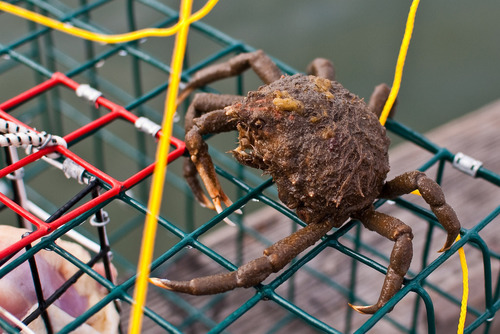
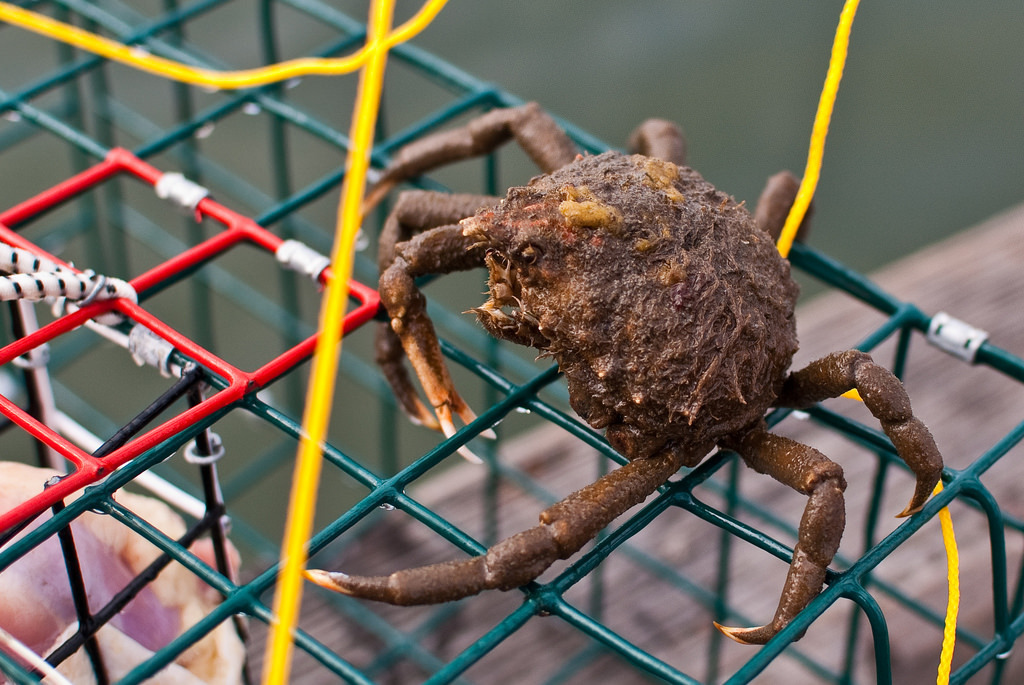
—observations
—countries
—peak records
Not EvaluatedConservation statusIUCN Red List categoriesLCNTVUENCREWEXNot Evaluated — not placed on the risk ladderRed List categories, explained →
Diet & prey
- Dead Fish
- Algae
- Bivalves
Predators
- Gulls
- Striped Bass
- Sea Turtles
ThreatsCoastal pollution, dredging, fishing bycatch
HabitatsBays, estuaries, muddy and sandy ocean floors
Life span5–8 years
Size / weightNot available
Classification
- OrderDecapoda
- FamilyEpialtidae
- GenusLibinia
- SpeciesLibinia emarginata
Range data is not available yet.
Interaction riskLow
- Low
- Moderate
- High
- Very high
- Why interaction risk is low
- Pincers can give a strong pinch if handled, so pick up from behind the carapace.
Responsible observation
- Spotting: Look for slow-moving clumps of seaweed on shallow estuarine mudflats.
- Safe handling: Hold gently by the rear of the carapace away from the front pincers.
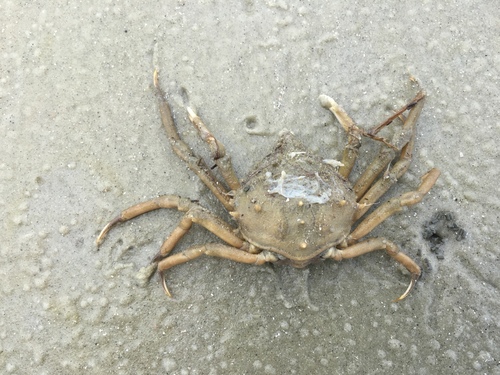
Close Relative (c) Mary Spilman, some rights reserved (CC BY), uploaded by Mary Spilman · cc-by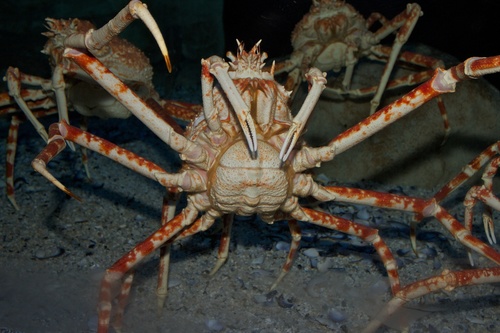
Distant Relative (c) Brian Gratwicke, some rights reserved (CC BY) · cc-by
Help improve the field guideSomething wrong?
Checking your Fauna account…Report a name, category, or profile issue for review.