
Invertebrate · GBIF taxon 2225832
Great Land Crab
Cardisoma guanhumiAlso known as Blue Land Crab, White Land Crab, Giant Land Crab
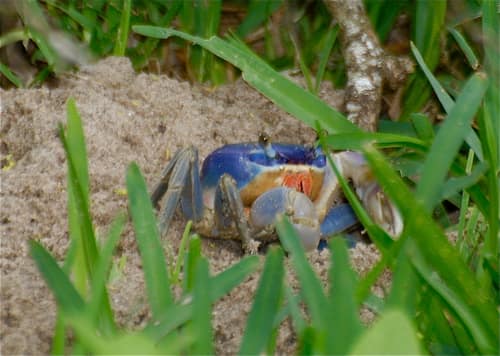
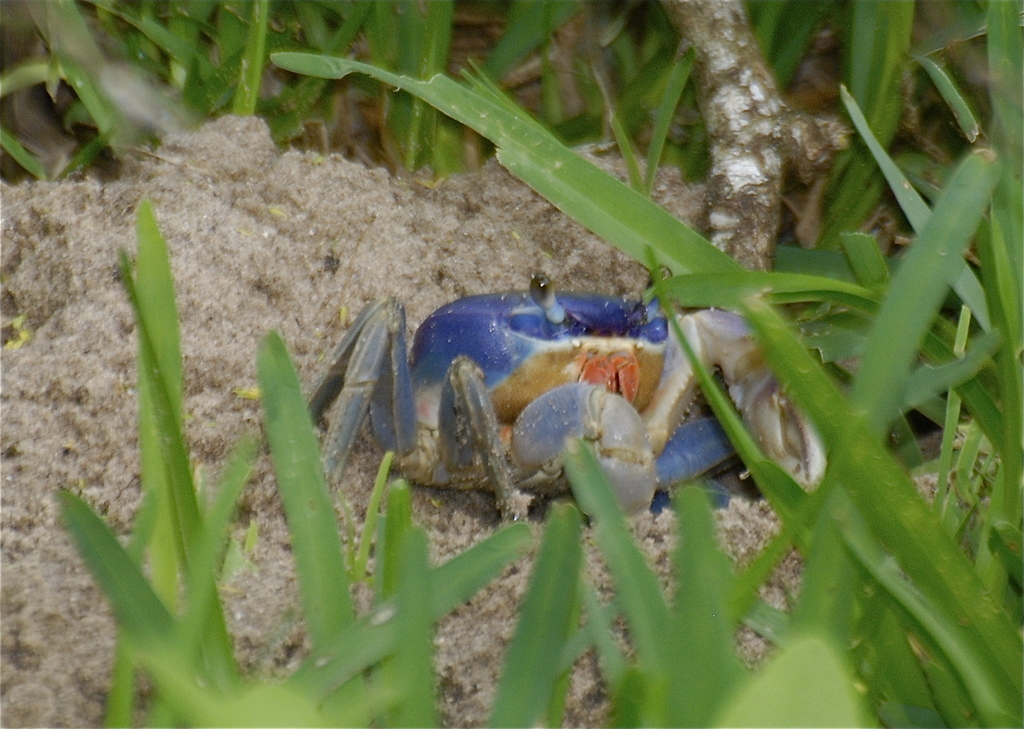
Great land crabs build extensive burrow networks in coastal mud and sandy soils just above the high-tide line across tropical and subtropical regions. Adults display striking color variations ranging from sky blue and lavender to pale grey, using an oversized master claw for territory defense and courtship displays. During mass breeding migrations timed with summer full moons, females travel down to the ocean edge to release hundreds of thousands of eggs into the waves.
BurrowingCoastalNocturnal
—observations
—countries
—peak records
Not EvaluatedConservation statusIUCN Red List categoriesLCNTVUENCREWEXNot Evaluated — not placed on the risk ladderRed List categories, explained →
Diet & prey
- Fallen Leaves
- Mangrove Fruit
- Plant Seedlings
Predators
- Raccoons
- Yellow-crowned Night Herons
- Coatis
ThreatsCoastal development, road mortality during breeding migrations, localized overharvesting
HabitatsMangrove swamps, estuarine forests, salt marshes, coastal scrubs
Life span10–13 years
Size / weightNot available
Classification
- OrderDecapoda
- FamilyGecarcinidae
- GenusCardisoma
- SpeciesCardisoma guanhumi
Range data is not available yet.
Interaction riskLow
- Low
- Moderate
- High
- Very high
- Why interaction risk is low
- Powerful claws can pinch severely if cornered; keep a respectful distance and avoid handling.
- Why it is dangerous
- Adult crabs possess massive chelae capable of exerting immense pressure, easily breaking skin and bruising hands if grabbed.
- How to recognize a risky encounter
- Look for a broad, rounded shell up to 15 cm across with a light blue to brownish-grey hue and one markedly enlarged claw.
- What to do
- Keep at least one meter back when watching wild crabs and never reach into burrow openings with bare hands.
Responsible observation
- Flashlight Etiquette: Use a red-filtered light during evening observations to avoid disorienting foraging adults.
- Breeding Migrations: Watch from road shoulders during summer full moons when females march toward the ocean shore.
- Burrow Entrance: Approach holes quietly along mangrove edges to spot crabs resting in shade near their tunnels.

Co-Habitant (c) Annika Lindqvist, some rights reserved (CC BY), uploaded by Annika Lindqvist · cc-by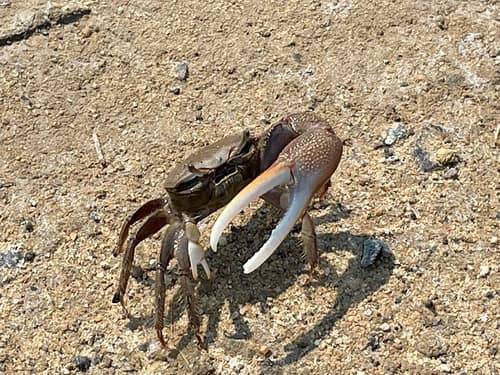
Co-Habitant "Fiddler Crab at Blackwater National Wildlife Refuge" by U. S. Fish and Wildlife Service - Northeast Region is marked with Public Domain Mark 1.0. To view the terms, visit https://creativecommons.org/publicdomain/mark/1.0/. · cc0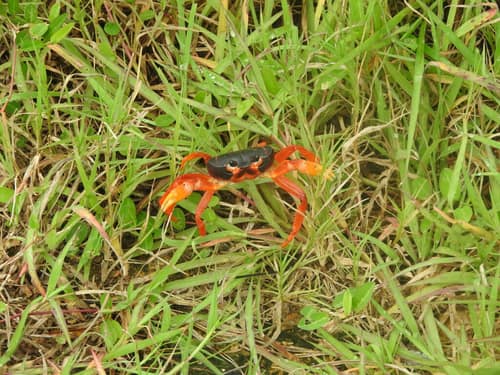
Close Relative no rights reserved · cc0
Keep collecting in Fauna
Found in Collections
Species set Pro
Shore Life
Great Land Crab is found in this collection. Identify it in Fauna to fill this slot and continue your progress.
Unlock to track progress
Help improve the field guideSomething wrong?
Checking your Fauna account…Report a name, category, or profile issue for review.