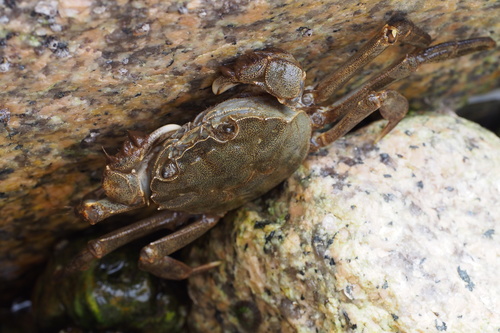
Also known as Shanghai Hairy Crab, Mitten Crab, Big Sluice Crab
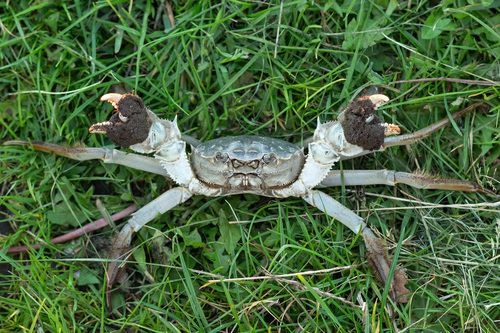
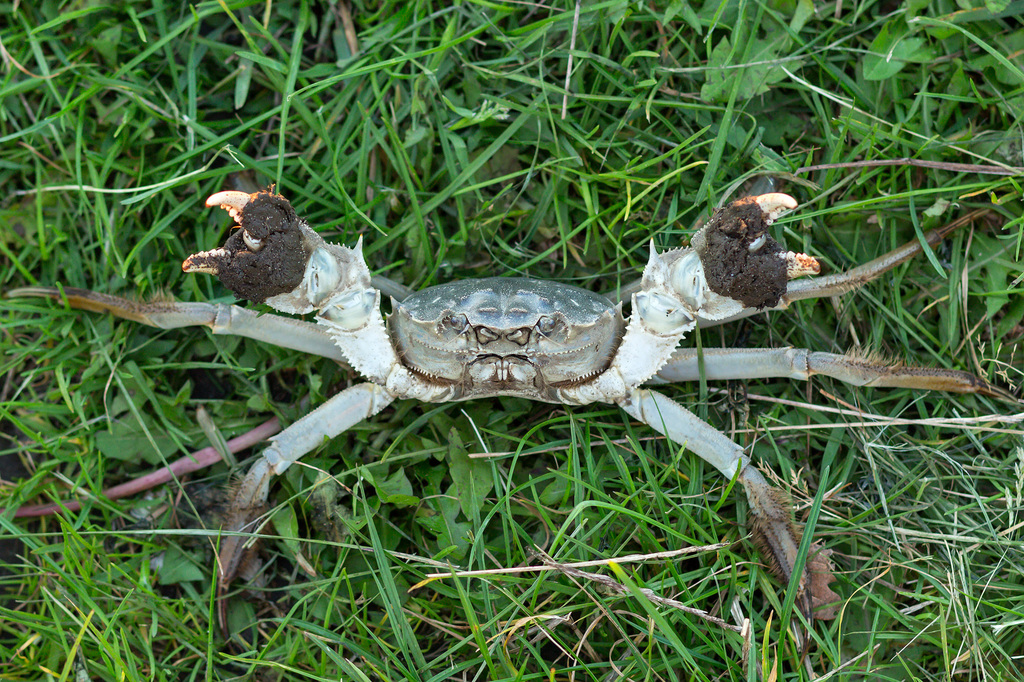
Chinese mitten crabs spend most of their lives in freshwater rivers before embarking on long autumnal migrations down to brackish estuaries to mate and spawn. Their dense mats of dark, velvety hair on the claws provide a striking visual marker, though their extensive burrowing along riverbanks often causes severe bank erosion and infrastructure damage. As highly adaptable omnivores, they readily outcompete native aquatic life across introduced waterways in Europe and North America.
Not EvaluatedConservation statusIUCN Red List categoriesLCNTVUENCREWEXNot Evaluated — not placed on the risk ladderRed List categories, explained →
Key facts
Diet & prey
Aquatic vegetation
Benthic invertebrates
Detritus
Predators
Predatory fish
Herons
Otters
ThreatsHabitat degradation in native range; aggressive control and eradication in invasive ranges
HabitatsRivers, lakes, estuaries, and coastal wetlands
Life span3–5 years
Size / weightNot available
Classification
FamilyVarunidae
SpeciesEriocheir sinensis
Range & activity
Range data is not available yet.
Safe observation
Interaction riskModerate
Low
Moderate
High
Very high
Why interaction risk is moderate
Powerful claws deliver painful pinches and wild individuals can harbor lung fluke parasites; do not handle directly.
Why it is dangerous
Pincers deliver strong bites capable of breaking skin, and consuming raw or undercooked wild individuals can transmit Paragonimus lung fluke parasites.
How to recognize a risky encounter
Look for dense, dark velvety patches of hair covering the claws, a square carapace with four lateral spines, and yellowish leg tips.
What to do
Do not release captured individuals back into non-native waters; wear thick leather gloves if handling and contact environmental authorities.
Responsible observation
Reporting Sightings: Document and report captures to local environmental authorities when found in non-native waters.
Safe Distance: Avoid grabbing live crabs directly with unprotected hands as their claws possess considerable strength.
Preventing Spread: Never transport live mitten crabs between water bodies to prevent further invasive expansion.