
Invertebrate · GBIF taxon 2225698
Pacific Sand Crab
Emerita analogaAlso known as Pacific Mole Crab, Coldwater Mole Crab, Sand Flea
Pacific sand crabs inhabit the turbulent swash zone of exposed sandy ocean beaches, constantly riding the tide up and down the shore. They burrow backward into wet sand using specialized paddle-like legs, leaving only feathery antennae exposed to filter plankton from retreating waves. These active crustaceans form a vital ecological bridge, converting marine plankton into energy for shorebirds and surf fish.
CrustaceanIntertidalBurrower
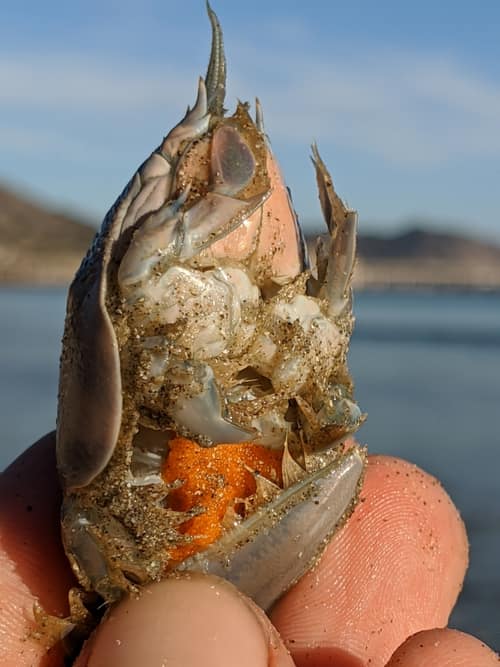
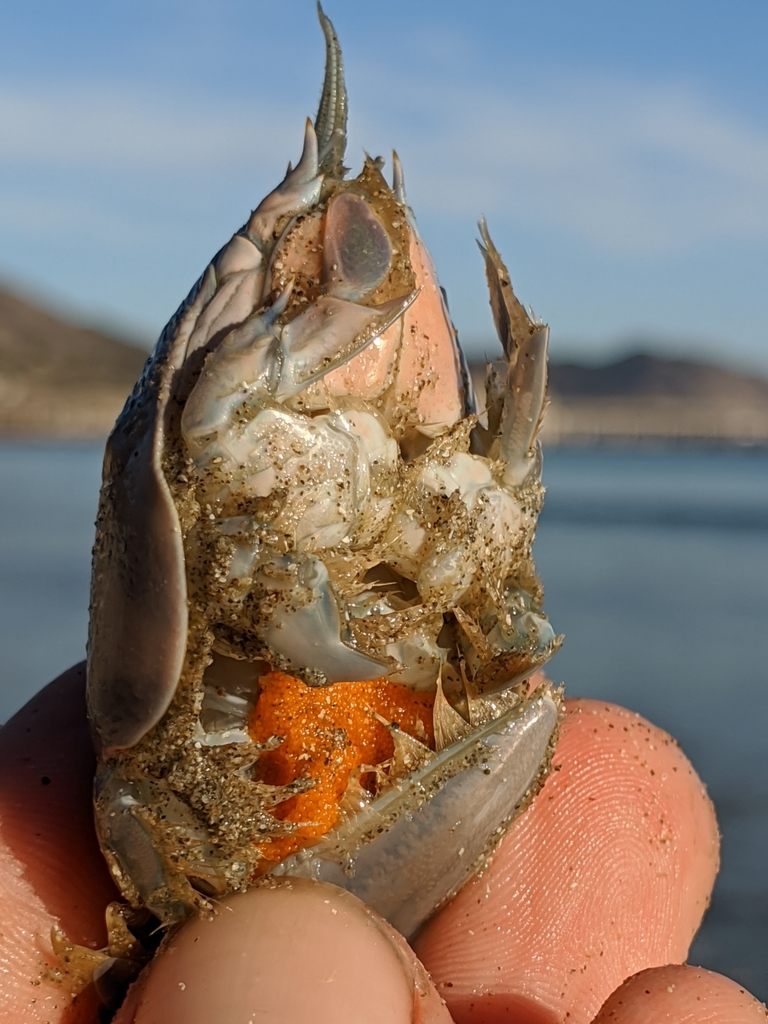
—observations
—countries
—peak records
Not EvaluatedConservation statusIUCN Red List categoriesLCNTVUENCREWEXNot Evaluated — not placed on the risk ladderRed List categories, explained →
Diet & prey
- Phytoplankton
- Zooplankton
- Organic Detritus
Predators
- Sanderling
- Barred Surfperch
- Sea Otter
ThreatsCoastal development, oil spills, beach grooming, ocean acidification
HabitatsIntertidal swash zone, sandy ocean beaches
Life span2–3 years
Classification
- OrderDecapoda
- FamilyHippidae
- GenusEmerita
- SpeciesEmerita analoga
Range data is not available yet.
Interaction riskLow
- Low
- Moderate
- High
- Very high
- Why interaction risk is low
- Safe to observe at a normal distance.
Responsible observation
- Spotting Feeding Signs: Look for V-shaped ripples in receding waves where feathery antennae filter plankton.
- Gentle Handling: Place crabs back in damp sand so they can rapidly burrow away from predators.
- Best Viewing Time: Observe during low or falling tides when crabs actively follow the swash line.
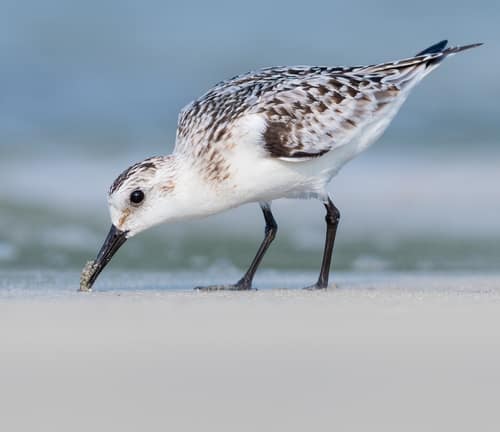
Predator (c) Marco Chan, some rights reserved (CC BY), uploaded by Marco Chan · cc-by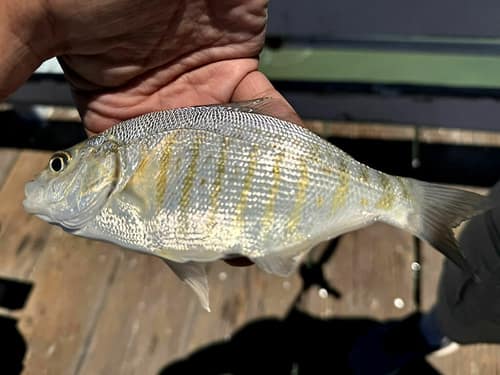
Predator (c) Peter Chen 2.0, some rights reserved (CC BY) · cc-by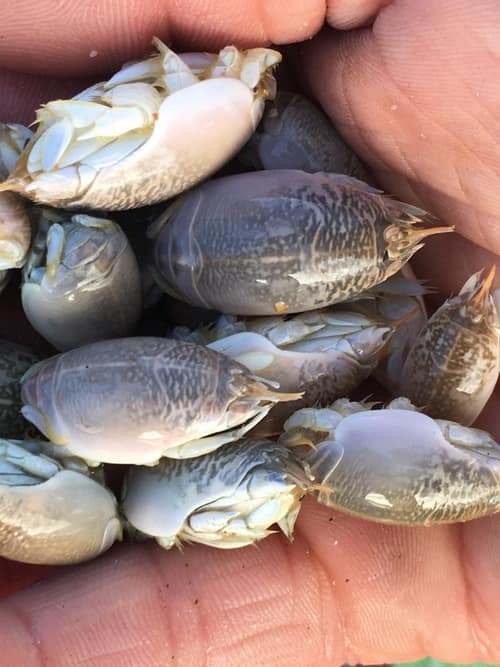
Close Relative (c) W. Terry Hunefeld, some rights reserved (CC BY), uploaded by W. Terry Hunefeld · cc-by
Help improve the field guideSomething wrong?
Checking your Fauna account…Report a name, category, or profile issue for review.