
Invertebrate
Hanasaki King Crab
Paralithodes brevipesAlso known as Spiny King Crab, Hanasaki Crab
Hanasaki king crabs thrive in the rocky, cold coastal shallow waters of the North Pacific, easily identified by their unusually short, heavily spined legs and thick carapace. Named after the Hanasaki region in Hokkaido where they are famous, these bottom-dwellers use heavy claws to crush hard-shelled mollusks and urchins. Intensive localized harvesting of large males has significantly impacted regional breeding success and mating dynamics.
MarineSpinyBenthic
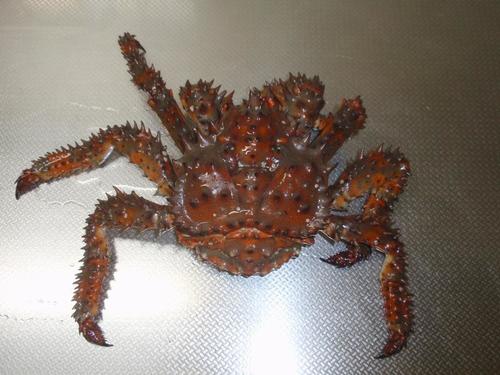
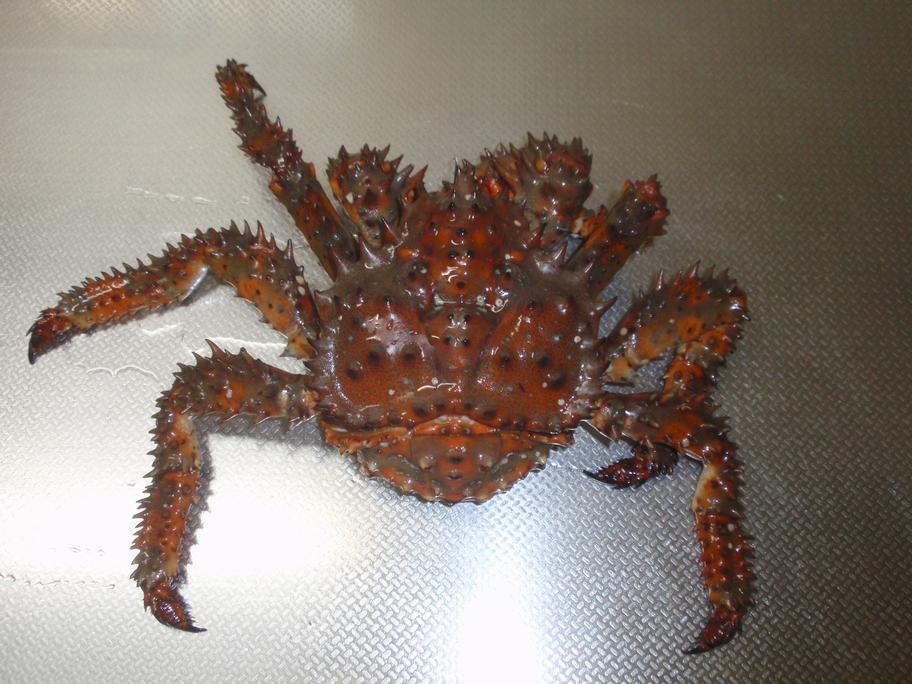
—observations
—countries
—peak records
Not EvaluatedConservation statusIUCN Red List categoriesLCNTVUENCREWEXNot Evaluated — not placed on the risk ladderRed List categories, explained →
Diet & preyClams, Sea urchins, Mussels
Predators
- Pacific cod
- Halibut
- Sea otters
ThreatsTargeted commercial overfishing, reproductive disruption, and ocean warming
HabitatsCold shallow coastal waters, rocky reefs, and subtidal kelp zones
Life span15–20 years
Classification
- OrderDecapoda
- FamilyLithodidae
- GenusParalithodes
- SpeciesParalithodes brevipes
Range data is not available yet.
Interaction riskLow
- Low
- Moderate
- High
- Very high
- Why interaction risk is low
- Strong pincers and sharp body spines can pinch or pierce skin; handle with heavy protective gloves.
- Why it is dangerous
- Powerful pincers and dense body spines can inflict deep pinches and skin punctures if the animal is seized carelessly.
- How to recognize a risky encounter
- Recognizable by its compact body covered in stout, sharp spines and thick reddish-brown shell.
- What to do
- Avoid picking up by the legs or claws; support the body from behind using heavy leather or rubber gloves.
- What to notice
- Recognizable by its compact body, dense sharp spines across the carapace, and spiky walking legs.
- Support conservation
- Follow local fishery regulations strictly and refrain from disturbing wild breeding adults in shallow coastal habitats.
Responsible observation
- Subtidal Spotting: Look for them on rocky, kelp-rich sea floors in cold North Pacific shallows.
- Safe Handling: Use thick protective gloves to avoid injuries from sharp carapace spines and powerful pincers.
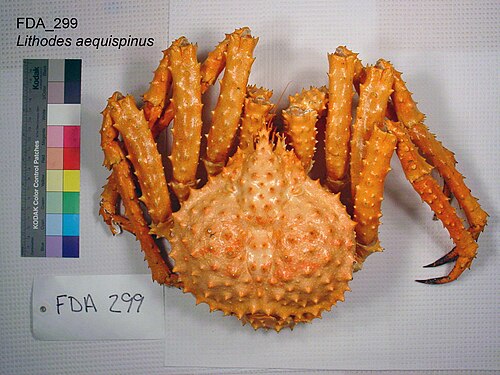
Kinship The U.S. Food and Drug Administration on Flickr / Public domain · cc0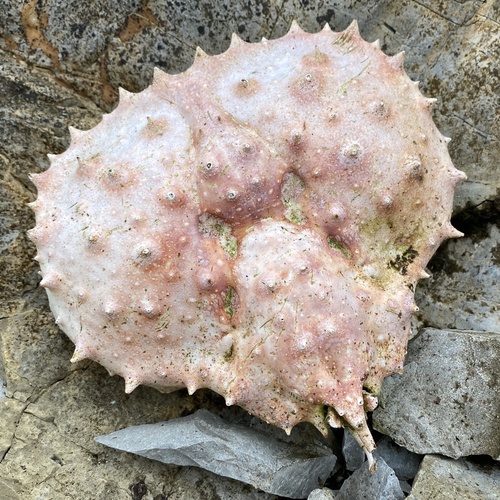
Close Relative no rights reserved, uploaded by Dag Endresen · cc0 Image unavailable
Close Relative
Help improve the field guideSomething wrong?
Checking your Fauna account…Report a name, category, or profile issue for review.