
Arachnid
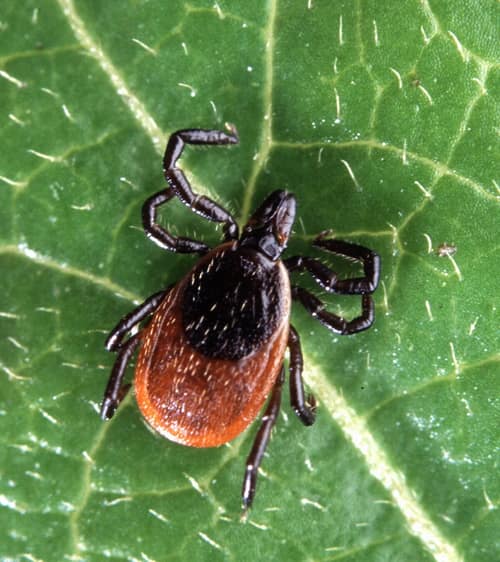
Eastern Black-legged Tick
Ixodes scapularisAlso known as Deer Tick, Bear Tick
Eastern black-legged ticks undergo a complex three-stage lifecycle over two to three years, requiring a blood meal from a host at each phase. Larvae feed primarily on small rodents like white-footed mice, nymphs target birds and medium mammals, and adult females rely on white-tailed deer to reproduce. Their questing behavior involves climbing tall grass or leaf litter and extending their front legs to latch onto any passing host.
ParasiteArachnidWoodland

—observations
—countries
—peak records
Not EvaluatedConservation statusIUCN Red List categoriesLCNTVUENCREWEXNot Evaluated — not placed on the risk ladderRed List categories, explained →
Diet & preyWhite-tailed deer blood, White-footed mouse blood, Bird blood
Predators
- Opossums
- Guineafowl
- Ants
ThreatsHabitat management, pesticide spraying, controlled burns
HabitatsDeciduous forests, brushy thickets, leaf litter, tall grass
Life span2–3 years
Classification
- OrderIxodida
- FamilyIxodidae
- GenusIxodes
- SpeciesIxodes scapularis
Range data is not available yet.
Interaction riskModerate
- Low
- Moderate
- High
- Very high
- Why interaction risk is moderate
- Transmits Lyme disease and other pathogens; wear repellent, check body after outdoors, and remove attached ticks immediately.
- Why it is dangerous
- Transmits Lyme disease spirochetes, babesiosis, anaplasmosis, and Powassan virus through bites during prolonged attachment.
- How to recognize a risky encounter
- Look for a flat, reddish-brown body with black legs and a dark dorsal shield, lacking white markings.
- What to do
- Never burn or smother an attached tick; pull straight out with tweezers and save it in alcohol for identification.
Responsible observation
- Clothing Protection: Wear light-colored long pants tucked into socks and treat clothes with permethrin.
- Post-Walk Inspection: Perform thorough body checks after visiting wooded areas, focusing on warm skin folds.
- Proper Removal: Grasp attached ticks close to the skin with fine-tipped tweezers and pull straight out.
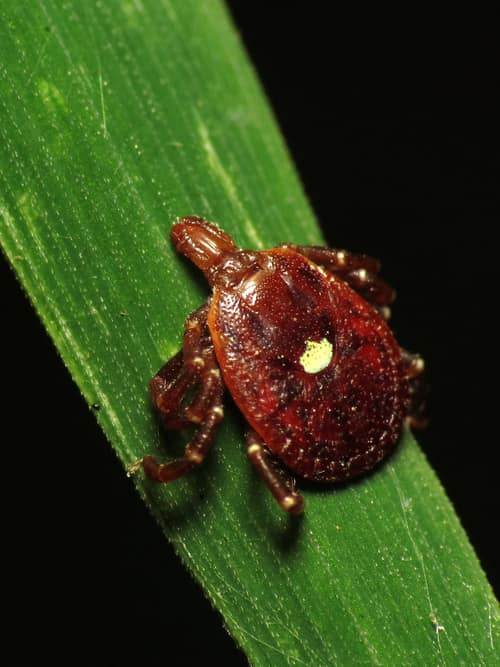
Co-occurring Vector (c) Katja Schulz, some rights reserved (CC BY) · cc-by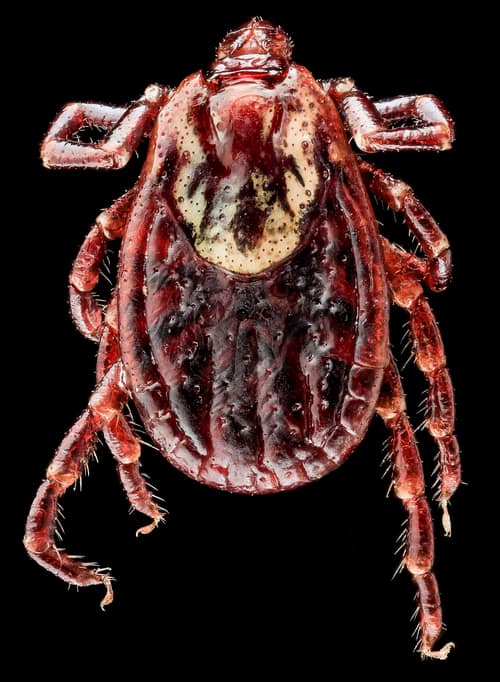
Co-occurring Parasite Sam Droege / CC BY 2.0 · cc-by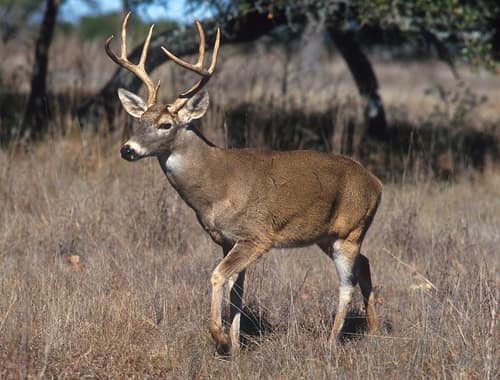
Host Species USDA photo by Scott Bauer / Public domain · cc0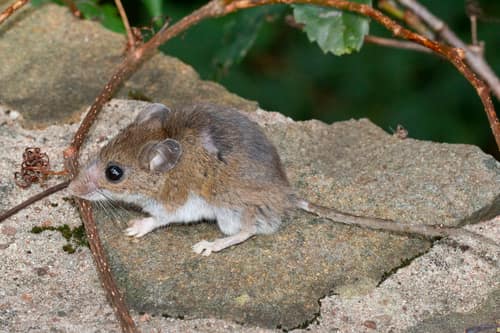
Reservoir Host (c) Kristof Zyskowski, some rights reserved (CC BY), uploaded by Kristof Zyskowski · cc-by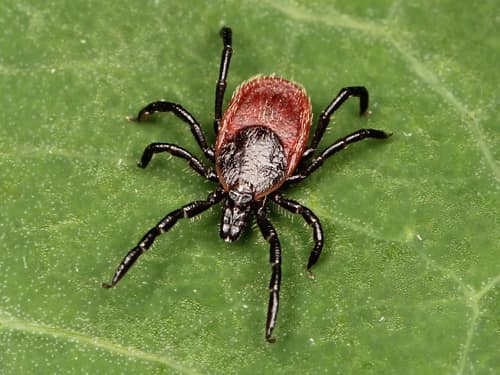
Close Relative no rights reserved, uploaded by Zygy · cc0
Help improve the field guideSomething wrong?
Checking your Fauna account…Report a name, category, or profile issue for review.