European house dust mites thrive in humid indoor microhabitats where warmth, fabric fibers, and an abundant supply of dead shed skin gather. They absorb ambient moisture directly through hygroscopic glands rather than drinking liquid water, making relative humidity above 50 percent essential to their survival. The digestive enzymes excreted in their microscopic fecal droppings remain stable in household dust for months, representing one of the primary triggers of indoor allergic asthma worldwide.
Not EvaluatedConservation statusIUCN Red List categoriesLCNTVUENCREWEXNot Evaluated — not placed on the risk ladderRed List categories, explained →
Key facts
Diet & preyHuman skin dander, Pet dander, Household mold spores
Predators
Predatory mite (Cheyletus eruditus)
Pseudoscorpion
Silverfish
ThreatsLow ambient humidity, thorough vacuuming, and laundering fabrics in hot water
HabitatsMattresses, bedding, carpets, and upholstered furniture
Life span65–100 days
Classification
FamilyPyroglyphidae
SpeciesDermatophagoides pteronyssinus
Range & activity
Range data is not available yet.
Safe observation
Interaction riskLow
Low
Moderate
High
Very high
Why interaction risk is low
Fecal pellets and shed molts contain potent allergens that trigger asthma and rhinitis in sensitized people.
Why it is dangerous
Produces Der p 1 and other digestive protease enzymes in fecal pellets that degrade epithelial barrier proteins, prompting severe allergic asthma, rhinitis, and atopic dermatitis.
How to recognize a risky encounter
Invisible without magnification, appearing under 40x zoom as an oval, translucent eight-legged arachnid with striated cuticle and no compound eyes.
What to do
Use allergen-impermeable encasements for mattresses and pillows, and wear a filtration mask when vacuuming infested carpets.
Responsible observation
Moisture control: Maintain indoor relative humidity below 50 percent to dehydrate populations and halt breeding.
Laundering: Wash bedding weekly in water heated to at least 55 degrees Celsius to eliminate mites and neutralize allergens.
Microscopy: Collect dust samples using an adhesive trap and inspect under low-power magnification to view live specimens.

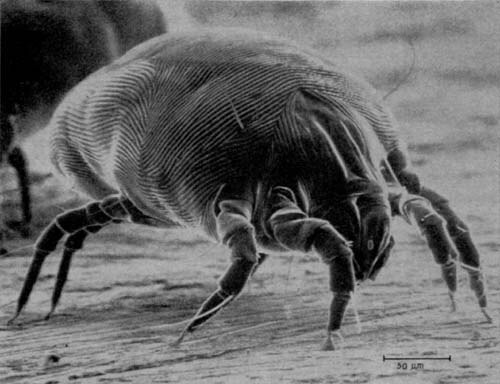
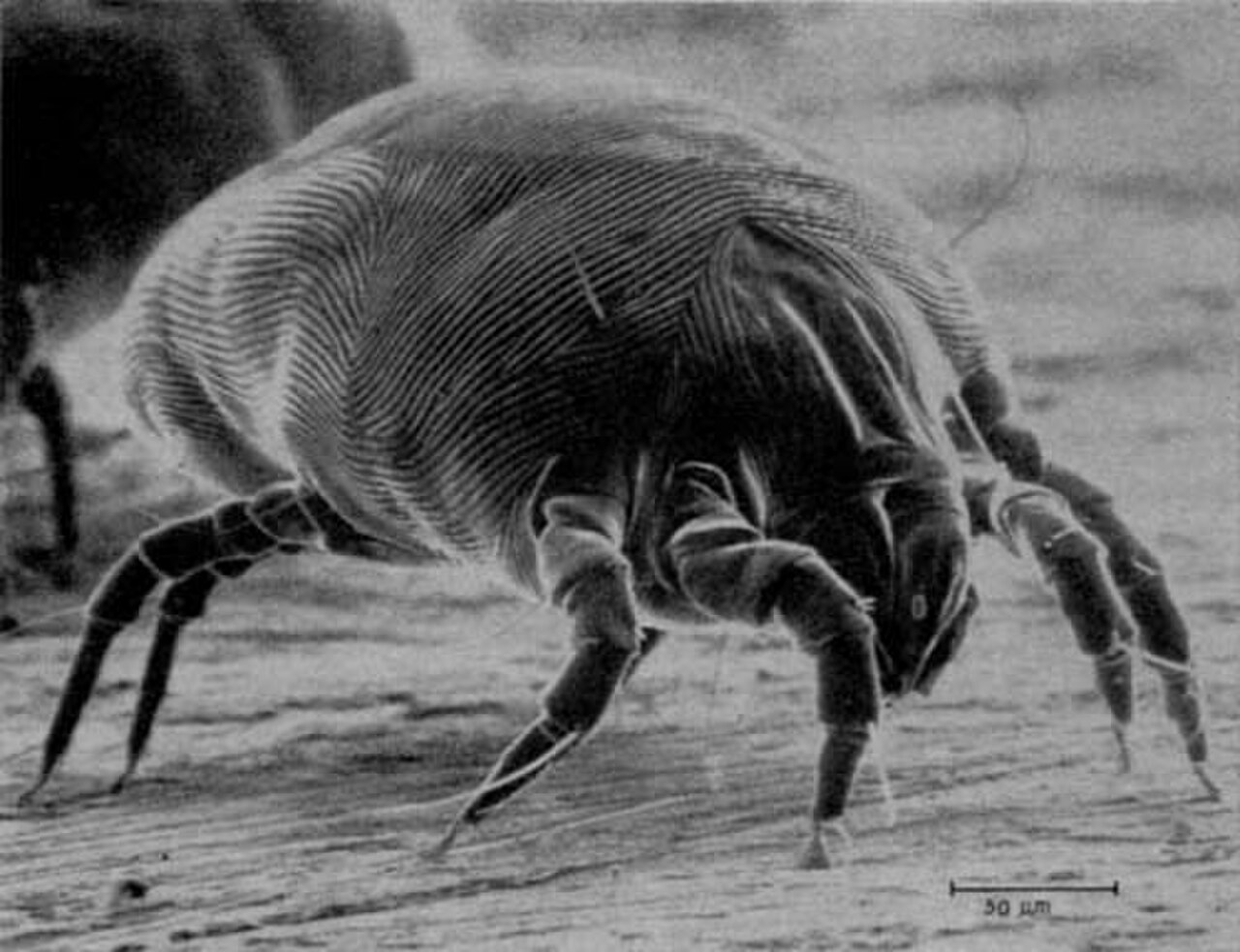
 Image unavailable