
Arachnid · GBIF taxon 2167266
Red-legged Purseweb Spider
Sphodros rufipesAlso known as Red-legged Purse-web Spider
Red-legged purseweb spiders build vertical, camouflaged silk tubes against the trunks of trees or stone surfaces, extending downward into subterranean burrows. When an insect crawls across the outer silk wall, the spider strikes from inside using outsized, forward-pointing chelicerae, impaling prey directly through the fabric before dragging it inward to feed. Reclusive females often remain inside a single retreat for multiple years, while mature males actively wander woodland floors in summer, flashing vivid crimson legs against a jet-black body.
ArachnidBurrowingPredatory
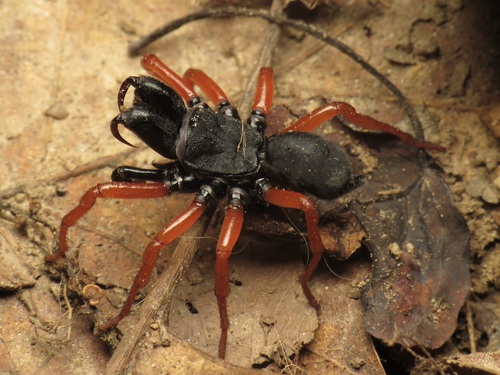
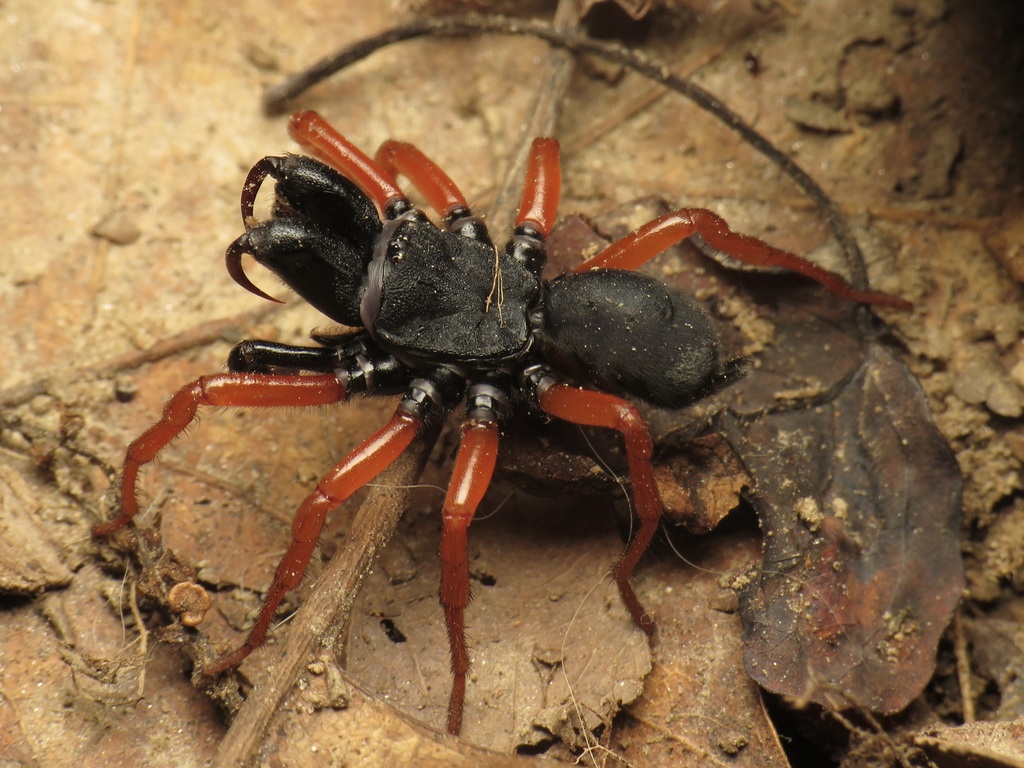
—observations
—countries
—peak records
Not EvaluatedConservation statusIUCN Red List categoriesLCNTVUENCREWEXNot Evaluated — not placed on the risk ladderRed List categories, explained →
Diet & prey
- Ground beetles
- Camel crickets
- Millipedes
Predators
- Spider wasps
- Shrews
- Ground-foraging birds
ThreatsHabitat fragmentation, leaf litter removal, and soil compaction
HabitatsDeciduous woodlands, shaded ravines, and moist forest slopes
Life span5–8 years for females; 2–3 years for males
Size / weightNot available
Classification
- OrderAraneae
- FamilyAtypidae
- GenusSphodros
- SpeciesSphodros rufipes
Range data is not available yet.
Interaction riskVery high
- Low
- Moderate
- High
- Very high
- Why interaction risk is very high
- Safe to observe at a normal distance.
Responsible observation
- Spotting: Scan the bases of mature hardwood trunks for dirty, finger-thick silk tubes disguised with moss and soil.
- Observation: Avoid peeling or poking the silk tube, which destroys the spider's hunting retreat.
- Timing: Look along woodland paths in early summer to encounter wandering red-legged males searching for mates.
 Image unavailable
Prey Close Relative Close Relative Same Family
Help improve the field guideSomething wrong?
Checking your Fauna account…Report a name, category, or profile issue for review.