
Arachnid
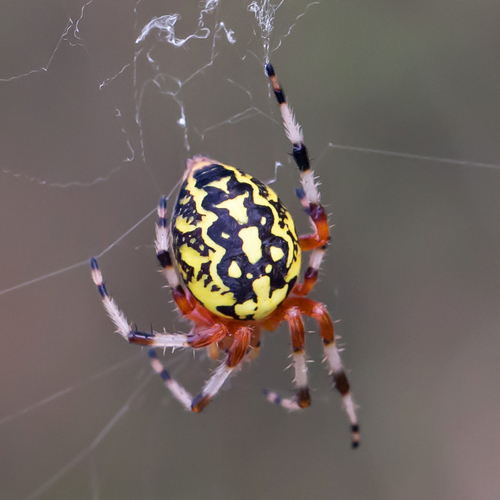
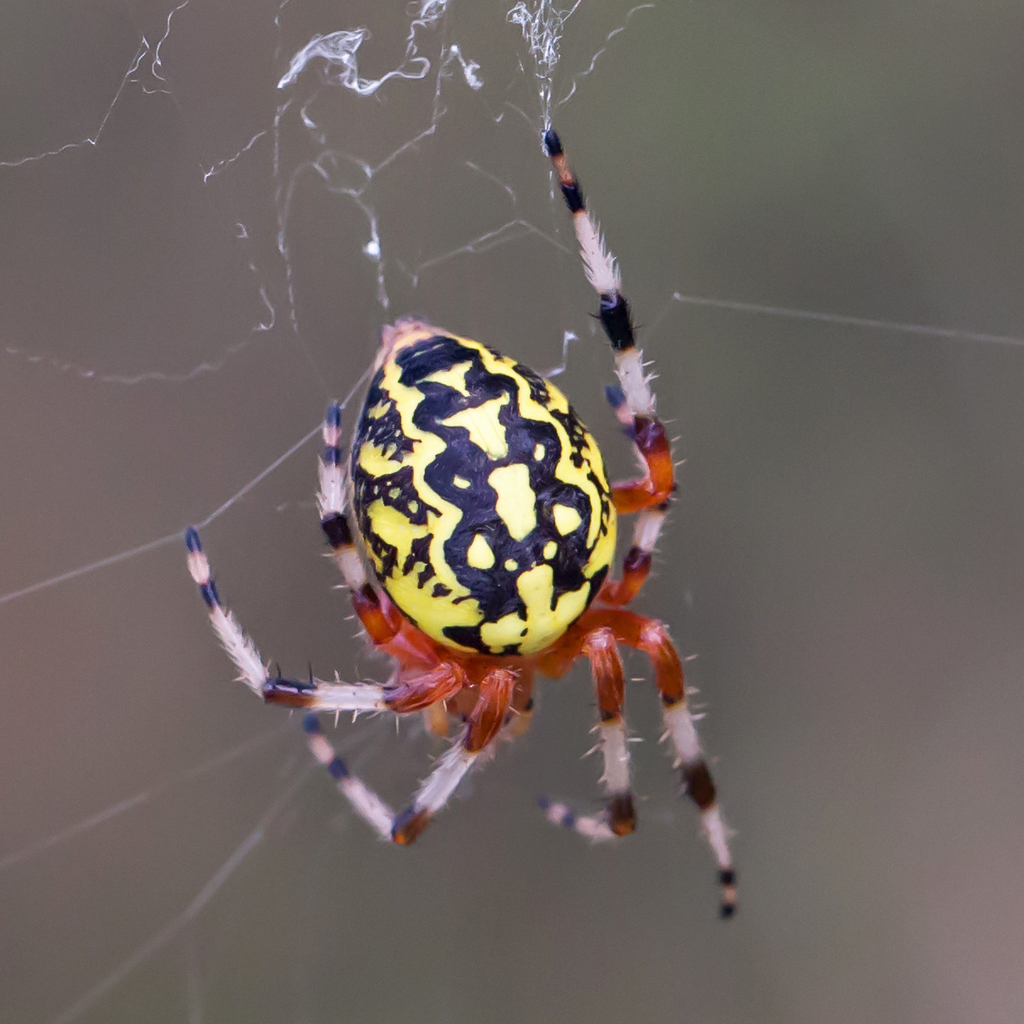
Marbled Orbweaver
Araneus marmoreusAlso known as Pumpkin Spider, Marbled Spider
Marbled orbweavers construct vertical spiral webs across woodland openings, waiting inside a silk-lined curled leaf retreat positioned just above the web. Adult females swell dramatically in mid-autumn, displaying a vivid yellow, orange, or marbled abdominal pattern that aids in thermal regulation during cooling days. A single tension line connects the hidden spider's claw to the web center, transmitting vibrations the instant an unsuspecting flying insect strikes the sticky threads.
Web WeaverHolarcticWoodland
—observations
—countries
—peak records
Least ConcernConservation statusIUCN Red List categoriesLCNTVUENCREWEXLeast ConcernRed List categories, explained →
Diet & preyMoths, Flies, Craneflies
Predators
- Blue jays and other songbirds
- Mud dauber wasps
- Treefrogs
ThreatsWidespread insecticide application, habitat destruction, and removal of understory shrubs
HabitatsDeciduous and mixed forests, wooded stream margins, overgrown fields, and shrubby forest edges
Life spanAbout 1 year
Classification
- OrderAraneae
- FamilyAraneidae
- GenusAraneus
- SpeciesAraneus marmoreus
Range data is not available yet.
Interaction riskLow
- Low
- Moderate
- High
- Very high
- Why interaction risk is low
- Safe to observe at a close distance; bites are exceptionally rare, defensive, and medically harmless.
Responsible observation
- Spotting the Retreat: Follow the silk signal line from the web hub to a nearby curled leaf where the spider hides.
- Gentle Lighting: Use low-angle flashlight illumination at dawn or dusk to highlight web architecture without disturbing the spider.
- Autumn Timing: Look in low trees and tall bushes during October when mature females reach their largest, roundest size.
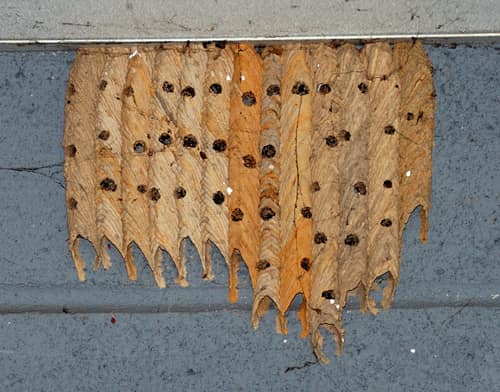
Predator (c) Michael K. Oliver, Ph.D., some rights reserved (CC BY), uploaded by Michael K. Oliver, Ph.D. · cc-by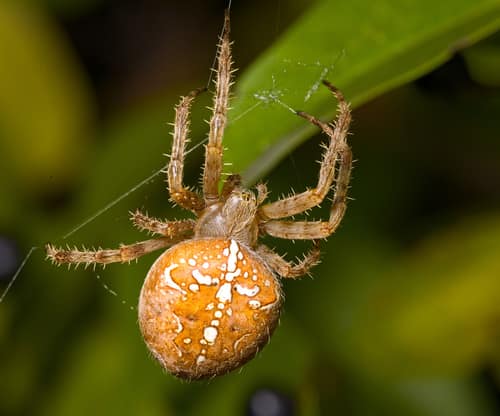
Close Relative (c) hedera.baltica, some rights reserved (CC BY-SA) · cc-by-sa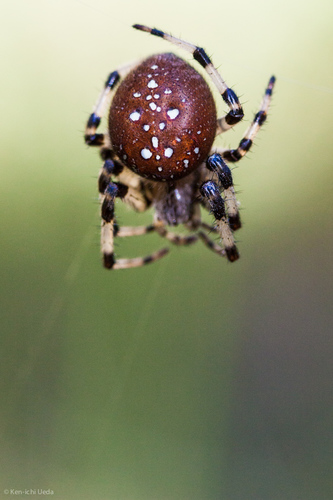
Close Relative (c) Ken-ichi Ueda, some rights reserved (CC BY) · cc-by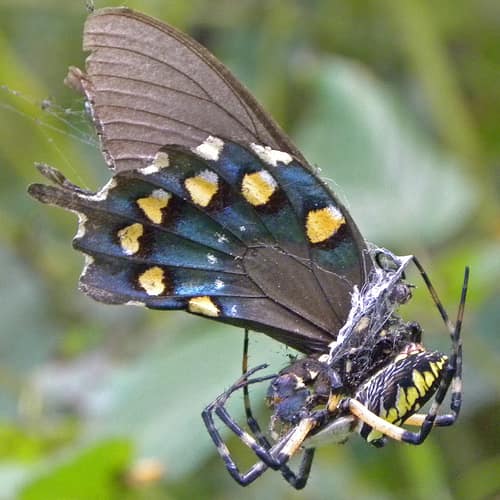
Same Family (c) M. Whitson, some rights reserved (CC BY) · cc-by
Help improve the field guideSomething wrong?
Checking your Fauna account…Report a name, category, or profile issue for review.