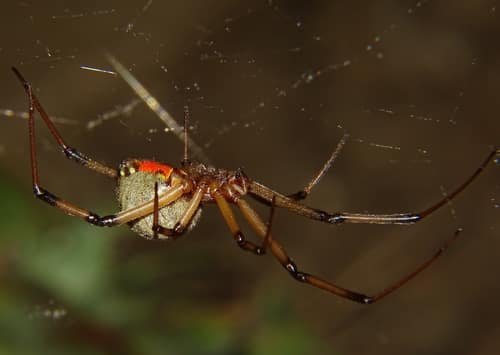
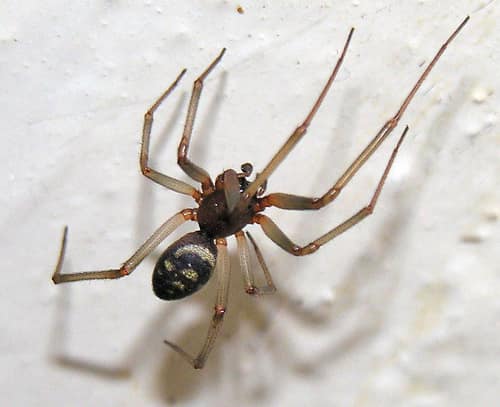
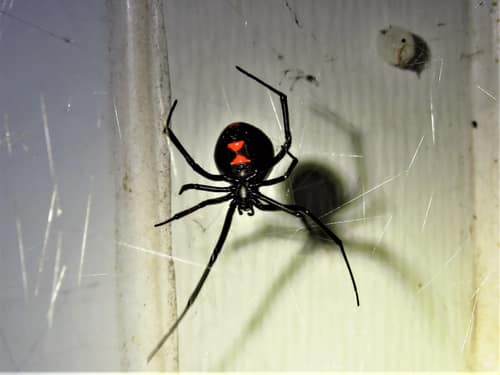
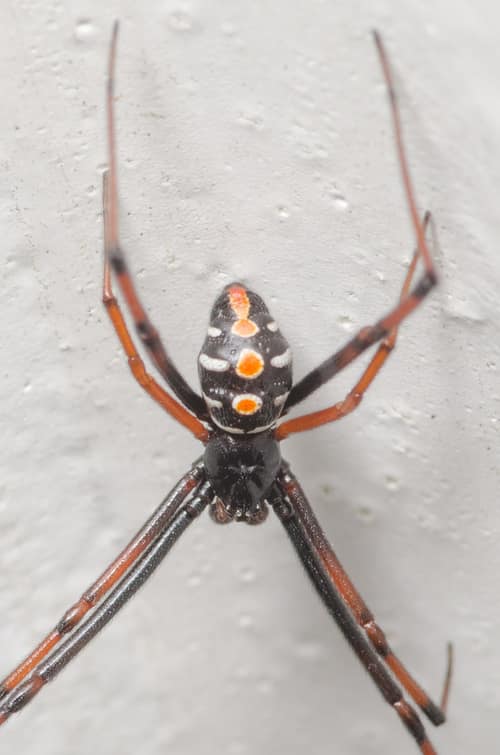
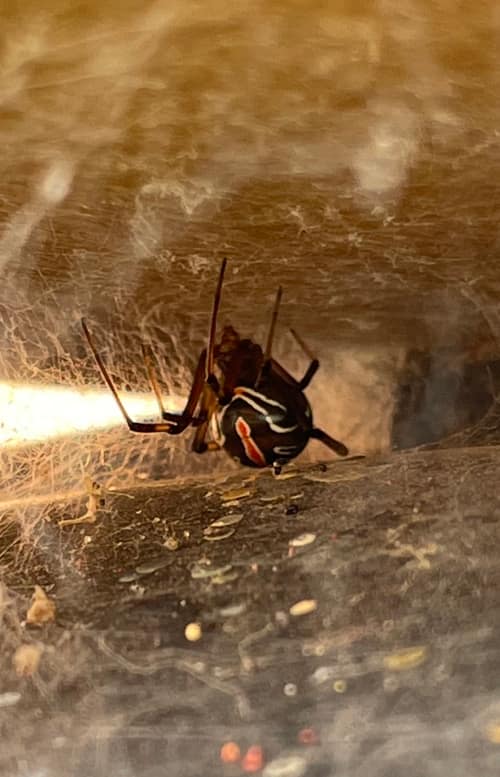
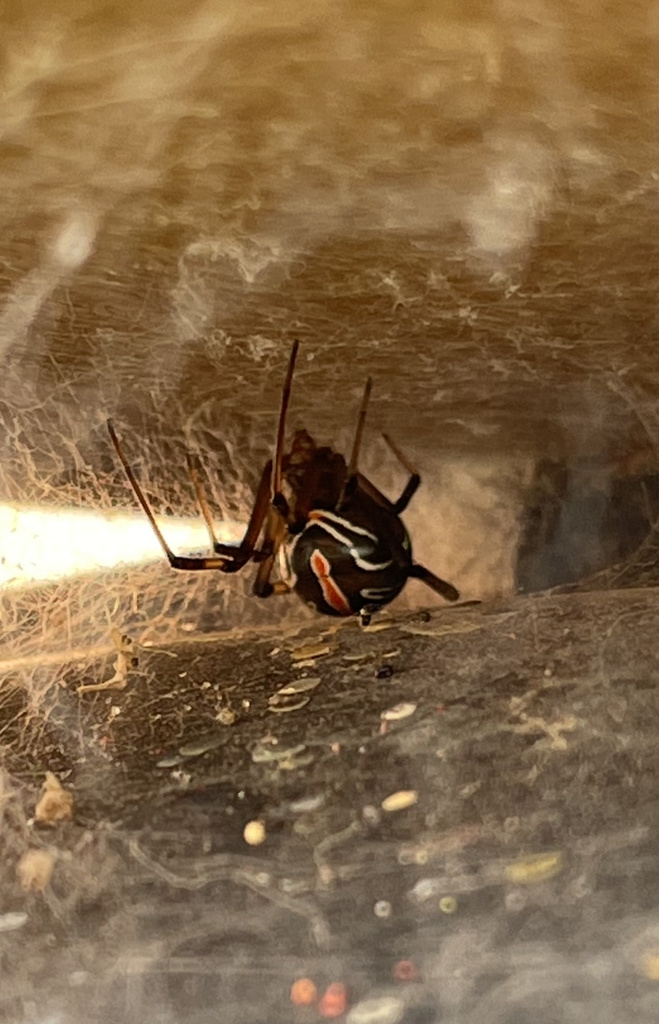
Western black widows weave tangled webs of exceptionally tough silk in low, dark corners to snare walking insects. Females spend most of their lives hanging upside down near the center of these irregular cobwebs, retreating into protective crevices at the slightest vibration. While their potent neurotoxic venom efficiently paralyzes prey, they act timidly toward humans and bite only when crushed or cornered.
Not EvaluatedConservation statusIUCN Red List categoriesLCNTVUENCREWEXNot Evaluated — not placed on the risk ladderRed List categories, explained →
Key facts
Diet & prey
Crickets
Beetles
Cockroaches
Predators
Mud dauber wasps
Lizards
Birds
ThreatsHabitat disturbance, pesticide application, human eradication
HabitatsArid scrublands, deserts, woodpiles, rock crevices, human structures
Life span1–3 years
Classification
OrderAraneae
FamilyTheridiidae
GenusLatrodectus
SpeciesLatrodectus hesperus
Range & activity
Range data is not available yet.
Safe observation
Interaction riskVery high
Low
Moderate
High
Very high
Why interaction risk is very high
Injects neurotoxic venom if squeezed or pressed; keep hands out of dark, unlit crevices.
Why it is dangerous
Bites deliver latrotoxin, a potent neurotoxin that causes severe muscular pain, cramping, nausea, and intense systemic discomfort requiring prompt medical evaluation.
How to recognize a risky encounter
Look for shiny black females displaying a prominent red or orange hourglass mark on the underside of a round, globular abdomen.
What to do
Never touch directly or reach into dark, unlit woodpiles or crawlspaces without protective leather gloves and adequate lighting.
Responsible observation
Wear gloves: Use thick leather gloves when moving firewood, yard debris, or stored boxes.
Inspect dark spots: Look under outdoor furniture, dark ledges, and debris before reaching inside.
Observe from distance: Maintain distance when observing webs, as bites occur when directly pinched.

 1 / 7
1 / 7