
Arachnid
Black Cobweb Spider
Steatoda capensisAlso known as Brown House Spider, Cupboard Spider, False Katipō
Black cobweb spiders spin tangled, irregular webs in dark corners, under rocks, and around human dwellings, waiting out of sight in a silk retreat until prey blunders into sticky anchor threads. Native to South Africa, this adaptable arachnid has spread widely across New Zealand and Australia, where it often outcompetes native cobweb spiders. Females guard round, papery egg sacs suspended in the web and can produce multiple broods over a single warm season.
NocturnalWeb-BuildingSynanthropic
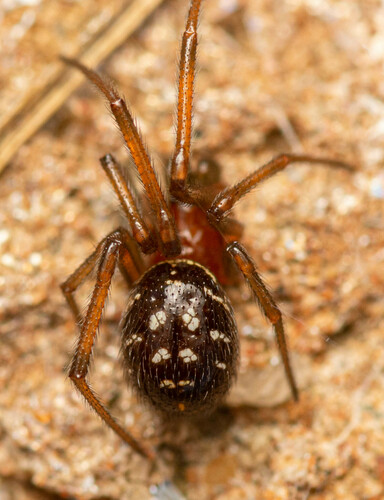
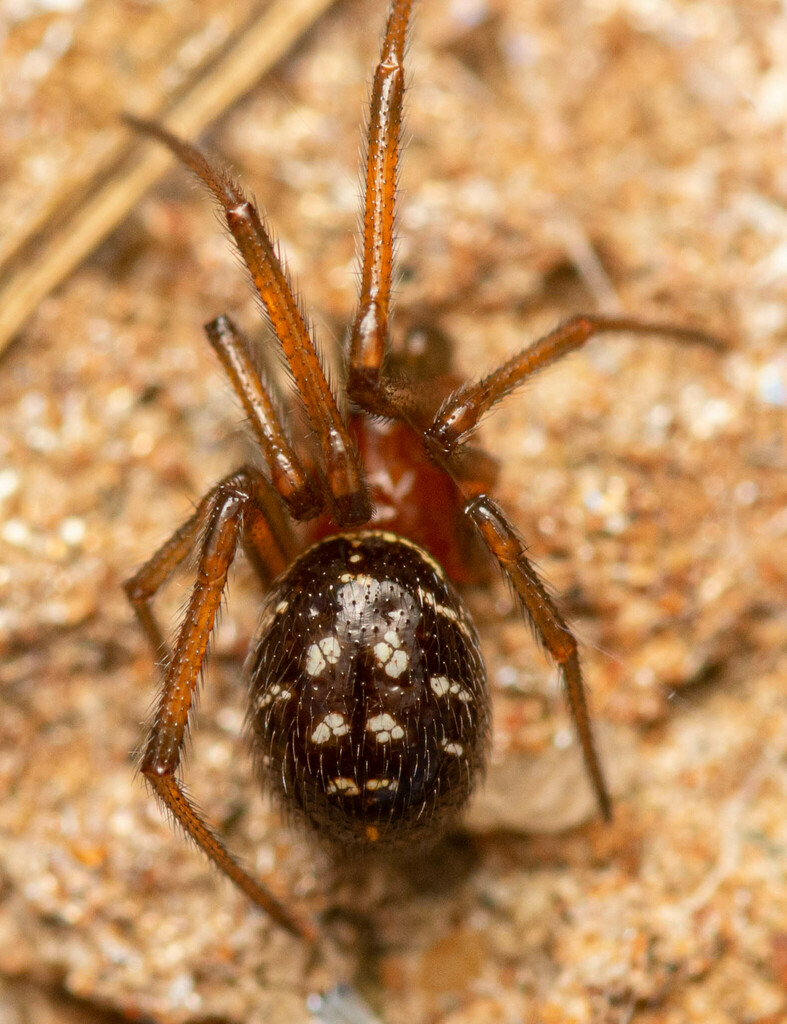
—observations
—countries
—peak records
Not EvaluatedConservation statusIUCN Red List categoriesLCNTVUENCREWEXNot Evaluated — not placed on the risk ladderRed List categories, explained →
Diet & preyFlies, Beetles, Woodlice
Predators
- Mud-dauber wasps
- Birds
- White-tailed spiders
ThreatsHabitat disturbance, pesticides, and predation by birds and wasps
HabitatsUnder stones, logs, bark, and in garages, sheds, and garden corners
Life span1–2 years (females live longer than males)
Classification
- OrderAraneae
- FamilyTheridiidae
- GenusSteatoda
- SpeciesSteatoda capensis
Range data is not available yet.
Interaction riskLow
- Low
- Moderate
- High
- Very high
- Why interaction risk is low
- Safe to observe at a normal distance; reluctant to bite, with rare bites causing mild, localized pain.
Responsible observation
- Web Inspection: Look for messy, three-dimensional cobwebs low to the ground near baseboards, rocks, or window frames.
- Gentle Observation: Use a flashlight at night to see females hanging upside down in the center of their webs.
- Safe Relocation: Guide any indoor spiders into a cup with a piece of stiff paper rather than handling them bare-handed.
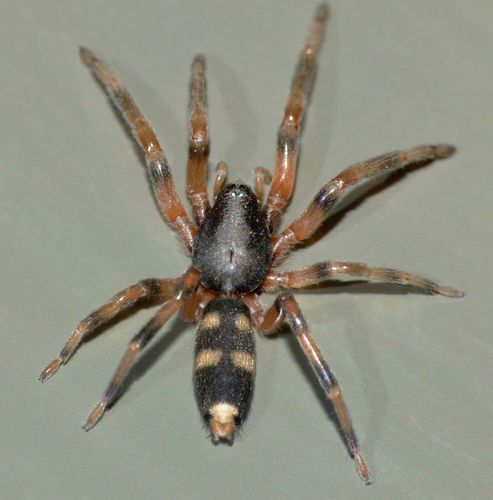
Predator (c) Steve Kerr, some rights reserved (CC BY), uploaded by Steve Kerr · cc-by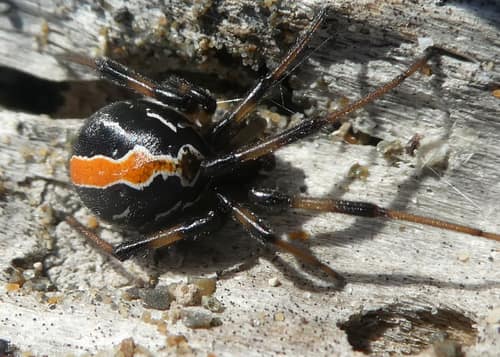
Same Family (c) Mark Anderson, some rights reserved (CC BY-SA), uploaded by Mark Anderson · cc-by-sa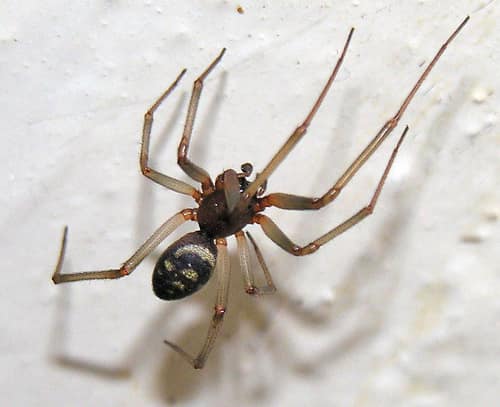
Close Relative (c) anonymous, some rights reserved (CC BY-SA) · cc-by-sa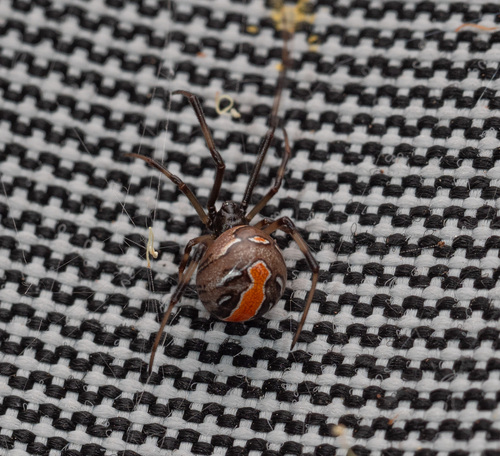
Same Family (c) Paul Whitington, some rights reserved (CC BY), uploaded by Paul Whitington · cc-by
Help improve the field guideSomething wrong?
Checking your Fauna account…Report a name, category, or profile issue for review.