
Brazilian Salmon Pink Tarantula
Lasiodora parahybanaAlso known as Brazilian Salmon Pink Bird-eating Tarantula, Salmon Pink Bird-eater, Salmon Pink Tarantula
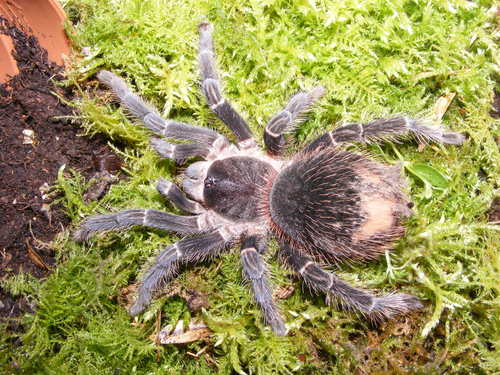
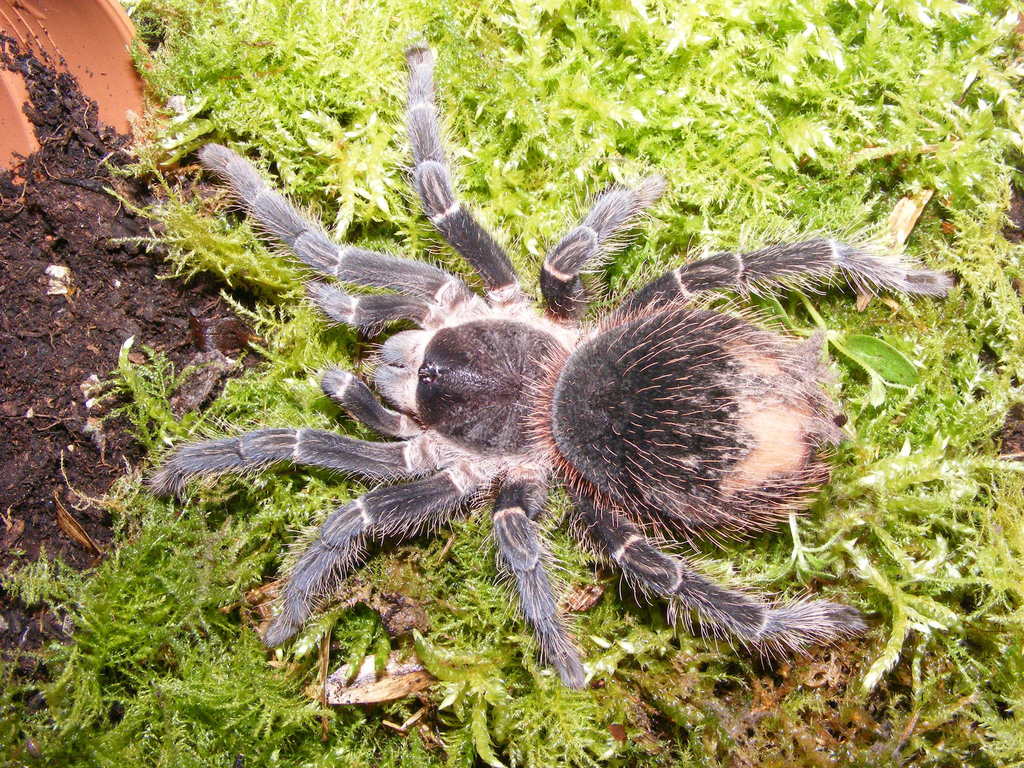
Brazilian salmon pink tarantulas stalk the forest floor of eastern Brazil, using specialized vibration-sensitive slit sensilla on their legs to detect passing quarry in complete darkness. When threatened, these massive arachnids rear back to display substantial fangs and vigorously flick clouds of barbed urticating hairs from their abdomen. Though fast-growing and voracious, they spend much of their daylight hours concealed beneath fallen logs, leaf litter, or abandoned burrows.
- Tarantula hawk wasp
- South American coati
- Large terrestrial snakes
- OrderAraneae
- FamilyTheraphosidae
- GenusLasiodora
- SpeciesLasiodora parahybana
- Low
- Moderate
- High
- Very high
- Why interaction risk is very high
- Flicks irritating abdominal hairs when stressed and delivers a painful defensive bite; observe from a distance.
- Why it is dangerous
- Barbed urticating setae kicked from the abdomen embed in skin and eyes, causing intense itching, swelling, and severe corneal damage.
- How to recognize a risky encounter
- Recognizable by its immense black body accented with long, shaggy salmon-pink hairs across the abdomen and legs.
- What to do
- Back away immediately if the spider raises its front legs or rubs its hind legs against its abdomen to release bristles.
- Safe Distance: Keep at least two meters back to avoid airborne urticating hairs.
- Ground Scanning: Watch the forest floor near fallen timber at twilight for active foragers.
- No Handling: Never touch or corral an individual, as kicked hairs cause severe dermatitis.
 Image unavailable
Competitor 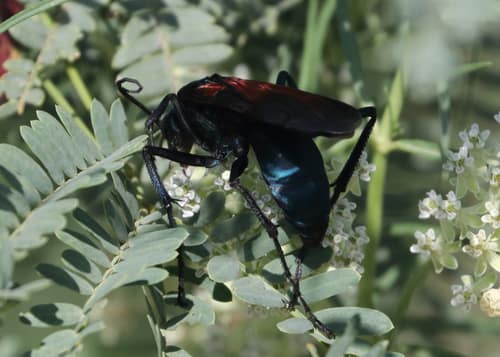
Predator (c) Seth Wollney, some rights reserved (CC BY) · cc-by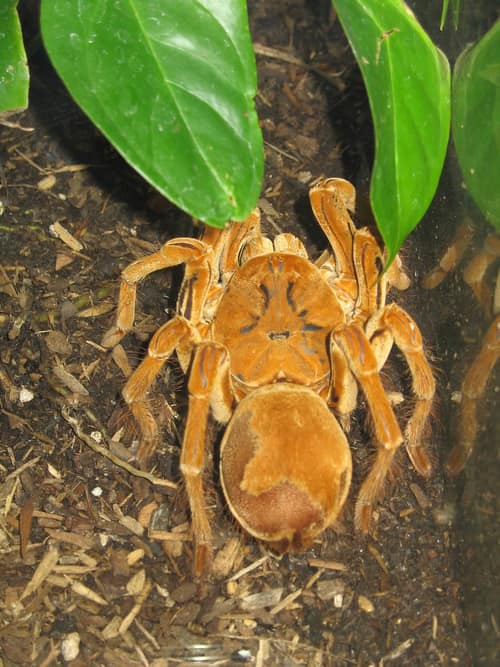
Close Relative "Goliath Birdeater Spider, Smithsonian Museum of Natural History, Washington DC" by nikoretro is licensed under CC BY-SA 2.0. To view a copy of this license, visit https://creativecommons.org/licenses/by-sa/2.0/. · cc-by-sa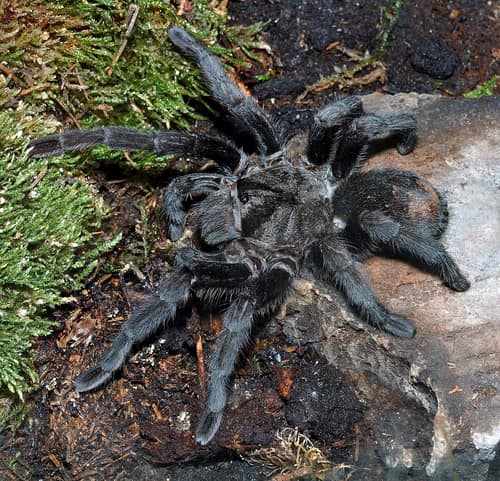
Family Member André Karwath aka Aka / CC BY-SA 2.5 · cc-by-sa
Found in Collections
Desert Sands
Brazilian Salmon Pink Tarantula is found in this collection. Identify it in Fauna to fill this slot and continue your progress.
Unlock to track progress
Report a name, category, or profile issue for review.