
Arachnid · GBIF taxon 2153759
Hispaniolan Giant Tarantula
Phormictopus canceridesAlso known as Hispaniolan Bronze Tarantula, Haitian Giant Tarantula, Hispaniolan Giant Bronze Tarantula
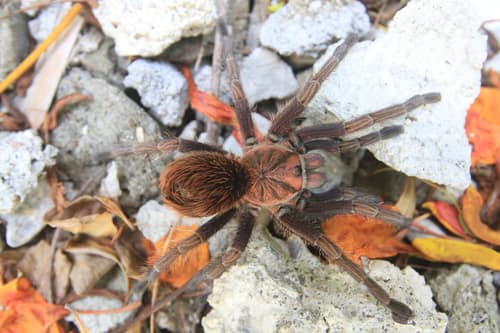
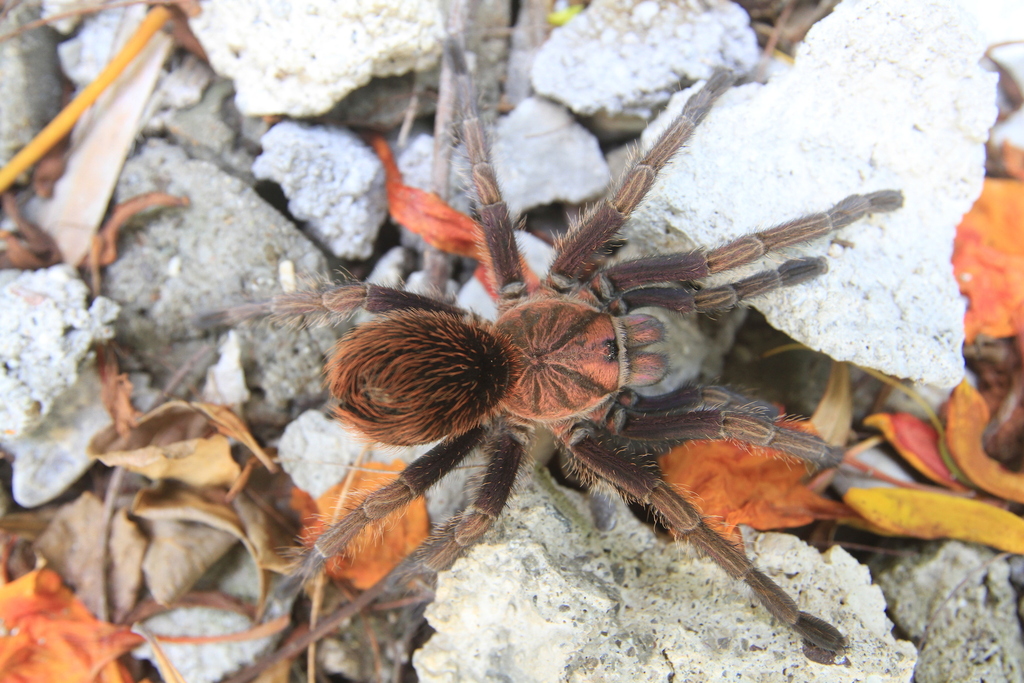
Hispaniolan giant tarantulas are formidable opportunistic ambushers that spend daylight hours concealed in deep silk-lined burrows, rock crevices, or beneath fallen logs. At night, adults emerge to hunt large invertebrates and small vertebrates along the forest floor with sudden bursts of speed. Adult males feature a striking iridescent bronze or violet sheen across their carapace after their final molt, while females retain a heavier, dark metallic brown appearance across a lifespan that can span decades.
NocturnalBurrowingPredatory
—observations
—countries
—peak records
Not EvaluatedConservation statusIUCN Red List categoriesLCNTVUENCREWEXNot Evaluated — not placed on the risk ladderRed List categories, explained →
Diet & prey
- Insects
- Lizards
- Small rodents
Predators
- Birds of prey
- Pepsis wasps
- Coatis
ThreatsHabitat loss, collection for the exotic pet trade, human persecution
HabitatsTropical dry forests, scrublands, rainforest edges, agricultural areas
Life spanFemales 15–20 years; males 3–5 years
Size / weightNot available
Classification
- FamilyTheraphosidae
- SpeciesPhormictopus cancerides
Range data is not available yet.
Interaction riskVery high
- Low
- Moderate
- High
- Very high
- Why interaction risk is very high
- Delivers a painful bite and kicks urticating hairs when threatened; observe safely from a distance.
- Why it is dangerous
- Fangs inflict a painful bite with mild venom, while urticating abdominal hairs cause severe skin and respiratory irritation.
- How to recognize a risky encounter
- Recognized by its large size, dark metallic brown to bronze color, and silk-draped ground burrows.
- What to do
- Do not touch or corner this spider, and back away immediately if it raises its front legs in defense.
Responsible observation
- Maintain distance: Stay at least a meter back to avoid triggering defensive hair-kicking or threat poses.
- Night observation: Use a red-light torch after dark to spot spiders waiting at burrow entrances.
- Respect burrows: Leave silk-covered ground holes untouched, as damaging them exposes spiders to danger.
 Image unavailable
Co-occurring Reptile Predator Close Relative
Help improve the field guideSomething wrong?
Checking your Fauna account…Report a name, category, or profile issue for review.