
Arachnid · GBIF taxon 2153726
Pampean Redhead Tarantula
Grammostola vachoniAlso known as Argentine Redhead Tarantula
Pampean Redhead Tarantulas construct deep silk-lined burrows beneath rocks and crevices across the windswept grasslands of central Argentina. Females spend most of their long lives near these protective retreats, ambush-hunting nocturnal insects and small vertebrates that stray too close. Males wander extensively during the humid breeding season in search of mates, facing high exposure to predators and extreme weather.
BurrowingSouth American
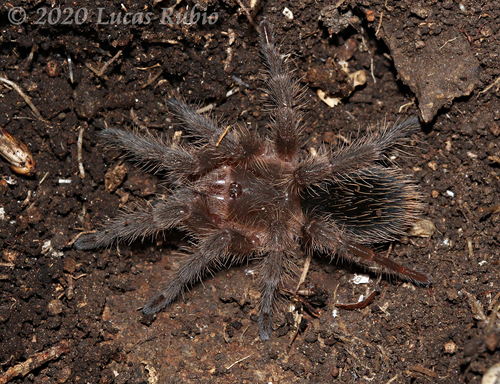
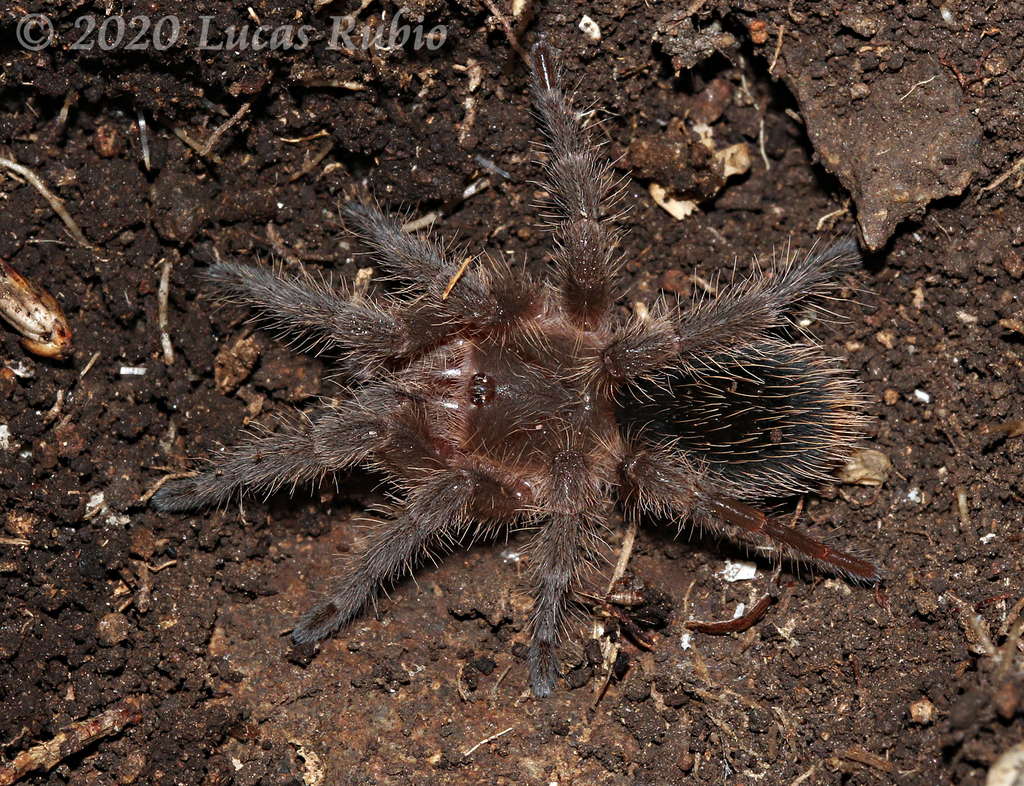
—observations
—countries
—peak records
VulnerableConservation statusIUCN Red List categoriesLCNTVUENCREWEXVulnerableRed List categories, explained →
Diet & prey
- Crickets
- Beetles
- Cockroaches
Predators
- Pompilid Wasps
- Birds of Prey
- Small Mammals
ThreatsHabitat loss, agricultural expansion, illegal collection
HabitatsGrasslands, rocky outcrops, scrublands
Life spanFemales 15–20 years, males 5–7 years
Size / weightNot available
Classification
- FamilyTheraphosidae
- SpeciesGrammostola vachoni
Range data is not available yet.
Interaction riskVery high
- Low
- Moderate
- High
- Very high
- Why interaction risk is very high
- Flicks irritating abdominal hairs and can deliver a mild bite; observe safely without handling.
- Why it is dangerous
- Possesses barbed abdominal urticating hairs that cause painful skin rash and eye irritation, alongside a mildly venomous bite.
- How to recognize a risky encounter
- Identified by a velvety dark body framed by conspicuous reddish-orange hairs on the abdomen and legs.
- What to do
- Maintain a respectful distance and avoid prodding burrows or harassing wandering individuals.
- What to notice
- Found under natural rock slabs in rocky grassland habitats within central Argentina.
- Support conservation
- Keep exact location coordinates private and leave natural rock structures completely undisturbed.
Responsible observation
- Observation: Watch from a short distance with a flashlight during evening hours when individuals emerge near burrow entrances.
- Handling Caution: Avoid touching or disturbing burrows, as contact causes urticating hairs to shed into the air.
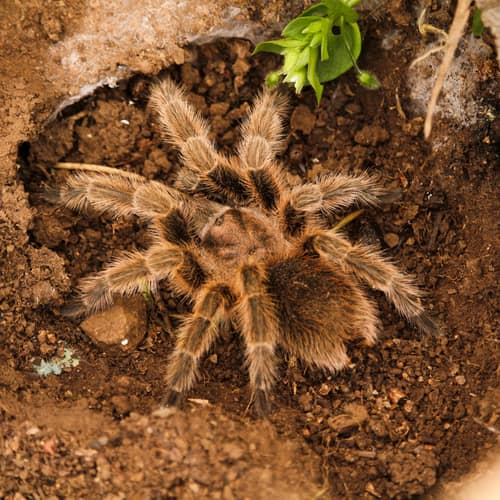
Close Relative no rights reserved, uploaded by Perrito Chiquitito · cc0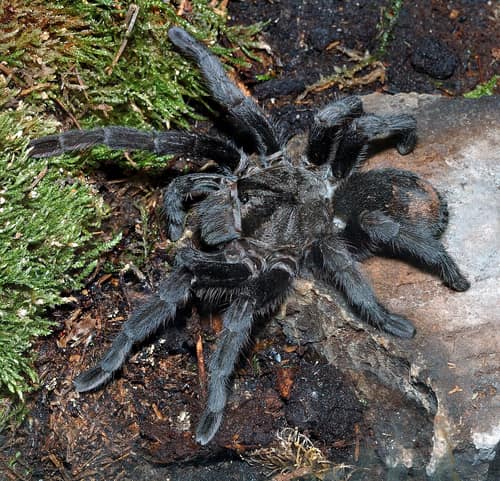
Close Relative André Karwath aka Aka / CC BY-SA 2.5 · cc-by-sa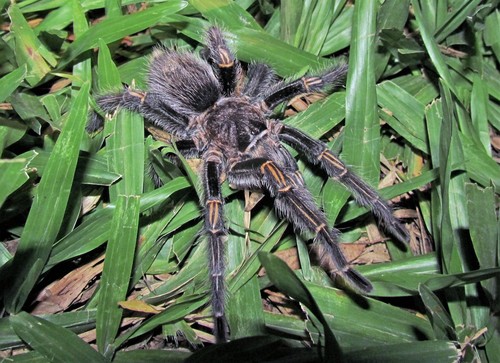
Close Relative no rights reserved, uploaded by Hugo Hulsberg · cc0
Help improve the field guideSomething wrong?
Checking your Fauna account…Report a name, category, or profile issue for review.