
Arachnid
Antrodiaetus unicolor
Antrodiaetus unicolorAlso known as Folding-Door Spider
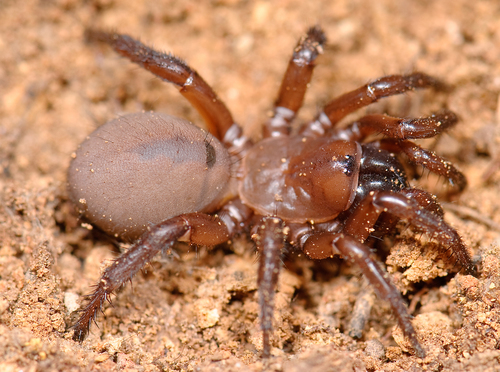
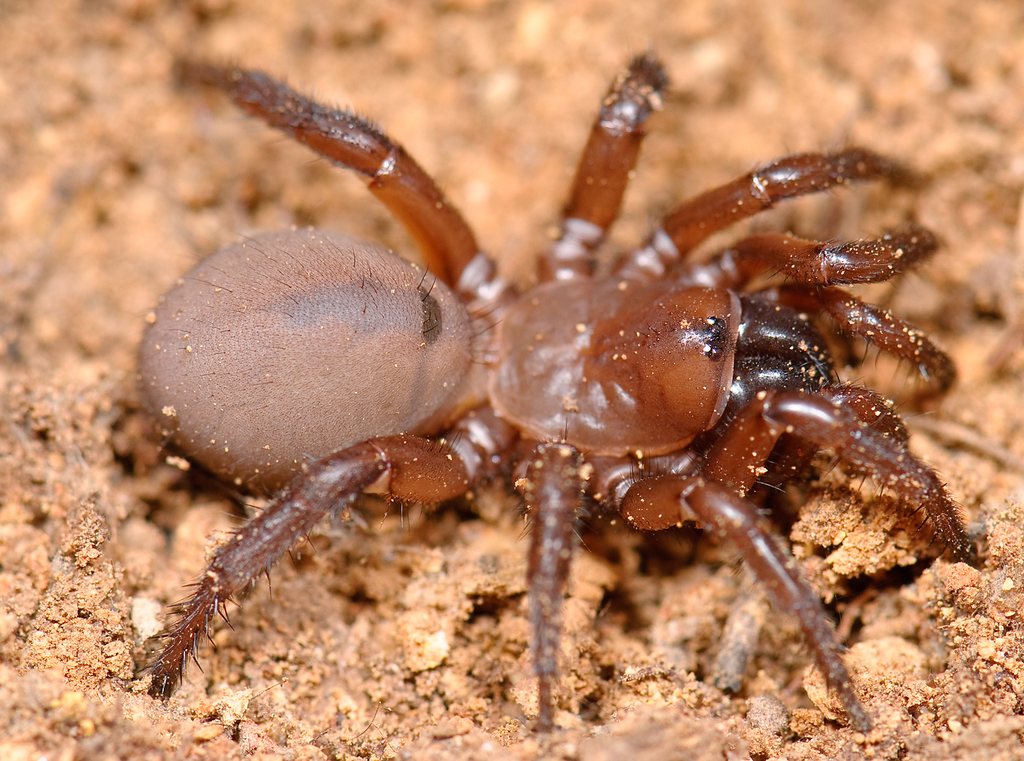
Folding-door spiders construct subterranean, silk-lined burrows tucked into mossy road cuts, ravine banks, and shaded forest floors. The entrance is camouflaged beneath a collapsible collar of two flexible, silk-and-soil flaps that remain shut until passing prey touches radiating silk trip lines. Females live sedentary lives inside their shelters for over a decade, while mature males emerge in autumn to wander damp leaf litter in search of mates.
NocturnalBurrowerCryptic
—observations
—countries
—peak records
Not EvaluatedConservation statusIUCN Red List categoriesLCNTVUENCREWEXNot Evaluated — not placed on the risk ladderRed List categories, explained →
Diet & preyGround Beetles, Crickets, Millipedes
Predators
- Spider Wasps
- Centipedes
- Shrews
ThreatsHabitat fragmentation, clear-cutting, and soil compaction
HabitatsDeciduous forest floors, mossy earthen banks, and shaded ravine slopes
Life span5–15 years
Classification
- OrderAraneae
- FamilyAntrodiaetidae
- GenusAntrodiaetus
- SpeciesAntrodiaetus unicolor
Range data is not available yet.
Interaction riskVery high
- Low
- Moderate
- High
- Very high
- Why interaction risk is very high
- Safe to observe at a normal distance; bites are non-toxic and exceedingly rare.
Responsible observation
- Spotting: Scan mossy earthen embankments and ravine cuts in mature woods for tiny double-flapped burrow mouths.
- Season: Look along damp woodland trails in autumn when wandering males search for females.
- Night Viewing: Use a low-intensity red flashlight after dusk to see spiders waiting at the burrow opening.
 Image unavailable
Neighbor Close Relative Same Family
Help improve the field guideSomething wrong?
Checking your Fauna account…Report a name, category, or profile issue for review.