
Arachnid
South American Toothed Hacklemesh Weaver
Metaltella simoniAlso known as Hacklemesh Weaver, Simon's Hacklemesh Weaver
South American toothed hacklemesh weavers spin tangled, woolly webs of cribellate silk within sheltered crevices, under tree bark, and around the foundations of buildings. Females spend the daytime tucked inside silk retreats, emerging at night to capture wandering insects, and diligently guard their lens-shaped egg sacs through early summer. Native to the Southern Cone of South America, they have established widespread urban and suburban populations across the southern United States and parts of California.
NocturnalWeb-BuildingIntroduced
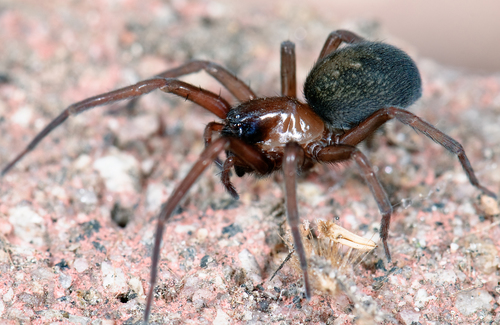
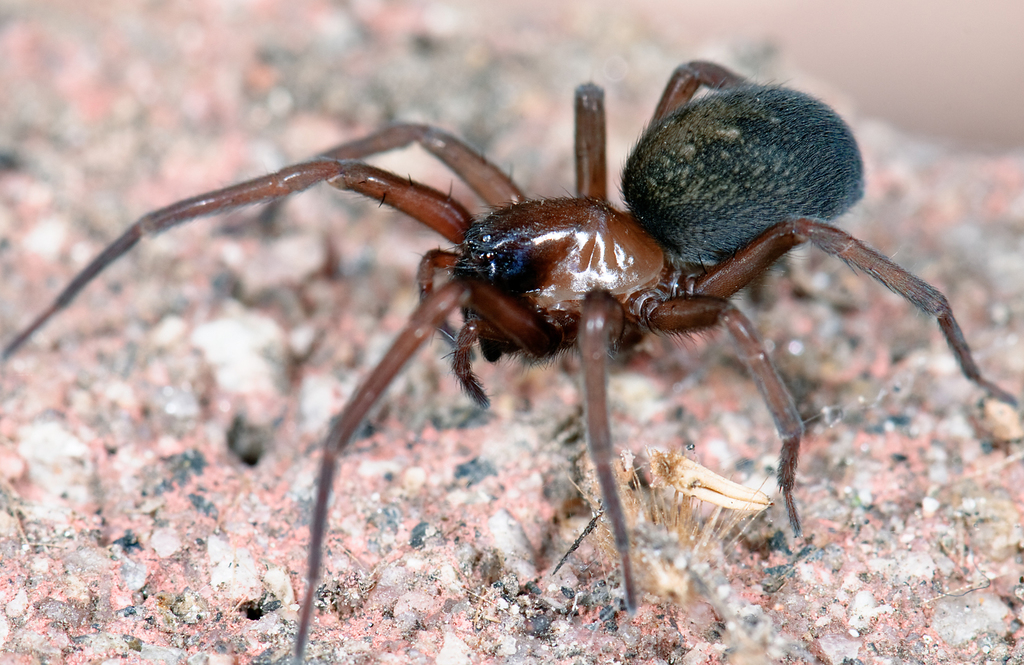
—observations
—countries
—peak records
Not EvaluatedConservation statusIUCN Red List categoriesLCNTVUENCREWEXNot Evaluated — not placed on the risk ladderRed List categories, explained →
Diet & preyCrickets, Beetles, Woodlice
Predators
- Insectivorous birds
- Spider wasps
- Larger wandering spiders
ThreatsDirect pesticide applications and severe cold snaps
HabitatsUnder loose bark, rock piles, leaf litter, and exterior crevices of human structures
Life span1–2 years
Classification
- OrderAraneae
- FamilyDesidae
- GenusMetaltella
- SpeciesMetaltella simoni
Range data is not available yet.
Interaction riskLow
- Low
- Moderate
- High
- Very high
- Why interaction risk is low
- Reluctant to bite and harmless to humans; safe to observe at a normal distance.
Responsible observation
- Flashlight spotting: Look for their distinctive fuzzy, unorganized webs around exterior window frames and siding at night.
- Careful inspection: Check the head region for eight eyes arranged in two rows to distinguish it from six-eyed recluse spiders.
- Gentle relocation: Trap indoor wanderers beneath a clear cup and a stiff piece of paper to safely move them outside.
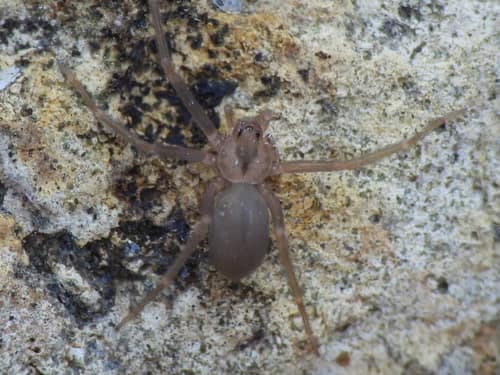
Look-Alike (c) Sam Kieschnick, some rights reserved (CC BY) · cc-by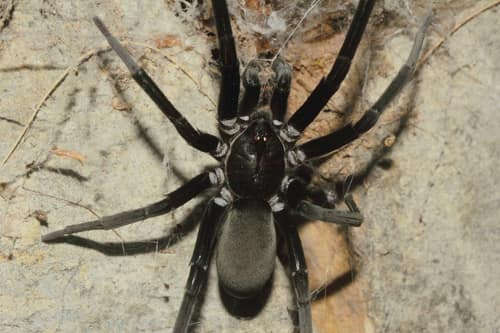
Competitor (c) Juan Cruzado Cortés, some rights reserved (CC BY-SA), uploaded by Juan Cruzado Cortés · cc-by-sa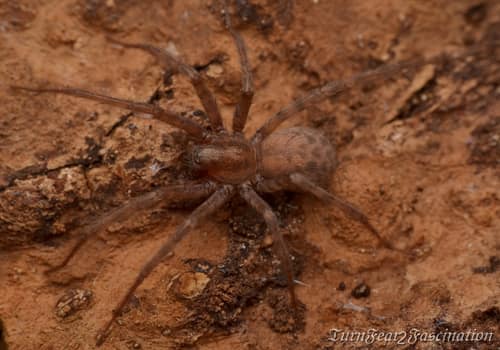
Competitor (c) Tone Killick, some rights reserved (CC BY), uploaded by Tone Killick · cc-by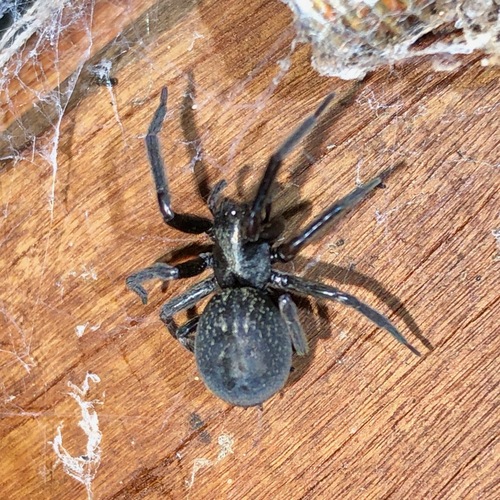
Close Relative (c) James K. Douch, some rights reserved (CC BY-SA) · cc-by-sa
Help improve the field guideSomething wrong?
Checking your Fauna account…Report a name, category, or profile issue for review.