
Arachnid
Black House Spider
Badumna insignisAlso known as Common Black Spider, Window Spider
Black house spiders spin intricate, zigzagged tangles of woolly cribellate silk that funnel into a deep, protected retreat. Emerging primarily after dark, females rarely abandon their silken tunnels and instead wait near the entrance to ambush insects that trip the surrounding perimeter threads. Highly adapted to human structures, these sedentary arachnids are familiar fixtures across exterior window frames, wall crevices, and rough tree bark.
NocturnalWeb-weaverUrban Wildlife
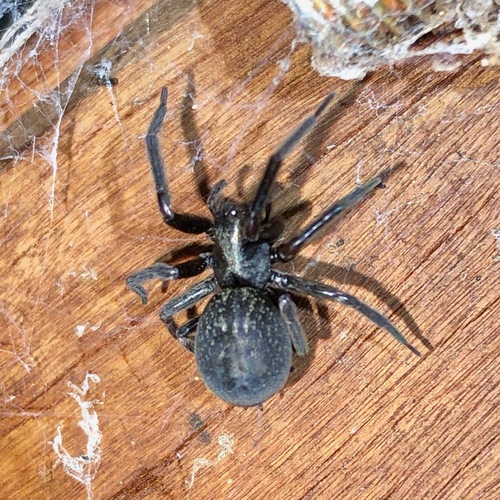
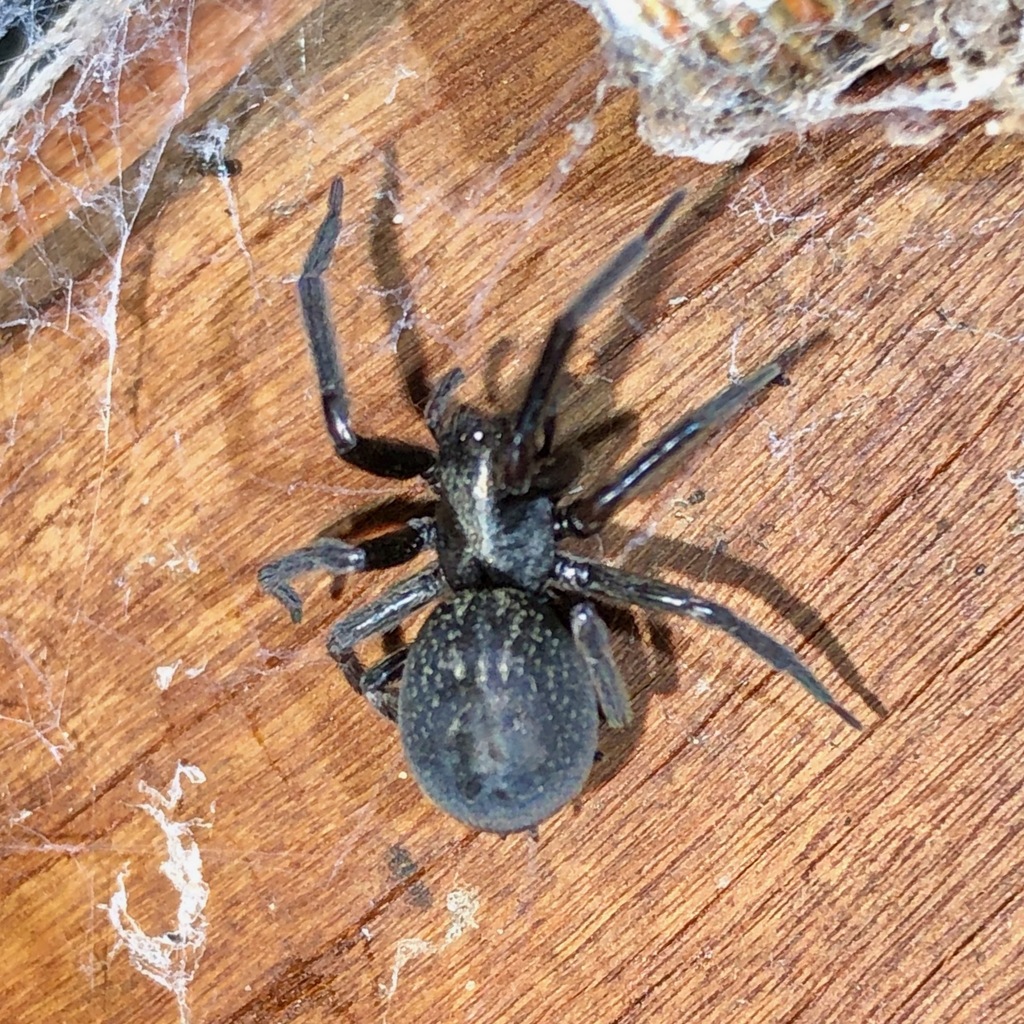
—observations
—countries
—peak records
Not EvaluatedConservation statusIUCN Red List categoriesLCNTVUENCREWEXNot Evaluated — not placed on the risk ladderRed List categories, explained →
Diet & preyFlies, Moths, Beetles
Predators
- White-tailed spider
- Spider-hunting wasps
- Insectivorous birds
ThreatsPesticide application, direct human persecution, and predation by specialist spider-hunting arachnids
HabitatsUrban infrastructure, exterior walls, window crevices, tree trunks, and rock crevices
Life spanUp to 2 years
Classification
- OrderAraneae
- FamilyDesidae
- GenusBadumna
- SpeciesBadumna insignis
Range data is not available yet.
Interaction riskVery high
- Low
- Moderate
- High
- Very high
- Why interaction risk is very high
- Timid and rarely bites unless handled directly; safe to observe at a normal distance.
Responsible observation
- Locating retreats: Inspect exterior window corners and rough tree bark where messy silk forms a distinct central tube.
- Nighttime viewing: Use a red or dim flashlight after dusk to spot the spider waiting at its entrance.
- Web maintenance: Avoid destroying the webs in garden sheds, as they capture numerous household pest insects.
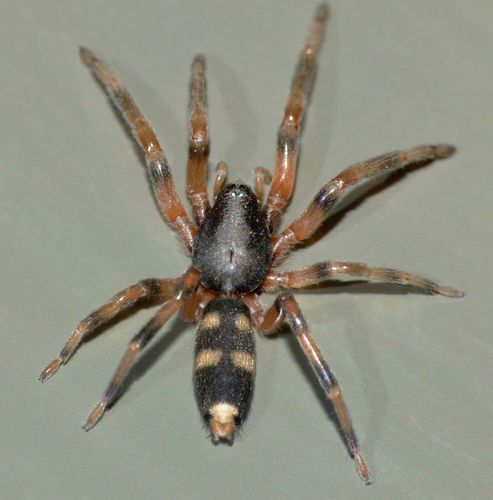
Predator (c) Steve Kerr, some rights reserved (CC BY), uploaded by Steve Kerr · cc-by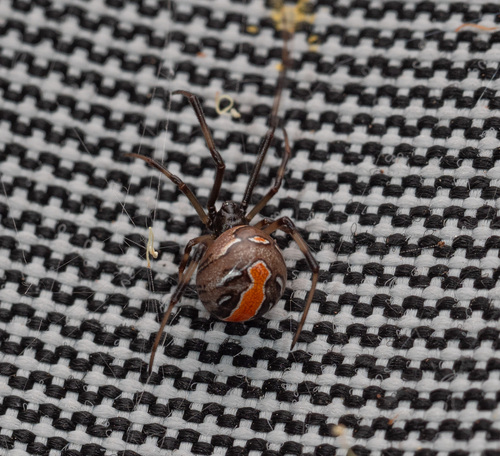
Competitor (c) Paul Whitington, some rights reserved (CC BY), uploaded by Paul Whitington · cc-by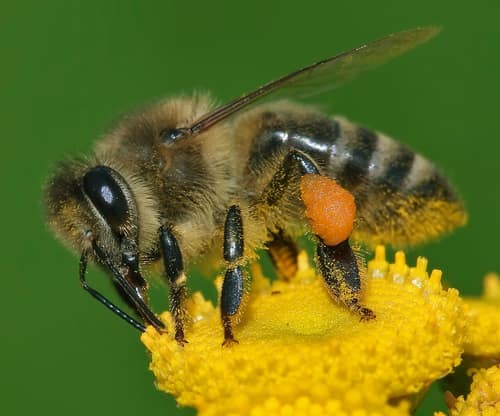
Prey Andreas Trepte / CC BY-SA 2.5 · cc-by-sa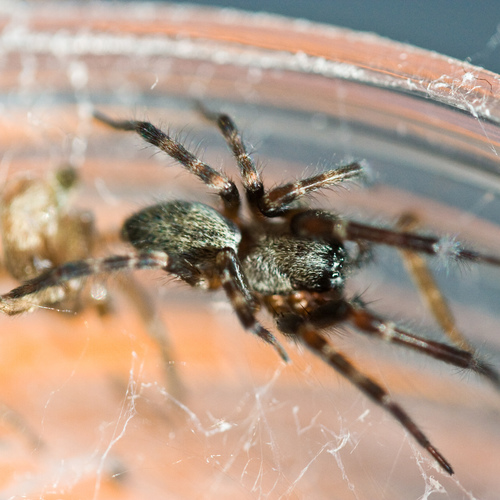
Close Relative (c) Ken-ichi Ueda, some rights reserved (CC BY), uploaded by Ken-ichi Ueda · cc-by
Help improve the field guideSomething wrong?
Checking your Fauna account…Report a name, category, or profile issue for review.