Also known as Waterbug, Ship Cockroach, Palmetto Bug, Bombay Canary
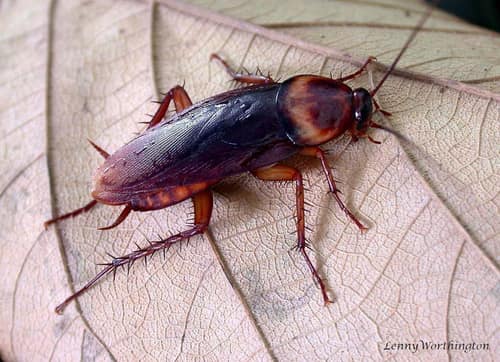
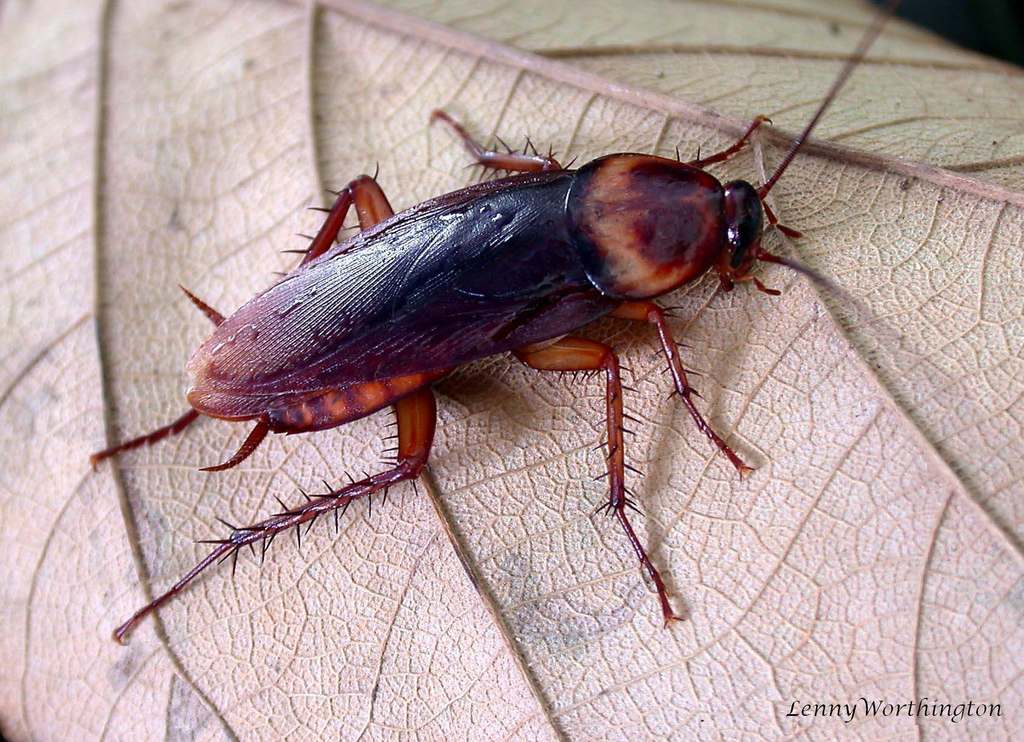
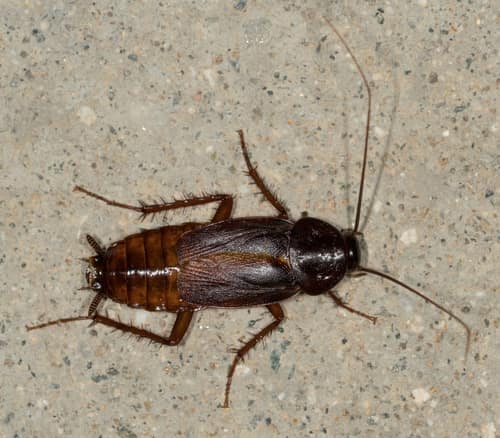
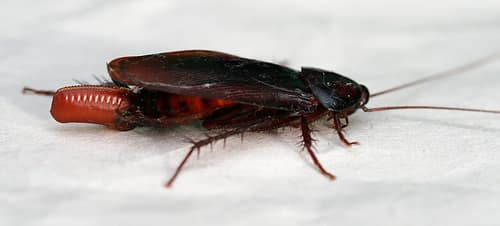
American cockroaches are swift, reddish-brown insects identifiable by a light yellowish band along the edge of the pronotum shield behind the head. Despite their name, these resilient opportunists originated in tropical Africa and spread worldwide through human trade networks. They thrive in warm, humid microhabitats such as steam tunnels, basements, and sewers, relying on long sensory antennae to navigate dark spaces.
Carries enteric pathogens on body surfaces and sheds potent indoor allergens; avoid direct contact.
Why it is dangerous
Shed exoskeletons and droppings contain proteins that trigger severe asthma and allergies, while external body surfaces mechanically transfer bacteria like Salmonella.
How to recognize a risky encounter
Recognizable by a large body exceeding 3.5 cm and a distinct yellowish outer border on the pronotal shield behind the head.
What to do
Avoid bare-handed contact, store food in sealed containers, and rely on non-contact monitoring traps inside buildings.
Responsible observation
Sanitation: Keep human food sealed and indoor waste bins tightly covered to eliminate attractants.
Exclusion: Seal gaps around plumbing penetrations and baseboards to block structural entry points.
Safe Observation: Use a red-filtered flashlight during nocturnal searches to view behavior without causing flight.