
Insect · GBIF taxon 1939077
Kaiser-i-Hind
Teinopalpus imperialisAlso known as Kaisar-i-Hind, Emperor of India
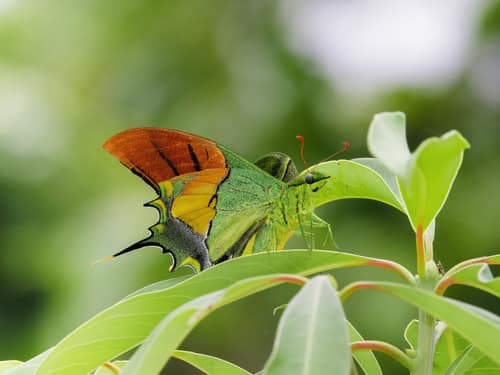
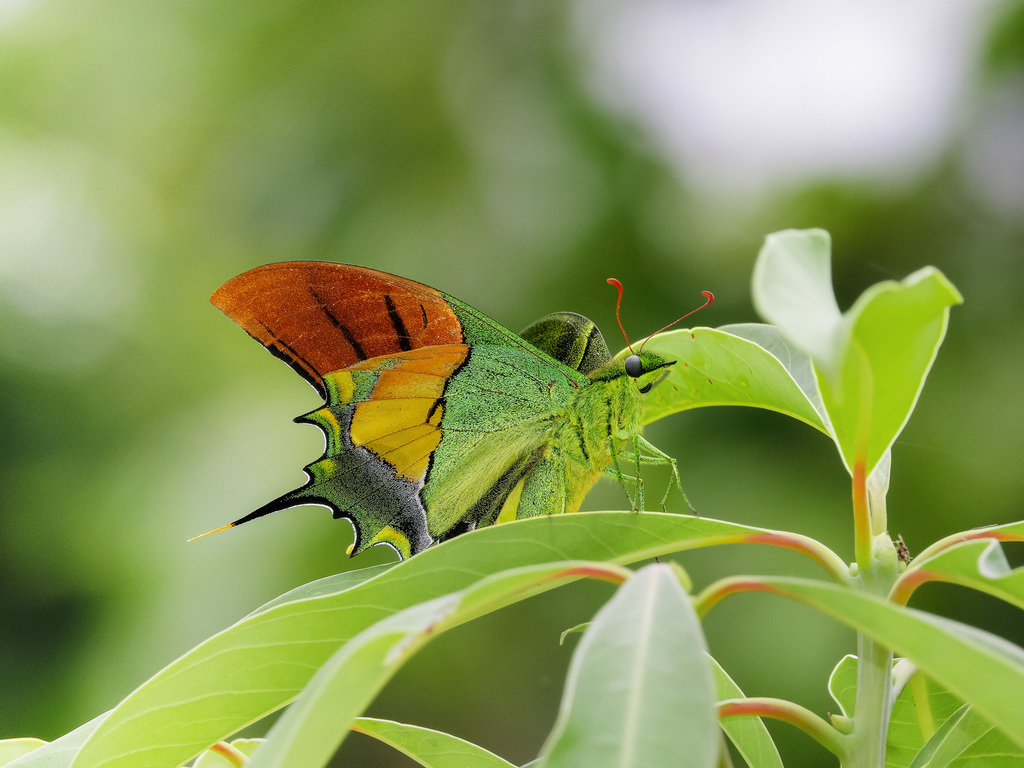
Kaiser-i-Hind butterflies inhabit the high canopy of cool montane cloud forests across the Eastern Himalayas and Southeast Asia. Males often defend territories along sunny ridge tops early in the morning before retreating into the tall tree crowns. Their stunning emerald coloration stems from microscopic photonic structures on their wing scales rather than green pigments.
MontaneIridescentRare
 1 / 2
1 / 2—observations
—countries
—peak records
Near ThreatenedConservation statusIUCN Red List categoriesLCNTVUENCREWEXNear ThreatenedRed List categories, explained →
Diet & prey
- Magnolia leaves
- Flower nectar
- Damp soil minerals
Predators
- Insectivorous birds
- Tree lizards
- Arboreal spiders
ThreatsHabitat loss from mountain deforestation, forest fragmentation, and illegal specimen collection.
HabitatsMontane broadleaf evergreen forests and cloud forest ridges from 1,800 to 3,000 meters altitude.
Life span1–2 months as adult
Size / weightNot available
Classification
- FamilyPapilionidae
- SpeciesTeinopalpus imperialis
Range data is not available yet.
Interaction riskLow
- Low
- Moderate
- High
- Very high
- Why interaction risk is low
- Safe to observe at a normal distance.
- What to notice
- Recognized by high canopy soaring, emerald green iridescent wings, long slender tails, and bright yellow hindwing patches.
- Support conservation
- Refrain from revealing precise roosting or breeding locations publicly to protect populations from illegal collection.
Responsible observation
- Morning Observation: Search along high ridge crests early on sunny mornings when males perch on outer foliage.
- Use Telephoto Lenses: Observe high canopy activity using binoculars or long lenses to avoid disturbing perching spots.
 Image unavailable
Co-occurring Swallowtail 
Close Relative no rights reserved · cc0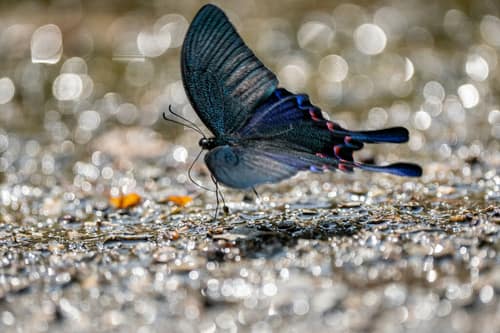
Family Member (c) Andrew Lai, some rights reserved (CC BY) · cc-by
Help improve the field guideSomething wrong?
Checking your Fauna account…Report a name, category, or profile issue for review.